ETYMOLOGY
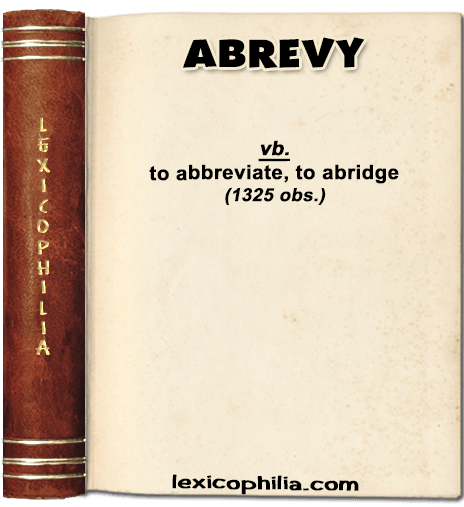
from Middle French abrevier, from Latin abbreviare (to abbreviate, to shorten)
EXAMPLE
“… Fyrst, diuide the denominator by hys numerator, and if anye number doe remaine, let your diuisor be diuided by the same number, and so you must continue vntyll you haue so diuided yt there may nothing remaine, then is it to be vnderstande, that your last diuisor (wherat you did ende, and that 0. did remaine after your last diuision) is the greatest number, by the which you must abreuiat, as you did in the laste example, but in case that your last diuisor be 1. it is a token that the same number can not be abreuied. Example, of 54/11 diuide 81. (which is the denominator) by 54. which is his numerator, and there resteth 27. then diuide 54. by 27. and there remaineth nothing, wherefore your last diuisor 27. is the number, by the which you must abreuiat 54/81 as in the last example is specifyed. …”
From: The Welspring of Sciences, which teacheth the perfecte worke and practise of arithmeticke both in vvhole numbers & fractions
By Humfrey Baker, 1564
The thirde Chapter treateth of abbreuiation of one great broken number into a lesser broken
 Lexicophilia