Word of the Day: HARRIDAN


ETYMOLOGY
of uncertain origin;
possibly from French haridelle (an old jade of a horse – 1558), (a woman (especially a servant) who is too weak to work – 1690) + a derivative suffix of uncertain origin)


EXAMPLE
“…Parret. Doest take me for a Harridan, or a Cuffey? ha!
Owmuch. I believe thee a very obliging Creature, truely.
Parret. I won’t be believed an obliging Creature by ne’re a Sir Fopling of you all, the Court know me a Creature of Heavens special Handy-work, and if I live to see the City, Bow shall Ring with thy abominations, till Mary-Overs eccho thy lewdness: Tempt me to be an obliging Creature…”

From: Tunbridge-Wells, or, A days courtship a comedy
By Thomas Rawlins, a1670

Word of the Day: HAND-WHILE

ETYMOLOGY
Middle English, from Old English handhwīl, 
from handhond (hand) + hwīl (while);
originally alluding to the short span of a handbreadth

EXAMPLE
“…Thou semste (quoth the spider) a costerde monger.
Conscience euery handwhile thou doste cry.
I muste (quoth the flie) se sum token stronger.
Ere I can suppose you of that mistery.
I call not for conscience more comonly.
Then you speake of it seelde, flie I tolde the erste.
Cause why: that conscience at laste ende shulde be perste
…”

From: The Spider and the Flie
A Parable of the Spider and the Flie
By John Heywood, 1556

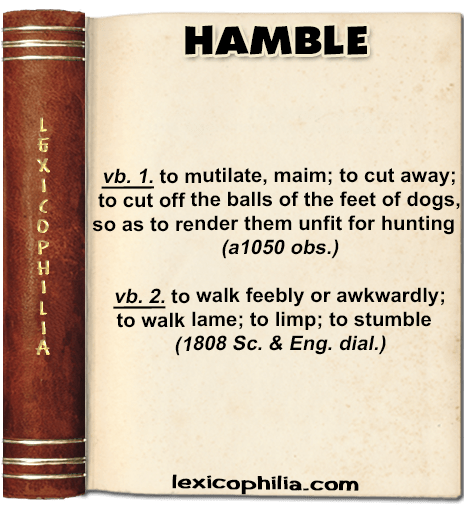
Word of the Day: HAMBLE

ETYMOLOGY
from Old English hamelian (to mutilate);
from an adjective appearing on Old High German as hamal (maimed, mutilated), whence mod.German hammel (a castrated sheep)

EXAMPLE
“…sume hi man bende, sume hi man blende,
sume man hamelode and sume heanlice hattode
…”

(…Some did they bind, some did they blind,
Some did they hamstring, some did they scalp
…)

From: The Anglo-Saxon Chronicle

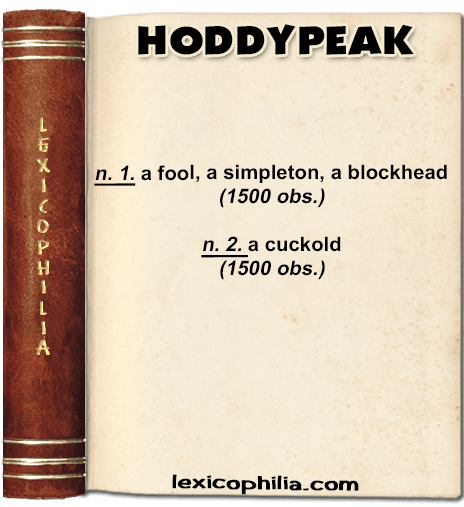
Word of the Day: HODDYPEAK

ETYMOLOGY
from hoddy (? snail or horned) + peak (a silly or foolish person, obs.),
but the sense is obscure

EXAMPLE
“…As well apparelyd at eche poynt of hys aray
Who dwelleth here wyll no man speke
Is there no fole nor hody peke
Now by the bell yt were almys to breke
…”

From: Nature, A Goodly Interlude of Nature
Compiled by Henry Medwall, 1500

Word of the Day: HOSPITALIOUS

ETYMOLOGY
from Latin hospitālis (hospitable) + -ous

EXAMPLE
“…Too much, too little, or a meane, sort out alike, we see,
House-keeping, nor Humilitie, in any of the Three.
Be hospitalious, Churchmen: Lay, cease sacrilegious sinne:
Your Soules-sore, but their Stores-salue, whence, euē whiningly, they winne,
By pinching from the Pulpet, and their Purses, with this note,
Scarse will their Studies stipend them, their wiues, and Children cote
…”

From: Albions England
A continued historie of the same kingdome, from the originals of the first inhabitants thereof
By William Warner, 1596

Word of the Day: HEARTSOME

ETYMOLOGY
from heart + -some

EXAMPLE
“…And ze defend the cruell Jesabell
Than Baallis Priestis will cal zow verray kynde
Now euerie Dowglas of ane hartsum mynde,
Thinke on dame Margaret sumtyme in the towre,
And of young Charles prudent of Ingyne
…”

From: Heir Followis ane Ballat Declaring the Nobill and Gude Inclinatioun of Our King
– Robert Sempill, 1567

Word of the Day: HUDDLE-DUDDLE

ETYMOLOGY
?? huddle is an obsolete word for a miserly old person

EXAMPLE
“…Yea, in the worde of one no more wealthy then hee was, (wealthy saide I? may I’le be sworne hee was a grande iurie man in respect of me,) those graybeard Huddle-duddles and crusty cum-twangs were strooke with stuch stinging remorse of their miserable Euclionisme and snudgery…”

From: Lenten Stuffe
– Thomas Nashe, 1599

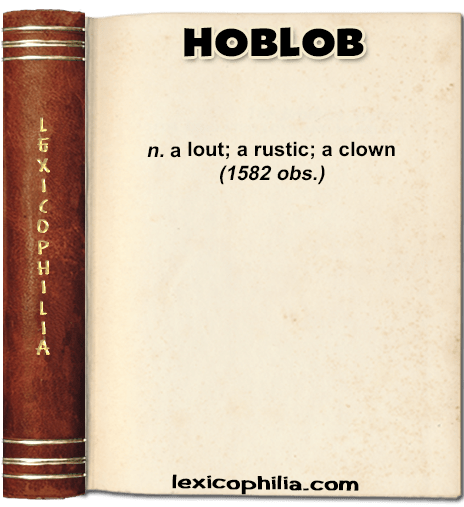
Word of the Day: HOBLOB

ETYMOLOGY
from hob (a generic name for a rustic, a clown) + lob (a country bumpkin, a clown)

EXAMPLE
“…By Phoebe to Delos, his natiue countrie seat, hastning.
Hee poincts a dawnsing, foorthwith the rustical hoblobs
Of Cretes, of Driopes, and paincted clowns Agathyrsi
Dooe fetch their gambalds hopping neere consecrat altars
…”

From: Thee first foure bookes of Virgil his Æneis tr. intoo English heroical verse 
– translated by Richard Stanyhurst, 1582