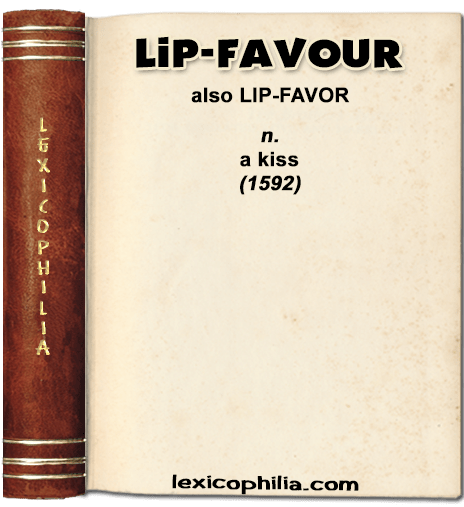
Word of the Day: LIP-FAVOUR

ETYMOLOGY
from lip + favour

EXAMPLE
“… As soon as she had sealed up her letter, she brooked no delay but sent it straight by one of
her waiting-women to Lutesio, whom she found sitting alone in his chamber reading
upon a book. Interrupting his study, she delivered him the letter and the message of her
lady. Lutesio, kind, gave the gentlewoman a kiss, for he thought she valued a
lip-favour
more than a piece of gold, and with great courtesy gave her leave to depart. She was
scarce out of the chamber but he opened the letter and found what he expected, the
resolution of a chaste countess, too worthy of so jealous a husband. …”

From: Philomela
The Lady Fitzwater’s Nightingale
By Robert Greene, 1592

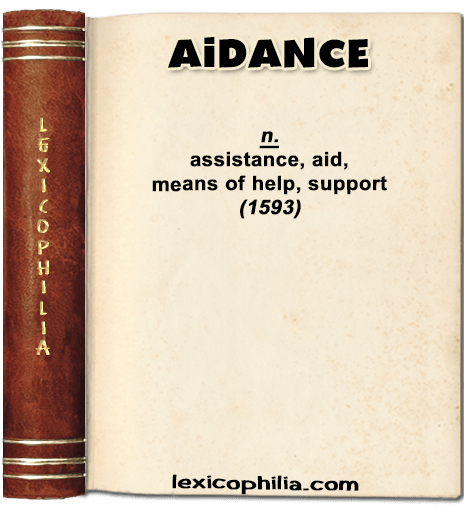
Word of the Day: AIDANCE

ETYMOLOGY
from Middle French aidance, from aider (aid) + -ance

EXAMPLE
“… All swolne with chafing, downe Adonis sits,
Banning his boystrous, and vnruly beast;
And now the happie season once more fits
That louesicke loue, by pleading may be blest:
For louers say, the heart hath treble wrong,
When it is bard the
aydance of the tongue. …”

From: Venus and Adonis
By William Shakespeare, 1593

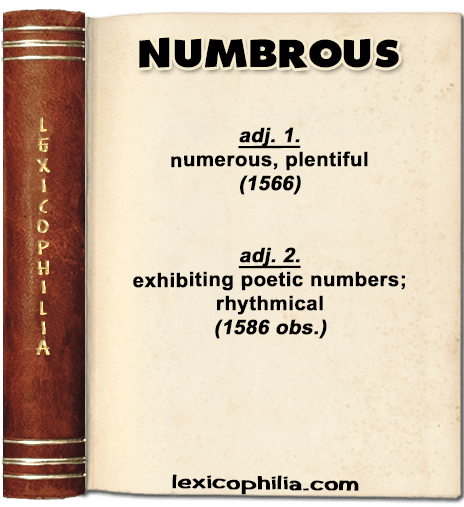
Word of the Day: NUMBROUS

ETYMOLOGY
from number (n.) + -ous

EXAMPLE
“… She sawe, she sawe the prophane route,
rushe in, without all measure:
Unto thy sacred holy house,
that route, whiche thou (O Lorde)
Forboddste, that they, ne shoulde come in,
the mansion of thy worde.
Her 
numbrous folke (a syghyng flocke)
and seekyng after foode,
Dyd geue for meate, what so they had,
thynges precious or good.
To cheryshe theyr so needie sowles.
…”

From: A Medicinable Morall, that is, the two bookes of Horace his satyres,
Translated by T. Drant, 1566

Word of the Day: HEEDY

ETYMOLOGY
from heed (careful attention, care, observation) + -y

EXAMPLE
“… Not wythstandynge (ryght worshipfull) I haue attempted an enterpryce in prouynge eche parcel of the pryuye masse to dysplease god, whiche I can neyther word, matier, ne reason accordynglye, and so am rather dyslyked then lyked of manye for thys my doyng, rather heady then heedy as they suppose: Howebeyt in case the sayd persons woll wythe me earnestly respect my bounden deutie in the sayd doyng, they (I doubte not (woll be rathere contented then discontented with me for the same. …”

From: A Treatise againste the preuee masse
By Edmund Gest, 1548

Word of the Day: MAKE-SPORT

ETYMOLOGY
from make (to produce by action, bring about) + sport (activity involving physical exertion and skill)

EXAMPLE (for adj.)
“… Graunt that this present Tyrian with Troian asemblye
May breede good fortune to our freends and kynred heer after.
Let
make sport Bacchus, with good ladye Iuno, be present.
And ye, my freend Tyrians, thee Troian coompanye frollick
Thus sayd, with sipping in vessel nycelye she dipped.
…”

From: Thee first foure bookes of Virgil his Aeneis
Translated by Richard Stanyhurst, 1582

Word of the Day: EXIMIOUS

ETYMOLOGY
from Latin eximius (excepted, select, choice), from eximere (to take out) + -ous;
common in 17th century literature

EXAMPLE
“… For this matter let euery man make frendes to the kinges maiestie, for it doth perteine to a king to help this infirmity, by the grace the which is giuen to a king anointed. But for as much as some men doth iudge diuers times a Fistle or a French pocke to be the kings euil, in such matters it behoueth not a king to meddle withal, except it be thorow & of his boutiful goodnes to giue his pitifull and gracious councell. For kinges & kinges sonnes & other noble men hath been eximious Phisicions, as it appeareth more largely in ye Introduction of knowledge, a booke of my making. …”

From: The Breuiarie of Health vvherin doth folow, remedies, for all maner of sicknesses & diseases,
By Andrew Boorde, 1547

PRONUNCIATION
uhg-ZIM-ee-uhss, ek-SIM-ee-uhss

Word of the Day: OMNISCIOUS

ETYMOLOGY
from Latin omniscius all-knowing, from omni- scire (to know) + -ous

EXAMPLE
“… Schoolemen may phantastically dreame, or philosophically discourse of new Adams, Salomons, and diuers putatiue wisemen, euen in that omniscious, and omnisufficient veine: but I wis such blacke Swans are very rare birds: and true prophets in the rightest, purest, and diuinest kinde, euen full as rare, or percase rarer, than they: as may haply be discussed more fully, and exactly, at more conuenient leisure. …”

From: A Discoursiue Probleme concerning Prophesies how far they are to be valued, or credited, according to the surest rules, and directions in diuinitie, philosophie, astrologie, and other learning;
By John Harvey, 1588

Word of the Day: TIB

ETYMOLOGY
perhaps the same as Tib, a shortened hypocoristic form of the female name Isabel; now rather rude or slighting (except playfully);
also with dim. -y or -ieTibbie, a common female name in the north

EXAMPLE
“… .Trupeny. Mary then prickmedaintie come toste me a fig,
Who shall then know our
Tib Talke apace trow ye?

An. Alyface. And why not Annot Alyface as fyne as she?

Trupeny. And what had Tom Trupeny, a father or none?

An. Alyface. Then our prety newe come man will looke to be one …”

From: Ralph Roister Doister 
By Nicholas Udall, a1556

Word of the Day: DUREFUL

ETYMOLOGY
from dure (to last, continue in existence) + -ful

EXAMPLE
“… Be nought dismayd that her vnmoued mind,
doth still persist in her rebellious pride:
such loue not lyke to lusts of baser kynd,
the harder wonne, the firmer will abide.
The
durefull Oake, whose sap is not yet dride,
is long ere it conceiue the kindling fyre:
but when it once doth burne, it doth diuide
great heat, and makes his flames to heauen aspire.
…”

From: Amoretti vi, in Amoretti and Epithalamion 
By Edmund Spenser, 1595