
ETYMOLOGY
from Latin ostrea (oyster) + -o- connective + -phagous (combining form, feeding on a specified kind of food)
EXAMPLE
“…A great advantage to the ostreophagous part of our population…”
From: Daily News (London), February 17, 1882
ETYMOLOGY
from Latin ostrea (oyster) + -o- connective + -phagous (combining form, feeding on a specified kind of food)
EXAMPLE
“…A great advantage to the ostreophagous part of our population…”
From: Daily News (London), February 17, 1882
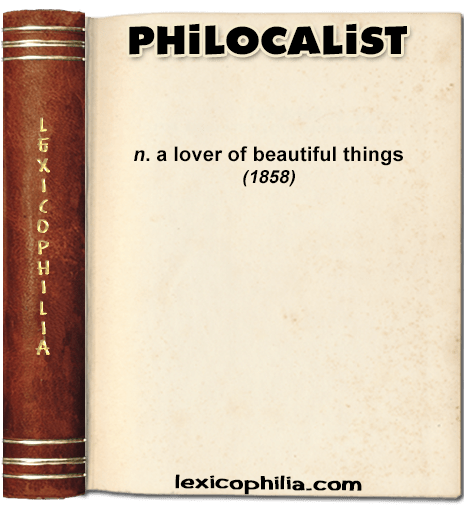
ETYMOLOGY
– from ancient Greek ϕιλόκαλος (loving the beautiful);
from ϕιλο- (philo-) + καλός (beautiful) + –ist (suffix)
EXAMPLE
“…This poor, vindictive, solitary, and powerful creature, was a philocalist: he had a singular love of flowers and of beautiful women.”
From: Horae Subsecivae
Locke and Sydenham, with other occasional papers
By John Brown · 1858

ETYMOLOGY
? from jounce to bump, thump and jolt, as a vehicle in deep ruts
FIRST DOCUMENTED USE
1857 – Dictionary of Obsolete and Provincial English
– Thomas Wright, 1857
 Lexicophilia