ETYMOLOGY
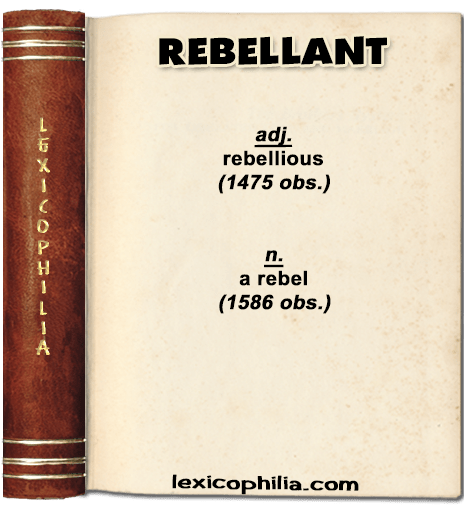
from Old French rebellant, pr. pple. of rebeller (to rebel),
(used as adj. and n. in 14th–16th c.)
EXAMPLE 1 (for adj.)
“…That other infortuny is exterialle, that man scholde haue his inferior rebellante to hym, in that he was inobediente to God his maker…”
From: The Chronicles and Memorials of Great Britain and Ireland During the Middle Ages,
Edited by Churchill Babington, 1869
Polychronicon Ranulphi Higden Monachi Cestrensis (Harley MS. 2261)
By Ranulf Higden
EXAMPLE 2 (for n.)
“…With Tantalus hild starued Ghosts, whose pleasure was their paine,
Whose euer Hords had neuer vse, and gettings had no gaine.
To Besides assisted Soules of Vnthrifts, whose supplies
Did passe from them as Sea through Cieues, whose wastes no wealthes suffise.
Vnto Ixeon stood their Sprights that had their lusts for law,
Rebellants to a common good, and sinning without awe.
To Titius lastly ioyned Ghosts, whose hearts did emptie hate
As Todes their poyson, growing when it seemeth to abate.…”
From: Albions England; or, historicall map of the same island
By William Warner,
 Lexicophilia