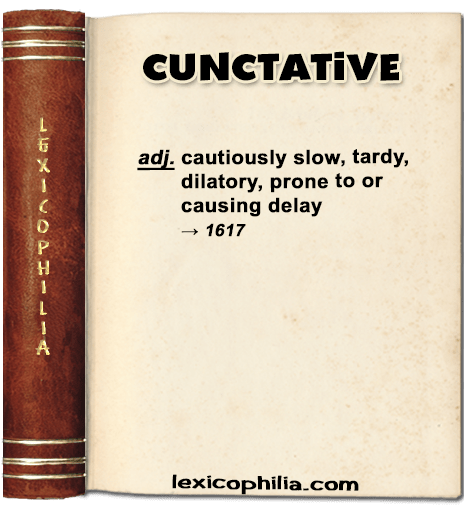
ETYMOLOGY
from Latin cunctat-, participial stem of cunctari (to hesitate) + -ive
EXAMPLE
“… For it hath been a manner much used of late in my last lord’s time, of whom I learn much to imitate, and, somewhat to avoid ; that upon the solemn and full hearing of a cause nothing is pronounced in court, but breviates are required to be made; which I do not dislike in itself in causes perplexed. For I confess I have somewhat of the cunctative; and I am of opinion, that whosoever is not wiser upon advice than upon the sudden, the same man was no wiser at fifty than he was at thirty. …”
From: The Works of Francis Bacon, Baron of Verulam, Viscount St. Alban, and Lord High Chancellor of England, 1803
Speech on taking his Place in Chancery, May 1617
 Lexicophilia