Word of the Day: ALIICIDE

ETYMOLOGY
from. Latin alius (another) + -icide (the killing of), in allusion to suicide

EXAMPLE
“… Would the Lord Chief Justice be at all surprised if one of his amiable and interesting, but insane, correspondents were to take a mad freak into her head some day, and commit suicide or allicide? If, instead of adorning the Queen’s Bench, he honoured the chair of an insurance company, what would he think of the rate of payment requisite on the lives of such persons going at large? …”

From:  Punch, or The London Charivari,
December 19, 1868
Look After Lunatics

Word of the Day: AMPUTE

ETYMOLOGY
from French amputer, from Latin amputare (to remove by cutting off)

EXAMPLE
“… The Blood of Christ, as purging away the guilt of sin, was represented in Circumsion as to be shed; but it is represented in Baptism as already shed, and applyed to the party baptized. The body of sin was represented in Circumcision under the notion of a superfluity to be amputed and cut off: ‘Tis represented in Baptism under the notion of a defilement or pollution, which is removed by washing. But the use of the one and the other in general was and is the same, namely to represent to the mind that way, and those means, by and through which the soul hath remission of sin, peace which God, and is brought to future Salvation. …”

From: An essay to revive the primitive doctrine and practice of Infant-Baptism
By Joseph Whiston, 1676

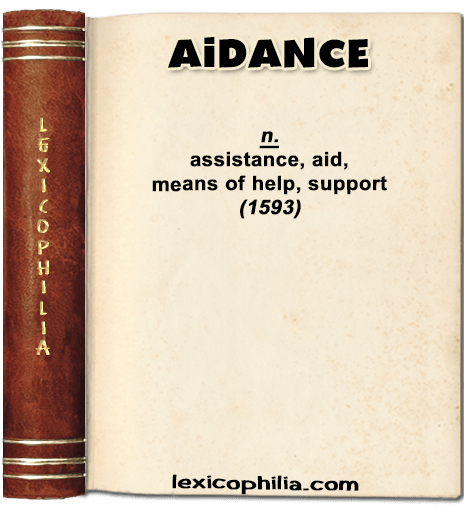
Word of the Day: AIDANCE

ETYMOLOGY
from Middle French aidance, from aider (aid) + -ance

EXAMPLE
“… All swolne with chafing, downe Adonis sits,
Banning his boystrous, and vnruly beast;
And now the happie season once more fits
That louesicke loue, by pleading may be blest:
For louers say, the heart hath treble wrong,
When it is bard the
aydance of the tongue. …”

From: Venus and Adonis
By William Shakespeare, 1593

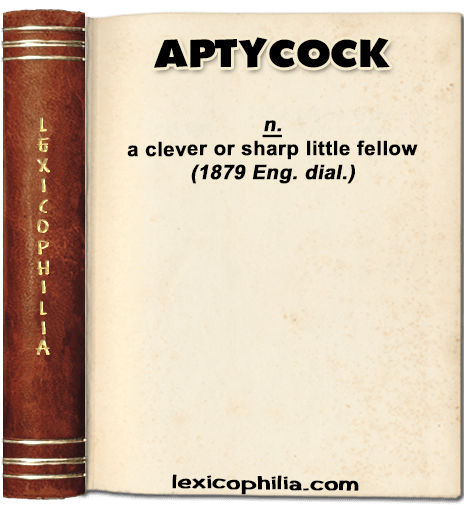
Word of the Day: APTYCOCK

ETYMOLOGY
from apt (intelligent, quick-witted) + -cock – a well-known suffix in surnames, as Alcock, Badcock;
probably from the use of ‘cock’ as a familiar term of appreciation for a man who fights with pluck and spirit

EXAMPLE
“…Tom marched away to school earlier than usual that afternoon, while the women went to the door and watched him trudge off, both mightily proud of his performance and his battered brown face.
“He be a reg’lar li’l
apty-cock, sure ‘nough!” said Joan.
Mrs. Tregenza answered with a nod, and looked along the road after her son.
…”

From: Collection of British Authors
Vol, 3228, 1897
Lying Prophets, By Eden Phillpotts

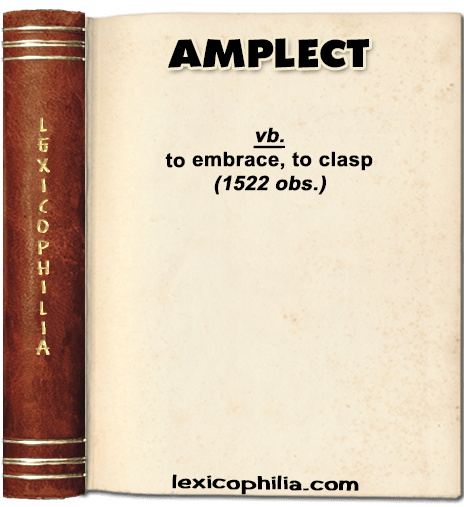
Word of the Day: AMPLECT

ETYMOLOGY
from Latin amplecti (to embrace, clasp), from amb- (about) + plectere (to plait, twine)

EXAMPLE
“...With what ioy Charles the people the amplect
Theyr ryght great ioyes done playnly testifye
Mixed with swete sownes of many a sect
Some sownyng trumpes and clarions wonders hye
Some other syngynge most melodiously
Some vpon lutes some vpon harpes play
The to reioyce in all that euer they may
….”

From: Anonymous translation of Latin verses by William Lily, 1522
“Of the tryumphe and the verses that Charles th’emperour and the most myghty redouted kyng of England Henry_the_.viii. were saluted with passyng through London”

Word of the Day: ADDULCE

ETYMOLOGY
originally from Middle French adoulcir, also written addoulcir; (mod. adoucir) (to sweeten):
—late Latin addulcire; from ad (to) + dulcis (sweet); subsequently refashioned after Latin

EXAMPLE
“…And thenne shalle not the Rigour and the reffuse of my noble lady be myned and adoulced by my habondaunt prayers and oroisons. yes verily. that shall she be or nature shall faylle. And if not the goddes shall be iniuste and agaynst me…”

From: The History of Jason
By Raoul Le Fevre
Translated by William Caxton, 1477

PRONUNCIATION
uh-DULS

Word of the Day: AGILIOUS

ETYMOLOGY
from Latin agilis (agile) + -ous

EXAMPLE
“…What is become of all these iugling gambalds, Apish deuises, with all the rest of your squint-eyed trickes? when as through your deepe studies, long practises, & apt bodies, both strong & agilious, you haue attained to the height of all these things. …”

From: Paradoxes of Defence wherein is proued the true grounds of fight to be in the short auncient weapons, and that the short sword hath aduantage of the long sword or long rapier
By George Silver, 1599

Word of the Day: ADULATORIOUS

ETYMOLOGY
from Latin adulatorius (adulatory) + -ous

EXAMPLE
“…Histories are full fraught with such relations of adorations, and most adulatorious Epithites giuen to his Holinesse, the proper name and calling now of the Pope, amongst his adorers and followers: and doe you think the Pope knoweth not, or affecteth not this his greatnes: obserue his pride (excuse me Pontifician reader) when he saith not priuate Masse himselfe, but is in his publike Chappel, …”

From: The Motiues of Richard Sheldon pr. for his Lust, Voluntary, and Free Renouncing of Communion with the Bishop of Rome, Paul the 5. and his Church
By Richard Sheldon, 1612

Word of the Day: AGAMIST

ETYMOLOGY
from Greek ἄγαµ-ος (unmarried) + -ist

EXAMPLE
“…to exhort these spirituall Fathers first to cease from murdering of their owne children to spare the bloud of innocentes, & not to persecute Christ so cruelly in his members, as they do, and furthermore to exhort in like maner these Agamistes, and wilful reiecters of matrimony, to take themselues to lawfull wiues, and not to resist Gods holy ordinaunce, nor encounter his institution with an other contrary institution of theyr own deuising, lest perhappes they preuented by fragilitie, may fall into daunger of suche inconueniences aboue touched …”

From: Actes and Monumentes 
By John Foxe, 1570

Word of the Day: AGNATICAL


ETYMOLOGY
from agnaticus (agnatic – related through the male line) [from Latin agnatus (a relation by the father’s side) + -ic] + ‑al


EXAMPLE
“… There are but two waies by which hereditary or successive Monarchies do descend; the one is Lineal descent, the other Lineal, Agnatical, Cognatical or Collateral; or as we say, the one descends to the heire general, the other to the heire male. This latter by vertue of a Salique law takes place only in France; we will therefore see what may be said and objected against the former, and how the latter hath been observed in France, and of what Authority it is…”

From: Justice vindicated from the false fucus put upon it,
by Thomas White gent. Mr. Thomas Hobbs, and Hugo Grotius:
As also elements of power & subjection; wherein is demonstrated the cause of all humane Christian, and legal society
‘Of Inheritance and Succession’
By Roger Coke, 1660