
ETYMOLOGY
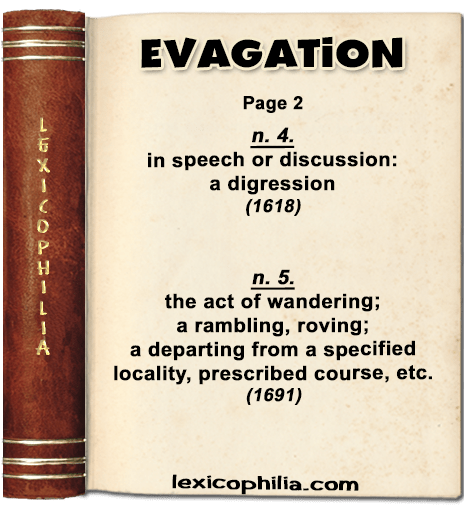
First introduced in the fig. n.1; from French evagation, Latin evagationem, noun of action from evagari, from e (out) + vagari (to wander)
EXAMPLE (for noun 1)
“… Clarefie me with fy clernesse of euerlastinge lijt, and bringe oute of fe liabitacle of myn herte aH maner of derkenes. Restreyne all euel evagacions & all miȝty temptacions. …”
From: The earliest English translation of the first three books of the De imitatione Christi
By Thomas à Kempis, c1425






 Lexicophilia