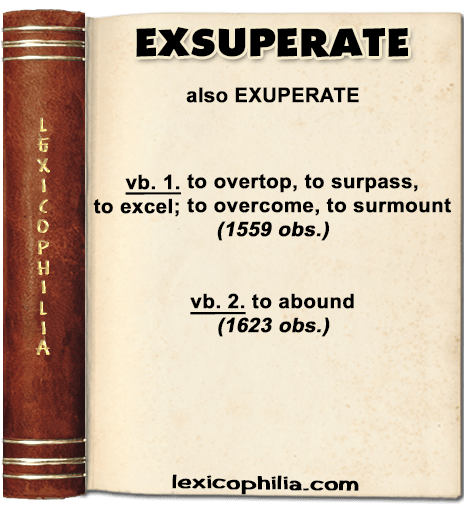
Word of the Day: EXSUPERATE


ETYMOLOGY
from Latin ex(s)uperat- ppl. stem of ex(s)uperare
from ex- + superare (to rise above), from super (above)


EXAMPLE
“…And if bewtie breed such blisfulnesse
Euamouring both God and man
Good Lady let no wilfulnesse
 Exuperate  your bewtye then
To slaye the hertes that yeld & craue
ladye ladye
The graunt of your goodwil to haue
My deare ladye…”

From: The Panges of Loue and Louers Fittes
By William Elderton, 1559
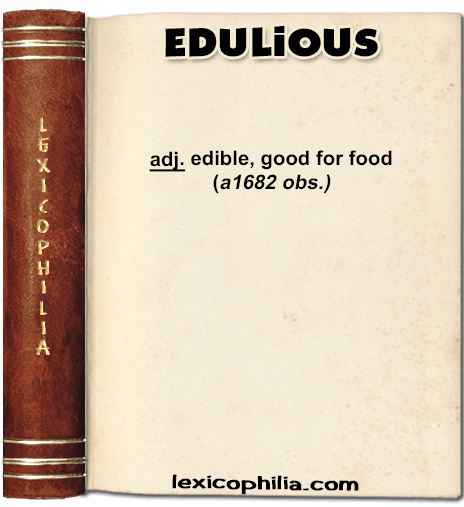
Word of the Day: EDULIOUS

ETYMOLOGY
from Latin edulis, from edere (to eat)

EXAMPLE
“…That the Prodigal Son desired to eat of Husks given unto Swine, will hardly pass in your apprehension for the Husks of Pease, Beans, or such edulious Pulses; as well understanding that the textual word or Ceration, properly intendeth the Fruit of the Siliqua Tree so common in Syria, and fed upon by Men and Beasts…”

From: Certain Miscellany Tracts
By Sir Thomas Brown, a1682

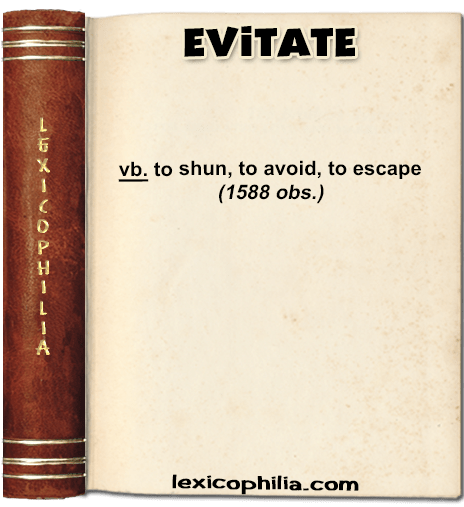
Word of the Day: EVITATE

ETYMOLOGY
from Latin evitatus, pa. ppl. of evitare (to shun),
from e– out + vitare (to shun)

EXAMPLE
“…So after the sayd father had informed himselfe of all that is sayde, and of many other thinges more, which is left out for to euitate tediousnes, till such time as of them may bee made a particular historie, hee departed from Goa and Cochin towardes Portingall, and passed by the Ilandes of Maldiuia which are many, & all are inhabited with Moores, nigh vnto the which they doe enter the poole Antartico, crossing the equinoctiall from the coast of Arabia, from thence they sayled with a faire winde till they came right against the Iland of sainct Lorenso, which is very great, for that it hath two hundreth seuentie and fiue leagues of longitude, and fourescore and tenne of latitude…”

From: The Historie of the Great and Mightie Kingdome of China
By Juan González de Mendoza
Translated out of Spanish by Robert Parke, 1588

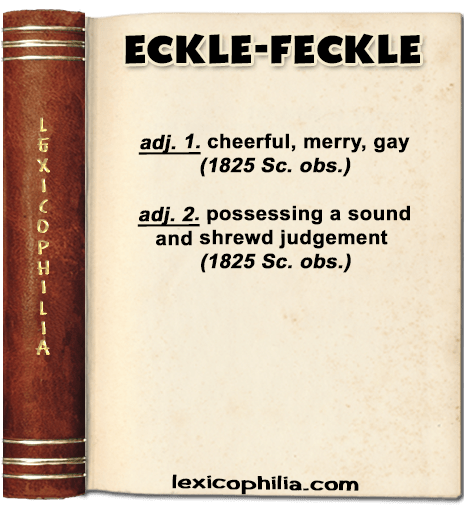
Word of the Day: ECKLE-FECKLE

ETYMOLOGY
of obscure origin;
perhaps allied to eekfow (blithe, having an affable demeanour)

EXAMPLE
“…I ne’er weas ca’ad a crankous kimmer,
A crabbed, craiken, crack-brained limmer.
Auld grannie ay was eckle feckle
Nor hogry mogry, nor kenspeckle –
Ay ready for a couthie clacky,
A pint o’ yill, a bit o’ baccy
…”

From: Willie Wabster’s Wooing and Wedding on the Braes of Angus
By Dorothea M. Ogilvy, Julia O. Robertson, 1873

Word of the Day: EYE-BRINE

ETYMOLOGY
from eye + brine

EXAMPLE
“…The Iudge that would be lik’st him, when he giues
His Doome on the Delinquent most that grieues.
Powders his words in Eye-brine, so to tast
of Grace, to them, that (so condemn’d) are grac’t
…”

From: A Select Second Husband for Sir Thomas Ouerburie’s Wife,
now a Matchlesse Widow;
Divers Elegies Tovching the Death of the Never Too Mvch Praised and Pitied, Sir Thomas Overbvry
By John Davies, 1616

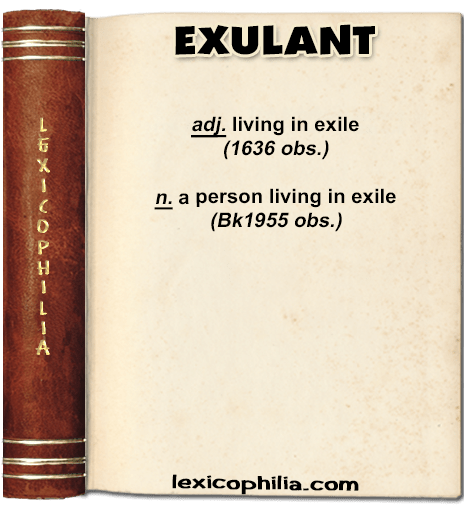
Word of the Day: EXULANT

ETYMOLOGY
from Latin ex(s)ulantem, present participle of ex(s)ulare (to be in exile

EXAMPLE
“…This Emperor made his brother Heraclius a Generall, whom he sent into the East against the Agarens with a powerfull Army. He endeavoured to put Iustinian to death who was now exulant in Cersonia: but notwithstanding all his plots to that purpose, he prevailed nothing, not could he bring his intent to any effect…”

From: The lives of all the Roman emperors being exactly collected,
from Iulius Cæsar, unto the now reigning Ferdinand the second
– Giovanni Antonio de Paoli 
Translated by Robert Basset, 1636

Word of the Day: EXHEREDATE

ETYMOLOGY
from Latin exheredat- participial stem of exheredare (to disinherit), from ex- + heredem (heir)

EXAMPLE
“…’Tis fit indeed, fortitude should be encouraged, all ages and Nations have need of it, and are made happy by it, therefore ought to reward it, and so have done, and so (for example sake) will do; but other vertues of equal merit, must not be exhaeredated, or become spurious, to advance its legitimation…”

From: A discourse and defence of arms and armory,
shewing the nature and rises of arms and honour in England, from the camp, the court, the city
By Edward Waterhouse, 1660