Word of the Day: EBRIETATING


ETYMOLOGY
from ebriety (a being intoxicated, drunkenness) + ‑ate 


EXAMPLE
“…But what we suppose conduces most to this seeming Magnanimity, is some things their Priests give them before, of an ebrietating Quality, which intoxicates their Spirits, and renders them insensible of what they are going to endure…”

From: The British Apollo, or, Curious Amusements for the Ingenious
May, 1711
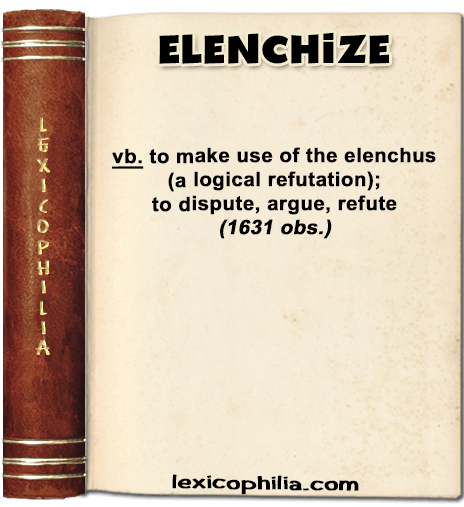
Word of the Day: ELENCHIZE


ETYMOLOGY
from elench ,from Latin elenchus, from Greek ἔλεγχος (cross-examination) + -ize


EXAMPLE
“…Lady. So do all Politicks in their Commendations.
   Host. This is a State-bird, and the verier Fly;
Tipto. But  Hear him problematize.   Prudence. Bless us, what’s that?
   Tipto. Or syllogize, elenchize.   Lady. Sure, petard’s,
To blow us up.   Lat. Some inginous strong words!
   Host. He means to erect a Castle i’ the Air,
And make his Fly an Elephant to carry it
….”

From: The New Inne, or The Light Heart, a Comedy
By Ben Jonson, 1631

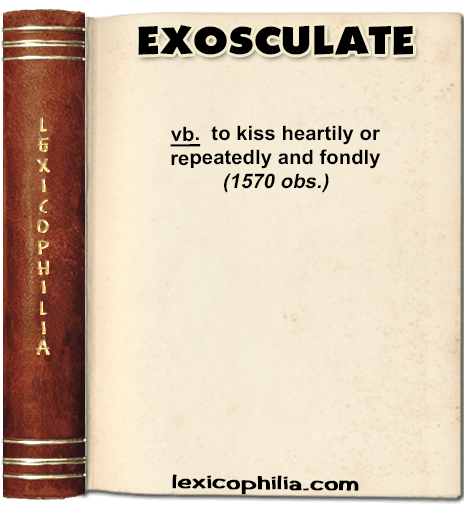
Word of the Day: EXOSCULATE


ETYMOLOGY
from participle stem of Latin exosculari, from ex- + osculari (to kiss), from osculum (a kiss)


EXAMPLE
“…And thus having copulated our plebeian endeavours, we exosculate the subumbrations of your subligacles; and sooner shall the surges of the sandiferous sea ignify and evaporate, than the cone of our duty towards you be in the least uncatenate or dissolved; always wishing you health and happiness…”

From: The Works of Jonathan Swift
By Jonathan Swift, 1814

Word of the Day: EACHWHERE


ETYMOLOGY
from each + where


EXAMPLE
“…A sely synful was she þis
For al hir synne turned in to blis
She was lyuynge in cuntre þere
Whenne ihesus preched vche where
And mony a pert myracle did
Wher wiþ to men he him kid
And mony seke he ȝaf her hele
And as he coom bi o castele
…”

From: Cursor Mundi (The Cursur o the World).
A Northumbrian poem of the XIVth century, a1400

Word of the Day: EDIBILATORY


ETYMOLOGY
badly formed on edibilis (edible),
after adjs. in –atory


EXAMPLE
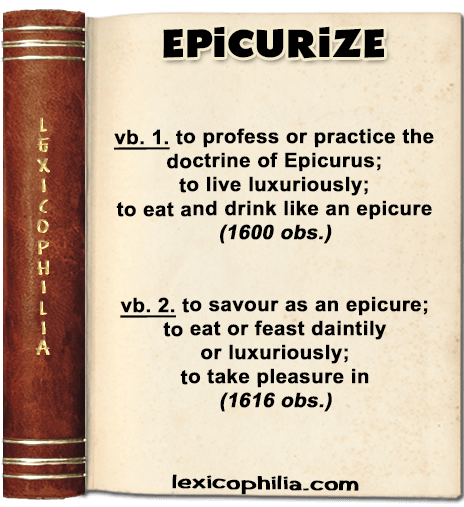
“…“Amen to your creed!” said I: “edibilatory Epicurism holds the key to all morality: for do we not see now how sinful it is to yield to an obscene and exaggerated intemperance?…”

From: Pelham, Or, Adventures of a Gentleman
By Edward Bulwer Lytton, 1828