ETYMOLOGY
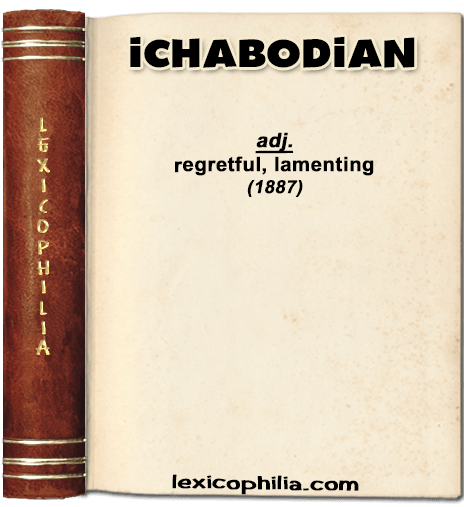
from Ichabod, the name given by Eli’s daughter-in-law to her son, used as an exclamation of regret, in allusion to 1 Sam. iv. 21
EXAMPLE
“… Dirges were sung with an Ichabodian refrain. …”
From: Daily News
December, 1887
ETYMOLOGY
from Ichabod, the name given by Eli’s daughter-in-law to her son, used as an exclamation of regret, in allusion to 1 Sam. iv. 21
EXAMPLE
“… Dirges were sung with an Ichabodian refrain. …”
From: Daily News
December, 1887
ETYMOLOGY
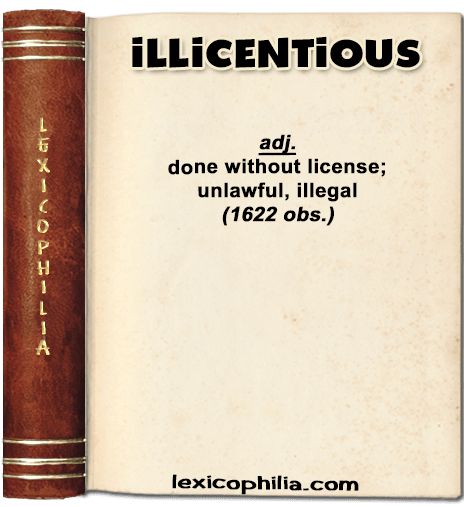
from il- + licentious (overstepping customary limits)
EXAMPLE
“… The Ciuile law, which is an abridgement, derogating many illicentious customes which grew by peruersnesse and corruptnesse of nature, and is termed Peculiar, vsed by one kind of people, called the the Imperiall Law. …”
From: Consuetudo, vel lex mercatoria, or The Ancient Law-merchant
By Gerard de Malynes, 1622
ETYMOLOGY
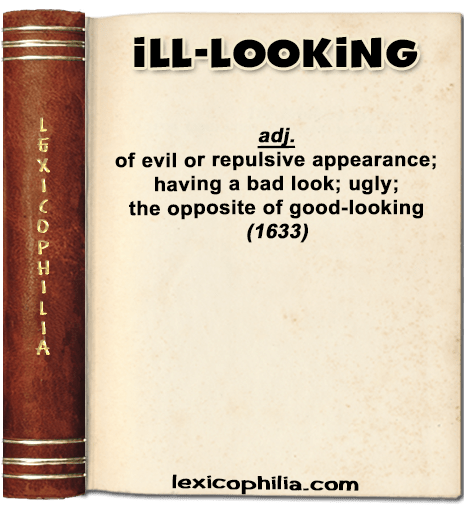
from ill (adj.) or (adv.) + looking, present participle of look (vb.)
EXAMPLE
“… That gawdy eare-wrig, or my lord your patron,
Whose pensioner you are. — I ‘le teare thy throat out,
Sonme of a cat, ill-looking hounds-head, rip up
Thy ulcerous maw, if I but scent a paper,
A scroll, but halfe as big as what can cover
A wart upon thy nose, a spot, a pimple,
Directed to my lady: it may prove
A mysticall preparative to lewdnesse. …”
From: The Broken Heart
By John Ford, 1633
ETYMOLOGY
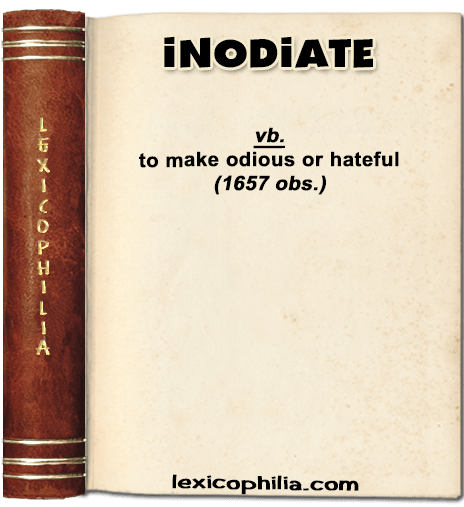
from Latin type inodiare, from in- + odium (hate)
EXAMPLE
“… And if I should appeal from Philip asleep, to Philip awake, I presume the Apologists themselves will acquit me of any odium toward Ministry; I wish some of them were not more culpable for inodiating Ministers, and censorious vilifying their persons and pains, that themselves may attract more esteem and dependencies, who (like the men of China) though they may think the Presbyterians to have one eye (as the Chinois say of the Europeans,) yet they conclude all the World beside to be blind. …”
From: Coena quasi koinē
The New-Inclosures broken down, and the Lords Supper Laid forth in common for all Church-members, having a Dogmatical Faith, and not being Scandalous
By William Morice, 1657

also INDULCIATE
ETYMOLOGY
from ppl. stem of Latin indulcare (to sweeten), from in- + dulcare (to sweeten), dulcis (sweet)
EXAMPLE
“… as guilt imbitters our comforts, it is like drinking out of a wormwood cup; so assurance would indulciate and sweeten all. …”
From: A Body of Practical Divinity
By Thomas Watson, 1759
Of Assurance.

ETYMOLOGY
from (doubtful) Latin irroborare, from ir- (ir-) + roborare (to strengthen)
EXAMPLE
They carried on, irroborated with still more black coffee.
EXAMPLE
“… Lus. A parlous melancholy, has wit enough
To murder any man, and Ile giue him meanes.
I thinke thou art ill monied.
Vin. Money, ho, ho,
Tas beene my want so long, tis now my scoffe.
Iue ene forgot what colour siluers off ….”
From: The Revenger’s Tragedie
By Thomas Middleton, 1607

ETYMOLOGY
from Latin imperfectus (imperfect), after factious, etc.
EXAMPLE
“…Come hither thou Imperfecksious slaue in
Regard of thy beggery, holde thee theres
Twoshillings for thee? to pay for the
Healing of thy left legge which I meane
Furiously to inuade or to maime at the least. …”
From: A Pleasant Conceited Historie, called The Taming of a Shrew, 1594

ETYMOLOGY
from Latin inficientem (that does nothing), from in- + facientem (doing)
EXAMPLE
“… Lent. How well thy power can shun that which
I followe with obedience. Too true yfaith;
Thou mightst as well put out the eie of day,
Or cover sinne from heaven, or to erect
A towre of sand on the uncertain surge,
Or any thing that were more inficient,
Then to remoove one doting thought of mine
From her disdain. Thy aide, deere Tulley,
Be thou an Orratour for Lentulus,
My tongue stands tund to a harsher method …”
From: Euerie Woman in her Humor
Unknown author, 1609
ETYMOLOGY
from im- + pluvious (characterized by rain, rainy) [from French pluvieux, or from Latin pluviosus (rain)]
EXAMPLE
“…Though (by the way) how that Expression should countenance an Impluvious state before the Flood, as the Latin Theory would make it, is not so clear and easie to be understood. For, if we consider, there was no Water upon that Earth, but what fell in Rain…”
From: Geologia: Or, A Discourse Concerning the Earth before the Deluge
By Erasmus Warren, 1690
 Lexicophilia