
ETYMOLOGY
? iterative of hug (vb.)
EXAMPLE
“…No no, it maketh no matter for these things, so he haue his pretie pussie to huggle withall, it forceth not, for that is the only thing he desireth…”
From: The Anatomie of Abuses
– Phillip Stubbes, 1583
ETYMOLOGY
? iterative of hug (vb.)
EXAMPLE
“…No no, it maketh no matter for these things, so he haue his pretie pussie to huggle withall, it forceth not, for that is the only thing he desireth…”
From: The Anatomie of Abuses
– Phillip Stubbes, 1583
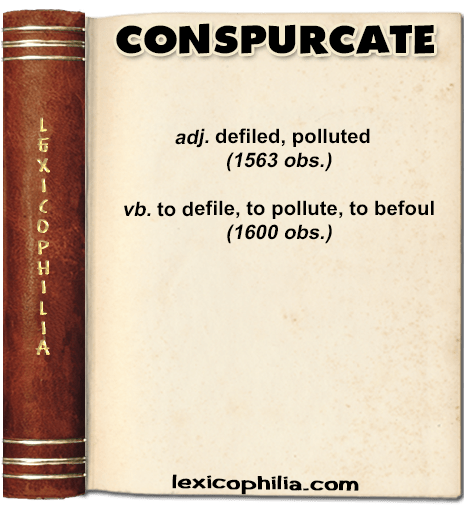
ETYMOLOGY
adjective: from Latin conspurcātus past participle
verb: from Latin conspurcāt-, participial stem of conspurcāre (to defile, pollute),
from con- + spurcāre (to befoul),
from spurcus (unclean, dirty, foul)
EXAMPLE
“…in dede I thynk they both will declare it hartely, if they should come before them. As for me, if you woulde knowe what I thynk (my good and most deare brother Laurence) bycause I am so synfull & so conspurcate (the Lord knoweth I lye not) with many greuous synnes (which yet I hope ar washed away Sanguine Christi) I neither can nor would be consulted withal, but as a siphar in augrim.…”
From: The first volume of the ecclesiasticall history contaynyng the actes and monumentes of thynges passed in every kynges tyme in this realme
– John Foxe, 1563

ETYMOLOGY
from naughty + pack
EXAMPLE
“…Calle hir a naughtie packe: withe that one woorde thou haste taken all from hir, and haste lefte hir bare and foule…”
From: A very frutefull and pleasant boke called the instructio[n] of a Christen woma[n]
By Juan Luis Vives, a1530
(translated by Richard Hyrde)

ETYMOLOGY
from Greek καλός (fair, excellent) + -ϕαντης (shower) (from ϕαίνειν to show) + -ic
EXAMPLE
“…T’is only wisht your work from Dolts, your Hiues from Drones were free:
T’is wisht in These, in Fugitiues, in Papists, and (more bad,
Whom to perswade to reason, were with reason to be mad)
In Calophantick Puritaines, amisse amendment had…”
From: Albions England
A continued historie of the same kingdome, from the originals of the first inhabitants thereof
– William Warner, 1596

ETYMOLOGY
from Latin exheredat- participial stem of exheredare (to disinherit), from ex- + heredem (heir)
EXAMPLE
“…’Tis fit indeed, fortitude should be encouraged, all ages and Nations have need of it, and are made happy by it, therefore ought to reward it, and so have done, and so (for example sake) will do; but other vertues of equal merit, must not be exhaeredated, or become spurious, to advance its legitimation…”
From: A discourse and defence of arms and armory,
shewing the nature and rises of arms and honour in England, from the camp, the court, the city
By Edward Waterhouse, 1660

ETYMOLOGY
from Neptune + -ist
EXAMPLE
“…Let euery man in his degree enioy his due; and let the braue enginer, fine Dædalist, skilfull Neptunist, maruelous Vulcanist, and euery Mercuriall occupationer, that is, euery Master of his craft and euery Doctour of his mystery, be respected according to the vttermost extent of his publique seruice or priuate industry.…”
From: Pierces Supererogation:
Or A New Prayse of The Old Asse
By Gabriell Harvey, 1593

ETYMOLOGY
from house + dove
EXAMPLE
“…safe and sounde to Rome, and euery man riche and loden with spoyle: then the hometarriers and housedoues that kept Rome still, beganne to repent them that it was not their happe to goe with him…”
From: The Liues of the Noble Grecians and Romanes
– Plutarch
– Translated by Thomas North, 1579

ETYMOLOGY
– from Latin opitulārī (to bring aid, to assist),
from op-em (aid) + tul- (to bring)
EXAMPLE
“…A conserve to opitulate & helpe the digestione, of the stomacke…”
From: The Boock of Physicke
Wherin … Most of Them Selected, and Approved Remedyes, for All Corporall Diseases, and Sicknesses, which Out of Manye Highe, and Common Persons Written Physick-boockes, are Compacted, and United Together
By Oswald Gäbelkover, 1599
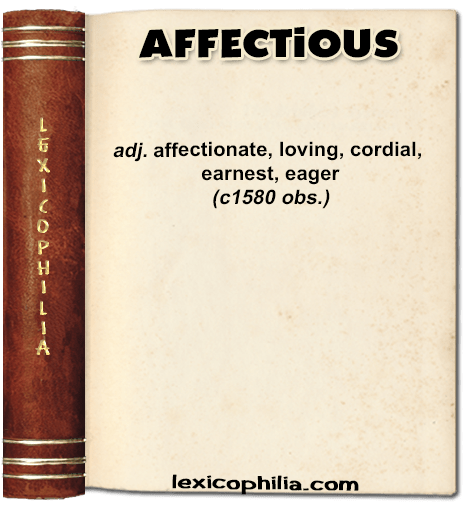
ETYMOLOGY
– from affection on analogy of caution, cautious, action, actious, etc.
EXAMPLE
“…and geif ze think it meit, I pray zou, wryt ane afectious letter to my mother, that scho may mak delygens…”
From: Memoirs of the Maxwells of Pollok
By William Fraser, 1863
“Lady Elizabeth Maxwell to Sir John Maxwell of Pollok, 23d July, c. 1580”
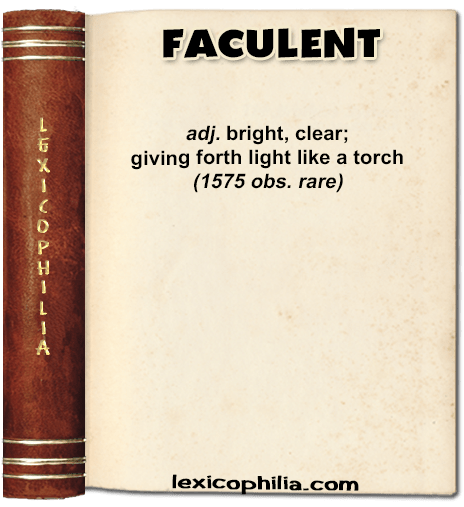
ETYMOLOGY
from medieval Latin faculentus, from facula, fax (torch)
EXAMPLE
“…Als it is red in storyis ancient,
Thocht it be not in ald nor new Testament.
How that Vergill that worthie wise doctour,
In latin toung was ane most faculent,
Nane mair pregnant, facund, nor eminent,
To writ, or dyit, he was of Clerkis flour…”
From: Ane Treatise callit the Court of VENVS,
deuidit into four Buikis,
Newlie Compylit be IOHNE ROLLAND in Dalkeith, 1575
 Lexicophilia