Word of the Day: MALT-HORSE

ETYMOLOGY
from malt + horse

EXAMPLE
“…And bicause he passeth certain limites of a meane, that Reckelesness of his is curious, and not comly, and is a thing that commeth cleane contrarye to passe from the dryfte, (that is to wit) to cover arte. Therfore I judge it a no lesse vyce of curiositye to be in Reckelesness (which in it selfe is prayse worthye) in lettynge a mans clothes fal of his backe, then in Preciseness (whiche likewise of it self is praise worthy) to carie a mans head so like a malthorse for feare of ruffling his hear, or to keepe in the bottom of his cappe a looking glasse, and a comb in his sleeve, and to have alwayes at his heeles up and down the streetes a page with a spunge and a brushe: …”

From: The First Book of the Courtier
By Baldassare Castiglione
Translated by Thomas Hoby, 1561

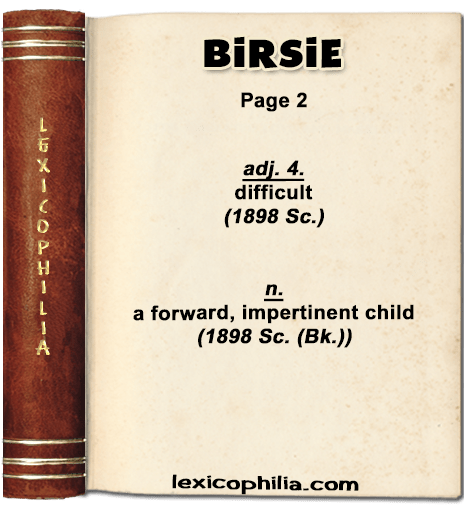
Word of the Day: BIRSIE

ETYMOLOGY
adj. 1. from birse (Sc. – a bristle, hair) + -y
n. from birse (Sc. – to push, to press, to squeeze) + -y

EXAMPLE
“…The mekill howke hym bair was Tryton callyt,
For in hir forstam was the monstre stallyt,
With watry trumpe fleyand the fludis gray;
Quhar as scho salyt, men mycht se hym ay
With  
byrsy body porturyt, and vissage
All rowgh of harys, semyng of cullage
In mannys form fra hys cost to hys crown,
…”

From: Virgil’s Aeneid translated into Scottish verse
By Gavin Douglas, a1522

Word of the Day: IMPERFECTIOUS

ETYMOLOGY
from Latin imperfectus (imperfect), after factious, etc.

EXAMPLE
“…Come hither thou Imperfecksious slaue in
Regard of thy beggery, holde thee theres
Twoshillings for thee? to pay for the
Healing of thy left legge which I meane
Furiously to inuade or to maime at the least.
…”

From: A Pleasant Conceited Historie, called The Taming of a Shrew, 1594

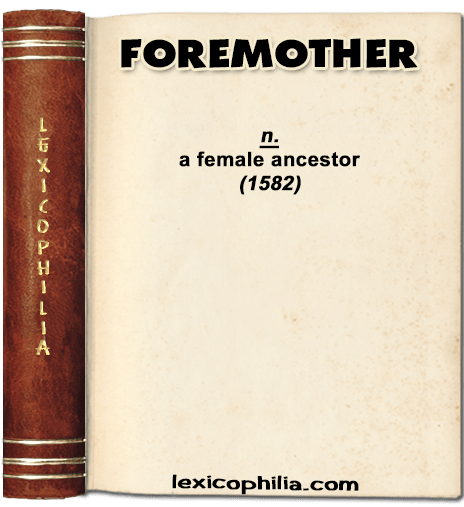
Word of the Day: FOREMOTHER

ETYMOLOGY
from fore- (prefix) + mother, after forefather

EXAMPLE
“…Finallie the admirable humilitie, and inuincible patience and constancie in all aduersities and persecution euen to the death and martyrdome, of Iepthas daughter, Susanna, the mother of the seuen brethren, and women of the Machabites, and manie other: that looking in this glasse of the holie liues of their foremothers, they may christianlie conforme and adorne themselues after their good examples, and become for their rare vertues verie beautifull spouses in the fight of their spirituall bridegroome Iesus Christ: to whom, as the kings daughters, they may appeere all glorious within, …”

From: The Monument of Matrones Conteining Seuen Seuerall Lamps of Virginitie, or Distinct Ttreatises
Compiled by Thomas Bentley, 1582

Word of the Day: INFICIENT

ETYMOLOGY
from Latin inficientem (that does nothing), from in- + facientem (doing)

EXAMPLE
“… Lent. How well thy power can shun that which
I followe with obedience. Too true yfaith;
Thou mightst as well put out the eie of day,
Or cover sinne from heaven, or to erect
A towre of sand on the uncertain surge,
Or any thing that were more inficient,
Then to remoove one doting thought of mine
From her disdain. Thy aide, deere Tulley,
Be thou an Orratour for Lentulus,
My tongue stands tund to a harsher method
…”

From: Euerie Woman in her Humor 
Unknown author, 1609

Word of the Day: AMPLECT

ETYMOLOGY
from Latin amplecti (to embrace, clasp), from amb- (about) + plectere (to plait, twine)

EXAMPLE
“...With what ioy Charles the people the amplect
Theyr ryght great ioyes done playnly testifye
Mixed with swete sownes of many a sect
Some sownyng trumpes and clarions wonders hye
Some other syngynge most melodiously
Some vpon lutes some vpon harpes play
The to reioyce in all that euer they may
….”

From: Anonymous translation of Latin verses by William Lily, 1522
“Of the tryumphe and the verses that Charles th’emperour and the most myghty redouted kyng of England Henry_the_.viii. were saluted with passyng through London”

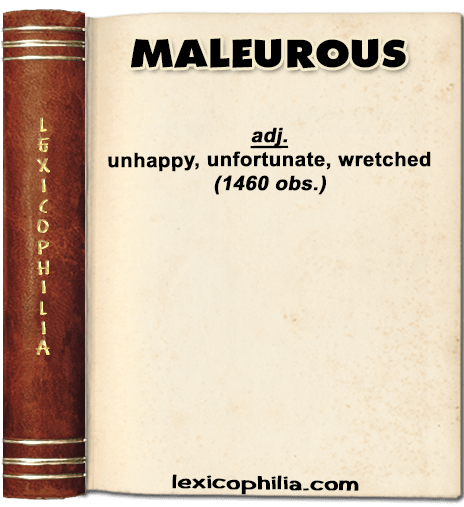
Word of the Day: MALEUROUS

ETYMOLOGY
from middle French maleureusmaleureux, modern French malheureux (unfortunate, unhappy, wretched; from maleur (ill fortune, misfortune) + ‑eus (‑ous) 

EXAMPLE
“…And seithe: “O,” seith he, “tho people bene passinge evreux whan there is a kinge of goode dis
crecioun and of goode counseill and wise in sciencez. And gretly bene the people malevreux whanne any of thise thingis abovesaide fauten in a kinge.”
…”

From: Translation of The Dicts and Sayings of the Philosophers, a1661
By Curt Ferdinand Buhler, Early English Text Society, 1941

Word of the Day: OVER-MONEY

ETYMOLOGY
from over- (prefix) + money; humorous usage after undermine (to work secretly or stealthily against)

EXAMPLE
“…At Preston in Andernesse, August 17. 1648. Duke Hambleton resolving to play an Aftergame of Loyalty, entred England with an Army more numerous then well Disciplined. Most beheld him as one rather cunning than wise, yet rather wise, than valiant. However he had Officers who did Ken the War-craft, as well as any of our Age. He would accept of no English Assistance, so to engrosse all the work and wages to himself. Some suspect his Officers trust was undermined, (or over-moneyed rather) whilst others are confident, they were betrayed by none save their own security. …”

From: The History of the Worthies of England
By Thomas Fuller, a1661

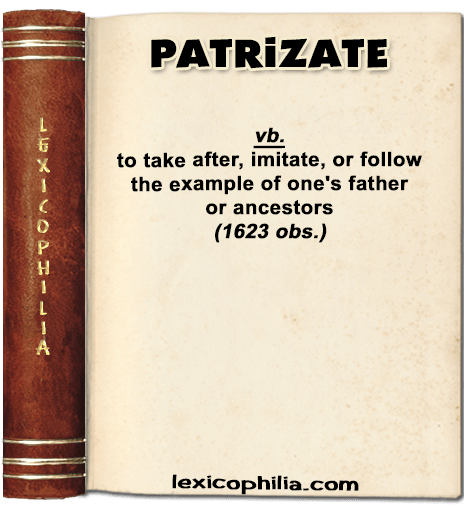
Word of the Day: PATRIZATE

ETYMOLOGY
from Latin patrissat- patrizat-, past participial stem of patrissare, patrizare (to act like or take after one’s father)

EXAMPLE
“…One was Walter Devereux Earl of Essex, who made him his bosome-friend, and the said Earl, lying on his death-bed, took his leave of him with many kisses, Oh my Ned (said he) farewell, thou art the faithfullest and friendliest Gentleman that ever I knew. In testimony of his true affection to the dead Father in his living Son, this Gentleman is thought to have penned that most judicious and elegant Epistle and presented it to the young Earl, conjuring him by the cogent arguments of example and rule, to patrizate. …”

From: The History of the Worthies of England
By Thomas Fuller, 1662