Word of the Day: LABION


ETYMOLOGY
from Latin labion-labio  also Latin labeon-labeo (a person who has large lips)
from labealabia ‑o


EXAMPLE
“…for it must necessarily be a meanes to hinder their speech by thickning their lips, as experience teacheth in those who either by Nature or by accident have thick, swoln, blabber lips, causing them to speak in their mouth, uttering their words very baldly and indistinctly, and assuredly the same or worse must befall these artificiall Labions, for their Lips must needs hang in their light, and their words stick in the birth, when such unwealdy Pourers out of speech occasion a hinderance to their delivery …”

From: Anthropometamorphosis: = Man Transform’d:
Or, The Artificiall Changling
By John Bulwer, 1653

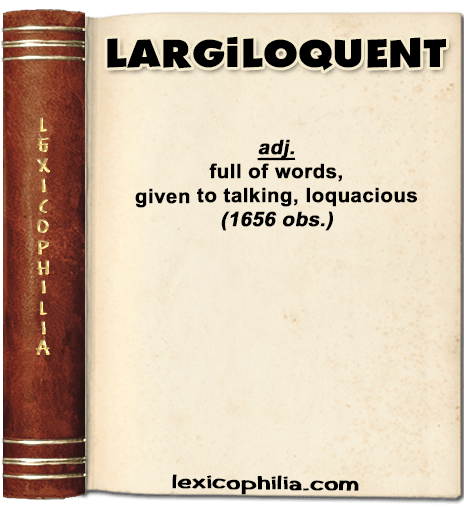
Word of the Day: LOCOMOVE


ETYMOLOGY
from Latin loco, ablative of locus (the place in which something is situated or occurs) + move


EXAMPLE
“…A Journey in a Postchaise
To his Brother
Passenham, July 16, 1792

Dear Brother, – It is high time you should know something about us and our locomotions. To-morrow morning, at six of the clock, we begin to loco-move towards Bitteswell
…”

From: Recreations and Studies of a Country Clergyman of the Eighteenth Century
By Thomas Twining (letter)

Word of the Day: LONGINQUE


ETYMOLOGY
from Latin longinquus (situated at a distance, remote, of time or distance: long, distant),
from longe (far) + a suffix also seen in propinquus (close at hand, neighbouring)


EXAMPLE
“…Of the Iles of the Gentiles in IAPHETS portion: of BEROSVS his too speedie seating GOMER the sonne of IAPHET in Italie; and another of IAPHETS sonnes TVBAL in Spaine: and of the antiquitie of Longinque Nauigation….”

From: the first part of The History of the World
By Sir Walter Raleigh, 1614

Word of the Day: LONG-TONGUED


ETYMOLOGY
from long + tongued


EXAMPLE
“…And tyme hathe this one vngracious propertee,
   to blab at length open all that he doothe see.
   Than a daughter eke he hath called veritee,
   As vnhappie a longtounged girle as can bee.
   she bringeth all to light, some she bring[eth] to shame,
   she careth not a grote what manne hathe thanke or blame.
   yf men be praise worthie she dothe so declare them
   And if otherwyse in faithe she dothe not spare them
…”

From: Respublica: an interlude for Christmas
Attributed to Nicholas Udall, 1553

Word of the Day: LIFESOME


ETYMOLOGY
from life (n.) + -some


EXAMPLE (for adj. 1)
“…If badd, how happ’s that none his hurtes disproue?
If willingly I burne, how chance I waile?
If gainst my will, what sorrow will auaile?
liuesome death, O sweete and pleasant ill,
Against my minde how can thy might preuaile?
If I bend backe, and but refraine my will,
If I consent, I doe not well to waile
…”

From: ἐκατομπαθία: The Hekatompathia or Passionate Centurie of Loue
By Thomas Watson, 1582

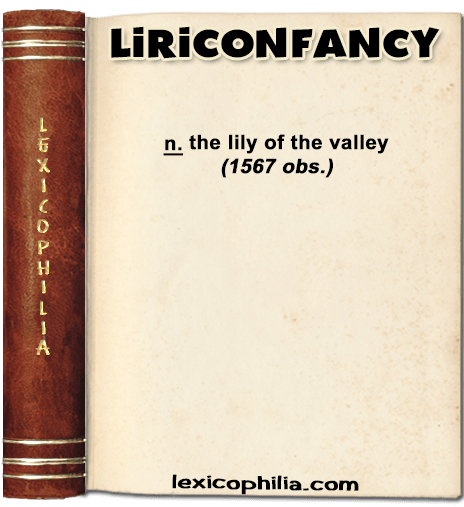
Word of the Day: LIRICONFANCY


ETYMOLOGY
alteration of Latin lilium convallium (lily of the valleys), influenced by fancy


EXAMPLE
“…Of Liricumancie.
Liricumfancie, or as other iudge May Lilie, for resemblace alike: It hath his flowre verie white. In Greeke it is called Ephemeron, for his short continuance and daylie dying
…”

From: A Greene Forest
By John Maplet, 1567