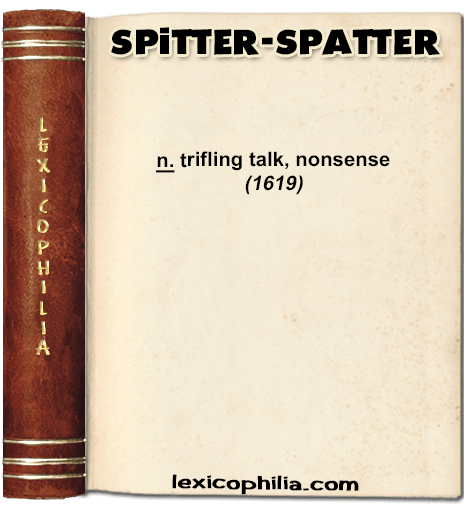
Word of the Day: SPITTER-SPATTER


ETYMOLOGY
from spatter (to scatter or disperse in fragments)


EXAMPLE
“...Or when the court removes, or what’s a clock,
Or where’s the wind (or some such windy mock)
With such fine scimble, scemble, spitter-spatter,
As puts me clean besides the money-matter?
Thus with poor mongrel shifts, with what, where when?
…”

From: A Kicksey Winsey: Or, A Lerry Come-Twang
By John Taylor, 1619
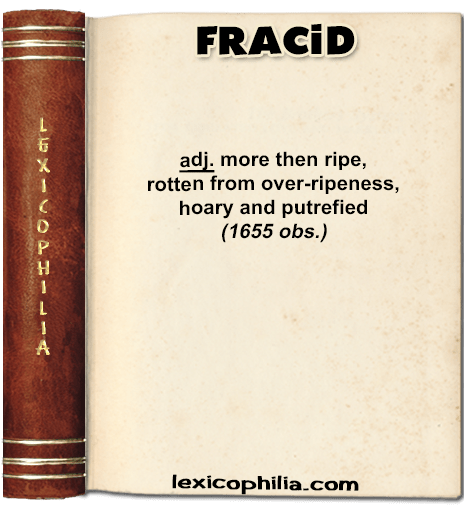
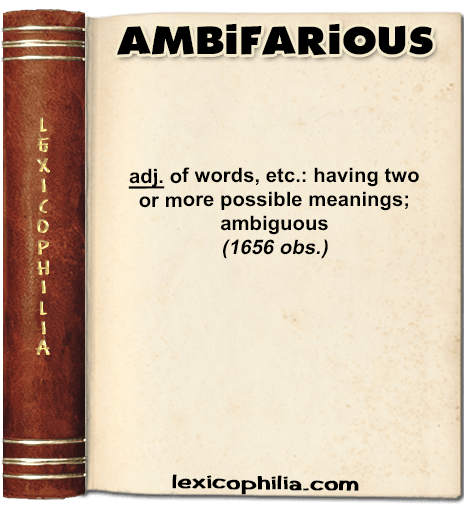
Word of the Day: AMBIFARIOUS


ETYMOLOGY
from Latin ambifarius two-sided, of double meaning + -ous


EXAMPLE
“…The Bridegroom, with his Bride is brought,
To Bed with various Turn of Thought;
By Ruth, with ambifarious Jest:
To please them both, she thinks it best
…”

From: Poems on Various Subjects,
By Thomas Sadler, 1766
The Unfortunate Batchelor, Or Wife’s Resentment

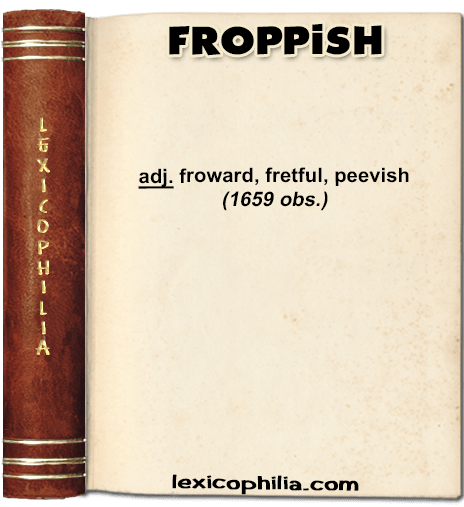
Word of the Day: FROPPISH


ETYMOLOGY
? from frop, variant of frap (to strike, to beat) + -ish


EXAMPLE
“…God doth usually, if not constantly, break their wills by de∣nying them, as one would cross a froward. Child of his stub∣born humour: or else puts a sting into them, that a man had been as good he had been without them, as a man would give a thing to a froppish Child, but it may be with a knock on his Fingers, and a frown to boot.…”

From: Christian letters full of spiritual instructions tending to the promoting of the power of godliness, both in person and families.
By Joseph Alleine, 1659

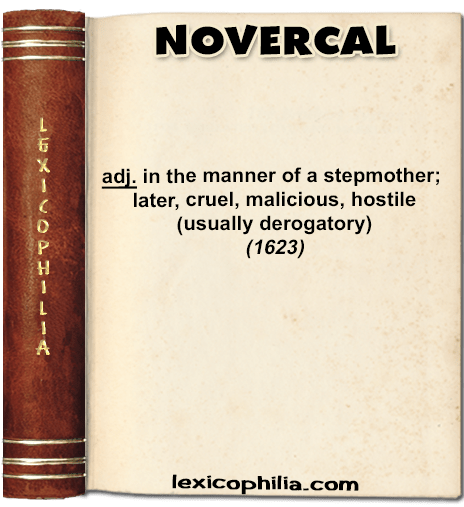
Word of the Day: NOVERCAL


ETYMOLOGY
from Latin novercalis (characteristic of a stepmother),
from noverca stepmother + -ālis (-al)


EXAMPLE
“…But Fortune that lends her smiles as Exctors do mony, to undoe the Debtor, soone cald for the Principall and Interest from this Prince, to whom she was meerly Novercall, and he might well call her with the expert Heros …”

From: The History of the Life and Reigne of Richard the Third
By Sir George Buck, 1646

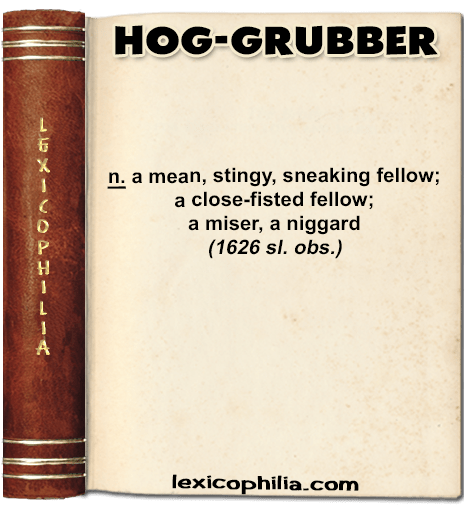
Word of the Day: HOG-GRUBBER


ETYMOLOGY
from hog + grubber (a person who gets wealth by sordid or contemptible methods)


EXAMPLE
“…The next that in our little Ease,
Came to be bit with Lice and Fleas,
Was a spruce Knave, like none of these, But sober,

As the Strand May-pole, – he did go,
In russe, – His thumb th’row ring, did show
A Gentleman seal’d, – for he was no Hog-grubber:

It was a Petty-fogging Varlet,
Whose back worse freez, but burn no scarlet,
And was tane napping with his Harlot, At noddy: …”

From: The Counter-Scuffle
Whereunto is added, the Counter-Ratt
By Robert Speed, 1626

Word of the Day: PEDISSEQUOUS


ETYMOLOGY
from Latin pedisequus (following on foot, a foot-follower), 
from pedi- (foot) + -sequus (following), sequī (to follow)


EXAMPLE
“…not onely melancholical and contumacious ones, but viscid and pituitous also, which sometimes put on the habit of Melancholly, and some adust bilious humours: and therefore we adde Rhabarb and Turbith, that we may with the Melancholical Captain-humour, educe the Pituitous, his companion inseparable, and also the Bilious, which is pedissequous.
And because this Medicament most respects melancholy, we have selected black Hellebore for this black humour; rejecting the white, as more convenient for Phlegm…”

From: A Medicinal Dispensatory: Containing the Whole Body of Physick
By Jean de Renou
Translated by Richard Tomlinson, 1657
The Apothecaries Shop: Of Liquid Electuaries

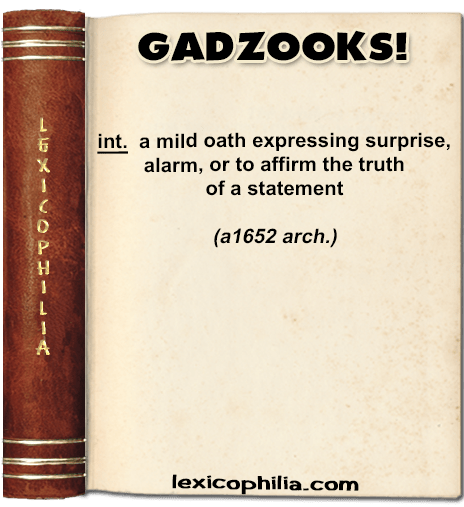
Word of the Day: GADZOOKS!


ETYMOLOGY
from gad (used to express strong feeling) + zooks (origin unknown)


EXAMPLE
“…Buz. Ile first take tother cup, and then out with’t altogether—And now it comes—If my Mistress do bring him home a bastard, she’s but even with him.

Nat. He has one I warrant. Has he cadzooks?…”

From: The English Moor or the Mock-Marriage,
in Five Nevv Playes, viz. The English Moor. The Love-sick Court. Covent Garden Eeeded. The New Academy. The Queen and Concubine,
By Richard Brome, 1659