Word of the Day: THRUMBLE

ETYMOLOGY
vb. 1: of uncertain origin
vb. 2, 3, 4: apparently from thrum (to press, to condense) + -le
vb. 5: apparently from thrum (to play on a stringed instrument) + -le

EXAMPLE (for vb.3)
“…PETER, quho was ever maist sudden, answers, and sayis: Thou art thrumbled and thrusted be the multitude, and ʒit thou speeris quha hes twitched thee, hee answers againe and he sayis, it is not that twitching that I speak of: It is ane vther kinde of twitching …”

From: Sermons vpon the Sacrament of the Lords Supper
By Robert Bruce, ?1591
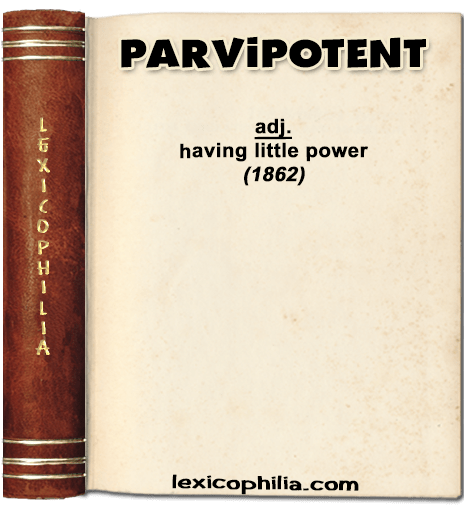
Word of the Day: PARVIPOTENT

ETYMOLOGY
from parvi- comb. form + potent (powerful, having great authority or influence)

EXAMPLE
“…It is called his causal body. Neither can do anything without one. The aggregate of the causal bodies of all souls, that is to say, distributive ignorances, make up I’s’wara’s causal body, which is illusion. Strange to say, the ignorance of a single soul renders that soul subject to misapprehension, and keeps it parviscient, parvipotent, &c; but the aggregation of these individual ignorances, or illusion, allows I’s’wara to be exempt from misapprehension, and communicate to him such attributes as omniscience and omnipotence …”

From: A Rational Refutation of the Hindu Philosophical Systems
By Nehemiah Nilakantha S’Astri’ Gore
Translation by Fitz-Edward Hall, 1862

Word of the Day: PAINTRIX

ETYMOLOGY
from paint + -trix 

EXAMPLE
“…
Quarters wages for Midsomer, anno Regni Regis Edwardi sexti Primo. [a.d. 1457.]…

On leaf 27, back, are
per Cade Item, to Anthony Totto, Painter … … … vj li v s
Item, to Barthilmewe Penne, Painter … … … vj li v s
Item, to Misteris levyn Terling, Paintrix … … xli
…”

In Thomas Vicary’s ‘The Anatomie of the Bodie of Man‘, 1547
Published by Early English Text Society, 1888

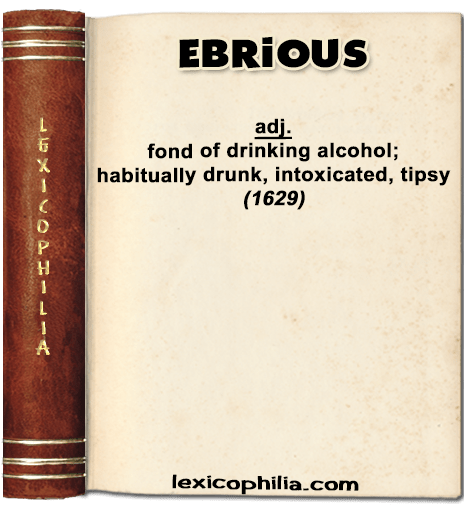
Word of the Day: EBRIOUS

ETYMOLOGY
from Latin ebrius (drunk intoxicated_ + -ous

EXAMPLE
“…This branded and illegall witnesse then, being at the very best a forraigner, doth only marre, not helpe their cause: The second was but an Anglo-Belgicus, a dissolute, ebrious and luxurious English-Dutchman…”

From: The Church of Englands Old Antithesis to New Arminianisme 
By William Prynne, 1629

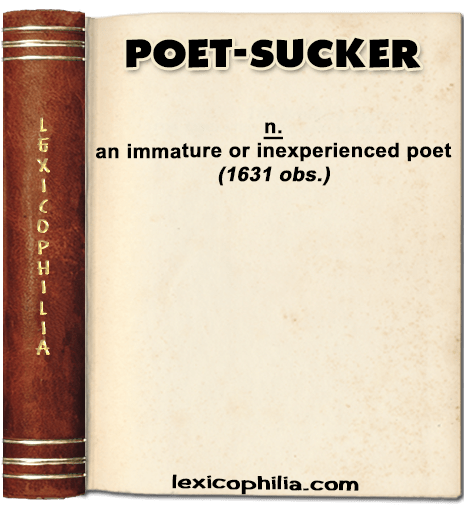
Word of the Day: POET-SUCKER

ETYMOLOGY
from poet + sucker (a greenhorn, a simpleton)

EXAMPLE
“…But gi’ me the man can start up a Justice of Wit out of six-shillings beer, and give the law to all the poets and poet-suckers i’ town. Because they are the players’ gossips? ‘Slid, other men have wives as fine as the players’, and as well dressed. Come hither, Win. …”

From: Bartholmew Fayre, A Comedie
By Ben Jonson, 1631

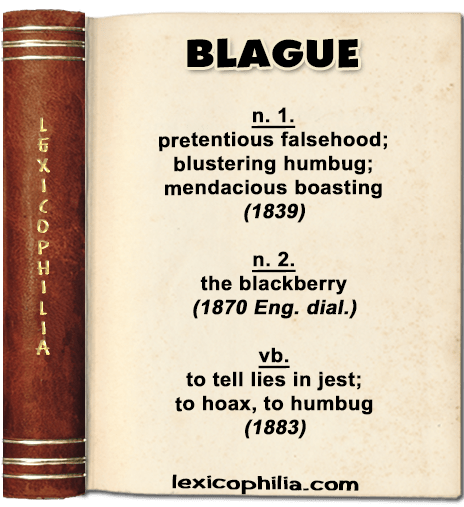
Word of the Day: BLAGUE

ETYMOLOGY
noun: from the French
verb: French blaguer, from the noun

EXAMPLE
“…In later editions of The French Revolution Carlyle did not alter a word of his original account. Instead, he added directly to the main text a new concluding paragraph correcting Barere’s story, which he terms a ‘masterpiece; the largest, most inspiring piece of blague manufactured, for some centuries, by any man or nation. As such, and not otherwise, be it henceforth memorable’…”

From: The French Revolution
By Thomas Carlyle, 1839

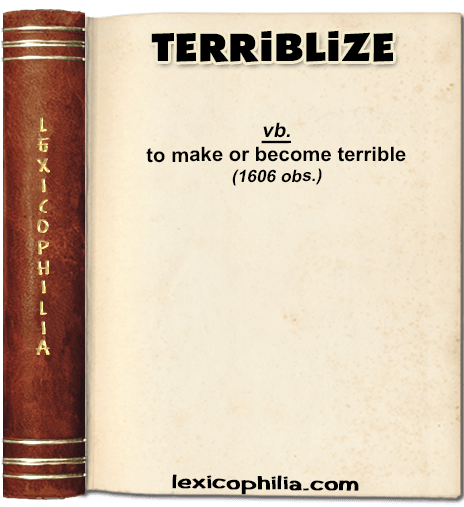
Word of the Day: TERRIBLIZE

ETYMOLOGY
from terrible + -ize

EXAMPLE
“…Both Camps appoach, their bloudy rage doth rise,
And even the face of Cowards 
terriblize;
New Martial heat inflames their mindes with ire,
Their bloud is moov’d, their heart is all on fire.
Their cheerfull limbs (seeming to march too slowe).
Longing to meet, the fatall drums out-goe;
And even already in their gesture fight:
Th’ iron-footed coursers, lusty, fresh, and light,
…”

From: Du Bartas his Deuine Weekes and Workes translated
By Guillaume de Salluste Du Bartas
Translated by Josuah Sylvester, 1606

Word of the Day: MOTABLE

ETYMOLOGY
from late Latin motabilis (mobile, moving), from Latin motare (to set in motion, keep moving) (from mot-, past participial stem of movere (to move)) + -abilis (-able)

EXAMPLE
“…The heat had, also, made the whole atmosphere tremulous and visible, so that the outline of towers, turrets, and majestic edifices of stone and marble, was fluttering and motable as if an etherial sea of some subtle fluid, with trembling waves and a constant, rippling motion, was flowing and dancing over it. …”

From: The Ladies’ Companion
A Monthly Magazine Embracing Every Department of Literature
Volume XIV, Printed 1841
‘The English Family; Or, Who Are They? ‘
A Sketch by Joseph Holt Ingraham