
ETYMOLOGY
from Latin nequient-, nequiens, present participle of nequire (to be unable)
EXAMPLE
I am, and probably always will be, nequient in the musical arts.
ETYMOLOGY
from Latin nequient-, nequiens, present participle of nequire (to be unable)
EXAMPLE
I am, and probably always will be, nequient in the musical arts.

ETYMOLOGY
from Latin utibilis, from utor (to use, employ)
EXAMPLE
“…Proposals by the Utible Society, for the Insurance on Marriages, by a weekly Dividend,
at the office, next door to the blue boar, over-against the half moon tavern in Aldersgate street…”
(Book title)
From: Example book title (above), ?1711
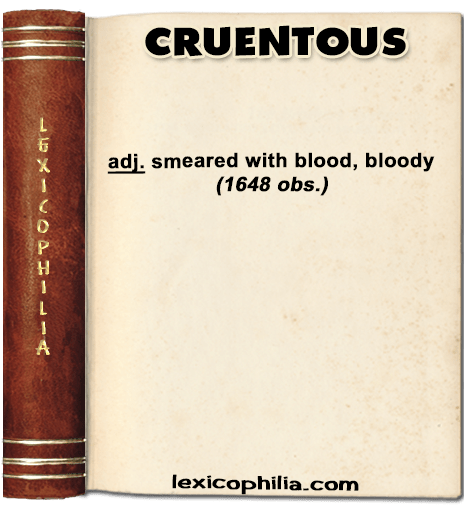
ETYMOLOGY
from Latin cruentus (bloody) + -ous
EXAMPLE
“…Thus a cruell and most cruentous civill war began which lasted neer upon foure yeers without intermission, wherin there happen’d more battailes, sieges and skirmishes, then passed in the Netherlands in fourescore yeers, and herein the Englishmen may be said to get som credit abroad in the world, that they have the same blood running in their veines (though not the same braines in their sculls) which their Ancestors had, who were observed to be the activest peeple in the field, impatient of delay, and most desirous of battaile then any Nation…”
From: A Venice Looking-Glasse
By J.B.C., 1648

ETYMOLOGY
from cormorant (a greedy or rapacious person)
EXAMPLE
“…There would be many money-cormorants, and their profit great….”
From: The Scales of Commerce and Trade
By Thomas Willsford, 1660
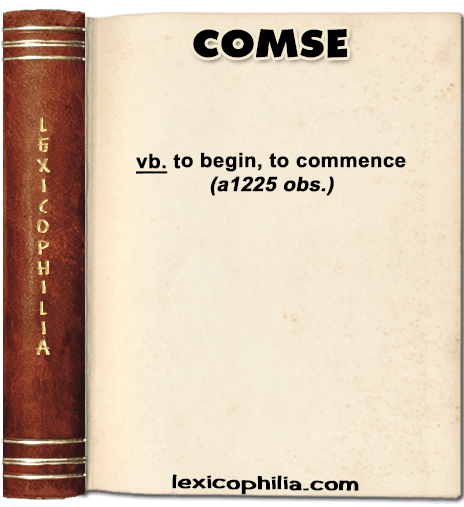
ETYMOLOGY
shortened by-form of commence
EXAMPLE
“…Her cumſeð þe uie of seinte iuliane. ant telleð of liflade hire…”
From: Þe Liflade of St. Juliana (The Life of St. Juliana)
(Royal Manuscript), a1225

ETYMOLOGY
from Latin pedestr-, pedester, also pedestris (going on foot), in prose, prosaic
(from pedes a person who goes on foot
(from ped-, pēs (foot) + -es (after eques) + -ter + -al
PRONUNCIATION
puh-DESS-tree-uhl
EXAMPLE
“…For, the formall esteemed causes (which are pedestriall, equestriall, or nauti∣call) stand either at the disposition of the efficient; or pretend perfection and vse from the finall…”
From: An Essay of the Meanes Hovv to Make our Trauailes, into Forraine Countries,
the More Profitable and Honourable
By Sir Thomas Palmer, 1606
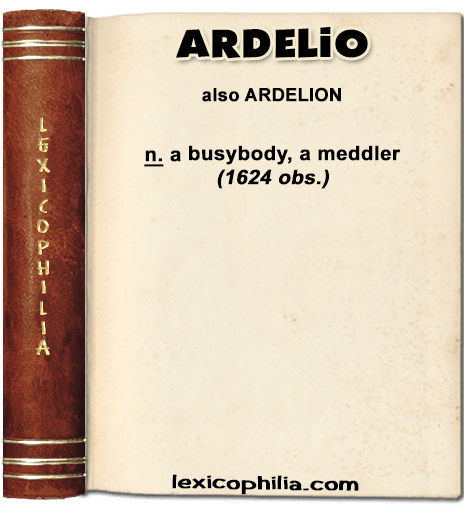
ETYMOLOGY
from Latin ardelio, from ardere (to burn, be eager or zealous)
EXAMPLE
“…we run, ride, take indefatigable pains, all up early, down late, striving to get that which we had better be without, (Ardelion’s busybodies as we are) it were much fitter for us to be quiet, sit still, and take our ease…”
From: The Anatomy of Melancholy
By Robert Burton, 1624
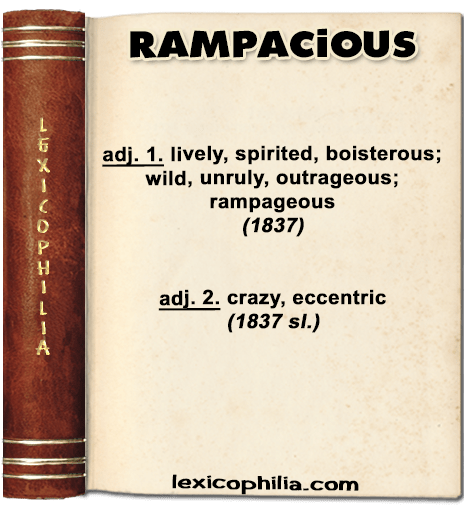
ETYMOLOGY
variant of rampageous, after adjectives ending in -acious
EXAMPLE
“…In the main street of Ipswich, on the left-hand side of the way, a short distance after you have passed through the open space fronting the Town Hall, stands an inn known far and wide by the appellation of the Great White Horse, rendered the more conspicuous by a stone statue of some rampacious animal with flowing mane and tail, distantly resembling an insane cart-horse, which is elevated above the principal door…”
From: The Pickwick Papers
By Charles Dickens, 1836

ETYMOLOGY
from Latin falsiloquus (from falsus (false) + loqui (to speak)) + -ence
EXAMPLE
“…And that their Mutual Forces Join’d,
Harnass’d with Wit so much refin’d;
And so adorn’d instead of Sense,
With Trappings of Falsiloquence,
Might draw misjudging Fools to be,
In Love with their Sincerity;…”
From: The Fifth and last Part of Vulgus Britannicus
By Edward Ward, 1710

ETYMOLOGY
from each + where
EXAMPLE
“…A sely synful was she þis
For al hir synne turned in to blis
She was lyuynge in cuntre þere
Whenne ihesus preched vche where
And mony a pert myracle did
Wher wiþ to men he him kid
And mony seke he ȝaf her hele
And as he coom bi o castele…”
From: Cursor Mundi (The Cursur o the World).
A Northumbrian poem of the XIVth century, a1400
 Lexicophilia