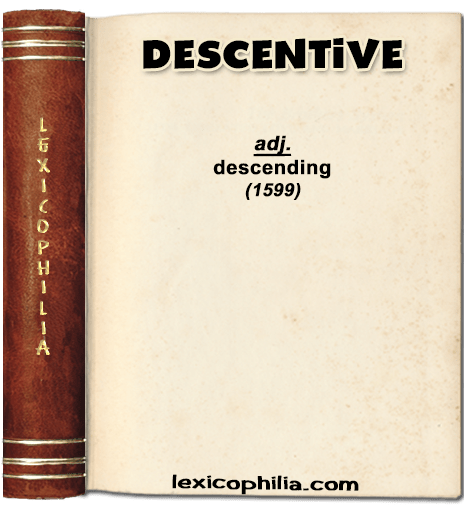
Word of the Day: DESCENTIVE

ETYMOLOGY
from descent + -ive

EXAMPLE
“… howsoeuer I purpose not in the like nice respect to leape ouer the laudable petigree of Yarmouth, but will fetch her from her swadling clouts or infancy, & reueale to you when and by whom she was first raught out of the oceans armes, and start vp and aspired to such starry sublimitie ; as also acquaint you with the notable immunities, franchises, priuileges she is endowed with beyond all her confiners, by the discentiue line of kings from the conquest. …”

From: Lenten Stuffe
By Thomas Nashe, 1599
The Praise of the Red Herring

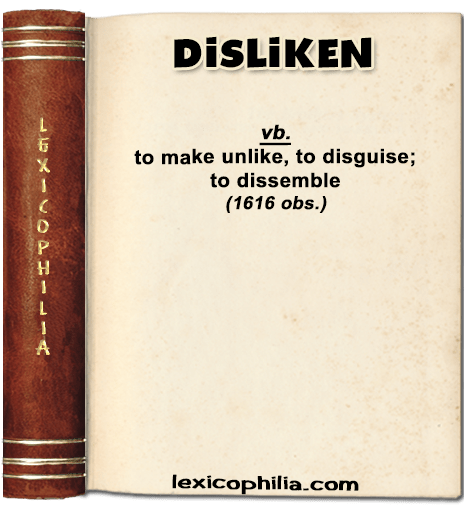
Word of the Day: DISLIKEN

ETYMOLOGY
from dislike (adj.) + -en, after likeliken

EXAMPLE
“… Dis-mantle you, and (as you can) disliken
The truth of your owne seeming, that you may
(For I do feare eyes ouer) to Ship-boord
Get vndescry’d.
…”

From: Mr. William Shakespeares Comedies, Histories, and Tragedies
By Wiliam Shakespeare, 1632
The Winters Tale, a1616

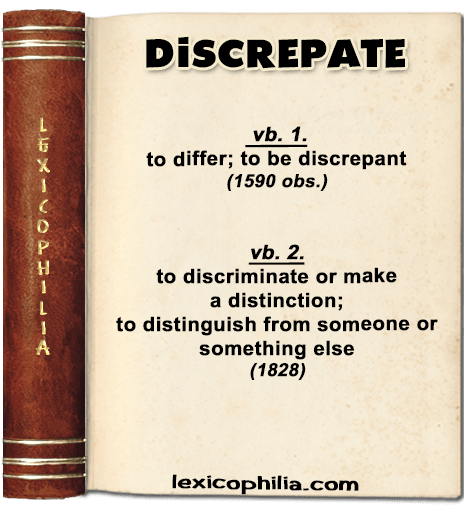
Word of the Day: DISCREPATE

ETYMOLOGY
from Latin discrepat-, past participial stem of discrepare (to differ in sound, to be out of tune, to be out of harmony or inconsistent with, to have differences or discrepancies, to lack agreement, to differ in opinion, to disagree,
from dis- + crepare (to make a noise, to creak)

EXAMPLE (for vb. 1.)
“… So that discrepating from his first propertie, vtterly corrupteth, decayeth, becommeth absumpt in the degree of death. …”

From: The Flower of Phisicke
By William Clever, 1590

Word of the Day: DECUMANAL

ETYMOLOGY
from Latin decumanus (very large, immense; usually of waves) + -al

EXAMPLE
“… till in the closure of the luxuriant period, the decumanal wave of the oddest whimzy of al, enforced the charmed spirits of the auditory (for affording room to its apprehension) suddenly to burst forth into a laughter; which commonly lasted just so long, as he had leasure to withdraw behind the skreen, shift off with the help of a Page, the suite he had on, apparel himself with another, and return to the stage to act afresh; for by that time their transported, disparpled, and sublimated fancies, by the wonderfully operating engines of his solacious inventions, had from the hight to which the inward scrues, wheeles, and pullies of his wit had elevated them, descended by degrees into their wonted stations, he was ready for the personating of another carriage; …”

From: Εκσκυβαλαυρον [Ekskybalauron]: or, The Discovery of a Most Exquisite Jewel, More Precious Then Diamonds Inchased in Gold, the Like Whereof Was Never Seen in Any Age
By Thomas Urquhart, 1652
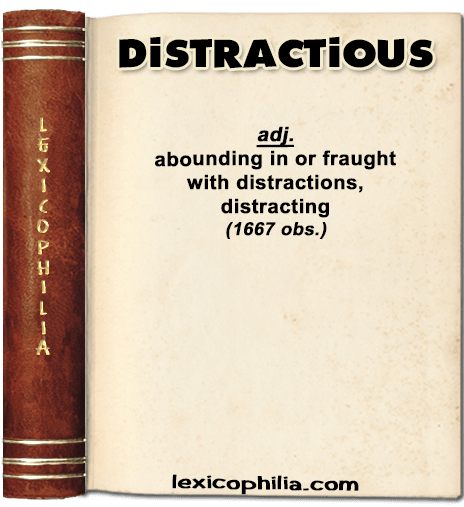
Word of the Day: DISTRACTIOUS

ETYMOLOGY
from distraction + -tious

EXAMPLE
“… There were indeed bruits of fear, and there were companies of suspicious persons who at the best, live upon the vices of the Nation, and who like Coasters ride out at Sea, to expect prey from wrecks, and small Boats which they can Master and prey upon, such Cormorants of pillage and snaps of ruine My Lodgings were an eminent instance of before they were burned yet open violence there was none to speak of, but much even of exemplary Justice, and charitable Mercy, In the time of the Fires raging, and of the distractious impetuosity; which I write not to vindicate the dissolute Multitude of pretended Labourers, and other instruments of carriage (who exhansed the rates of their own portadge, while perhaps their Wives, Children, and Servants, or some of them, were busie at other work, all becoming theirs which their hook could reach, or their Net drag away.) …”

From: A short narrative of the late dreadful fire in London
By Edward Waterhouse, 1667

Word of the Day: DETRACTORY

ETYMOLOGY
from Latin detractorius (disparaging, slanderous), from detractor (a defamer, slanderer) + -ory

EXAMPLE
“… Let him say al this, and much more, which idle and slothfull Christians are accustomed to bring for their excuse: let him alleage the same as much and as often times as he wil: it is but an excuse, and a false excuse, and an excuse moste dishonourable and detractorie to the force of Christ holie grace purchased vnto vs by his bitter passion …”

From: A Christian Directorie guiding men to their saluation
By Robert Parsons, 1585

Word of the Day: DANDILLY

ETYMOLOGY
apparently a derivative of dandle (to move (a child, etc.) lightly up and down in the arms or on the knee)

EXAMPLE
“… I wes in youthe, on nureice kne,
Cald
dandillie, bischop, dandillie,
And quhone that age now dois me greif,
A sempill vicar I can nocht be:
Exces of thocht dois me mischief.
…”

From: Dunbar: A Critical Exposition of the Poems
By Tom Scott, 1965
Don is a Battell on the Dragon Blak
Composed by William Dunbar, a1513

Word of the Day: DUBITATE

ETYMOLOGY
from Latin dubitat-, participial stem of dubitare (to doubt)

EXAMPLE
“… as it shall now fare with him, the whole Future may be this way or be that. If, for example, he were to loiter dubitating, and not come; if he were to come, and fail: the whole Soldiery of France to blaze into mutiny. …”

From: The French Revolution: a History
By Thomas Carlyle, 1837

Word of the Day: DOSSER

ETYMOLOGY
from doss (n. lodging, a bed) (vb. to sleep)

EXAMPLE
“… Most of the ‘dossers’ were transient customers, people who were always on the move. …”

From: New York Police Gazette
Leaves from the Diary of a Celebrated Burglar; Being a Compilation of the Events and Occurences of the Most Exciting, Interesting and Extraordinary Character in the Life of a Thief
By Anonymous, 1865

Word of the Day: DEBELLATE

ETYMOLOGY
from Latin debellat-, participial stem of debellare (to subdue in fight)

EXAMPLE
“… But let vs proceed: for now all claimes & quarrels were as open, as if no obstacle had euer beene interposed: the ignominie of their late terrible toiles wounded all true French hearts, and they desire (king Edward growne aged) not to seeme by sitting still vpon so many thornes of disgrace, and losse, to haue beene outwarred, though ouer-warred, and though in two or three battels inferior, yet not to haue beene clearely debellated. …”

From: The History of Great Britaine under the Conquests of ye Romans, Saxons, Danes and Normans
By John Speed, 1611