ETYMOLOGY
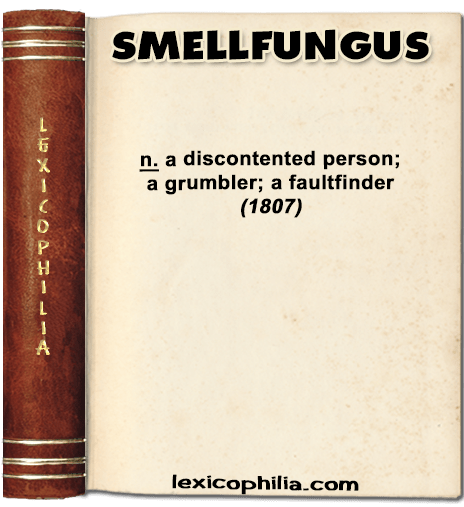
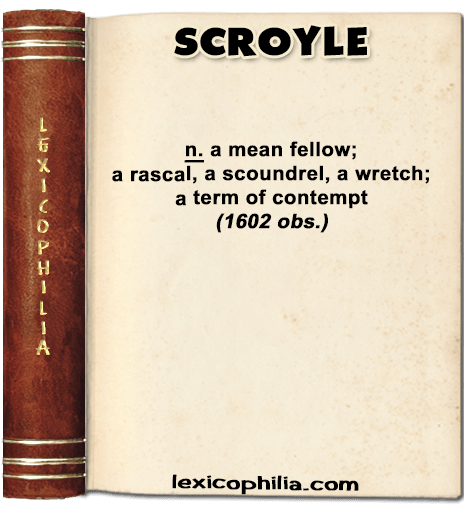
of unknown origin
EXAMPLE
“…Albius. For fault of a better, Sir.
Tucca. A better; prophane Rascall? I cry thee mercy (my good Scroile?) was’t thou?
Albius. No Harme, Captaine…”
From: Poetaster, or the Arraignment
By Ben Jonson, 1602

ETYMOLOGY
of unknown origin
EXAMPLE
“…Albius. For fault of a better, Sir.
Tucca. A better; prophane Rascall? I cry thee mercy (my good Scroile?) was’t thou?
Albius. No Harme, Captaine…”
From: Poetaster, or the Arraignment
By Ben Jonson, 1602

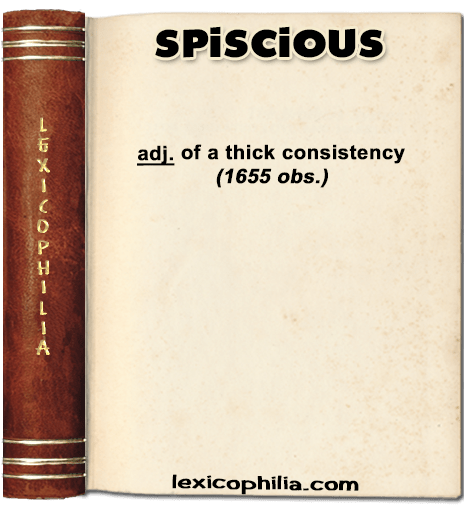
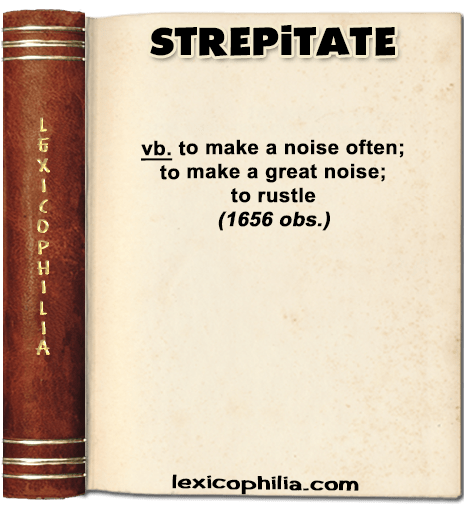
ETYMOLOGY
from Latin strepitat-, ppl. stem of strepitare (to make a repeated noise),
frequentative of strepere (to make a noise)
EXAMPLE
“…It’s yet, I say, to be mentioned to Uncle Harcourt, who’ll blow a stout gale, I know, enough to wreck some of us, when it is mentioned. He’ll strepitate finely, to use one of his own great words…”
From: Farquhar Frankheart; Or, Incidents in the Introduction of Methodism into Yorkshire
By Farquhar Frankheart, 1860

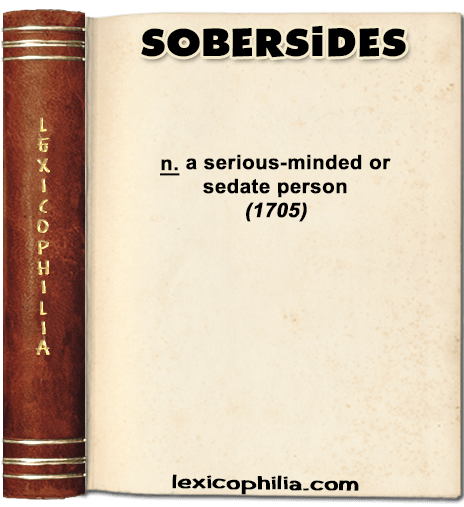
ETYMOLOGY
adj. 1: ? from side (adj.) + -y
adj. 2: from side (pretentiousness, swagger, conceit )
PRONUNCIATION
SIGH-dee
EXAMPLE
She is such a sidy woman – happy one minute, then angry the next.

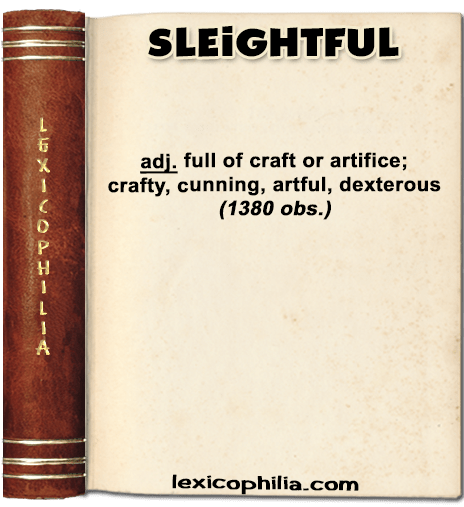
ETYMOLOGY
from silly (adj.) + -kin
EXAMPLE
“…In every small band, or knot of young thieves, there will always be found one or two sillikins, as they denominate those whom they can persuade to be foremost in any undertaking, by taunts of cowardice and threats of dissolving partnership…”
From: Fraser’s Magazine for Town and Country
Volume VI, August to Decemeber, 1832
The Schoolmaster’s Experience in Newgate

ETYMOLOGY
from spill- (comb. form in the sense spoilt) + time
EXAMPLE
“…That fynden þe þy fode? for an ydel man þow semest,
A spendour þat spende mot oþer a spille-tyme,
Oþer beggest þy bylyue a-boute at menne hacches,
Oþer faitest vp-on frydays · oþer feste-dayes in churches…”
From: The Vision of William concerning Piers the Plowman
By William Langland, 1393

ETYMOLOGY
from Latin sesquihora (an hour and a half)
EXAMPLE
“…but the greater part of those that were commissionated with the Scot-Ecclesiastical approbation) their rancour and spleen being still more and more sharpned against the English Nation, they in their tedious pharisaical prayers before Supper, and Sesquihoral Graces upon a dish of Skink, and leg of Mutton, would so imbue the mindes of the poor swains (on whose charge they were) with vaticinations of help from heaven…”
From: Εκσκυβαλαυρον (Ekskybalauron) (The Jewel)
By Thomas Urquhart, 1652

ETYMOLOGY
from spatter (to scatter or disperse in fragments)
EXAMPLE
“...Or when the court removes, or what’s a clock,
Or where’s the wind (or some such windy mock)
With such fine scimble, scemble, spitter-spatter,
As puts me clean besides the money-matter?
Thus with poor mongrel shifts, with what, where when?…”
From: A Kicksey Winsey: Or, A Lerry Come-Twang
By John Taylor, 1619

ETYMOLOGY
from spill (to lose waste in a wasteful or accidental manner) + good
EXAMPLE
She was by no means a spill-good, but somehow all their money disappeared anyway.

ETYMOLOGY
of fanciful formation
EXAMPLE
“…Curious enough, there is a Lady Erskine, wife of Lord E, her husband’s eldest brother living at Bollington, who tipples & ‘gets squiffy‘ just like this Mrs E. …”
From: The Letters of Mrs. Gaskell
By Elizabeth Cleghorn Gaskell, 1855
Edited by J. A. V. Chapple, Arthur Pollard, 1966

ETYMOLOGY
from sarcasm + -ous
EXAMPLE
“…Like th’ Hebrew-calf, and down before it
The Saints fell prostrate, to adore it.
So say the Wicked—and will you
Make that Sarcasmous Scandal true.
By running after Dogs and Bears,
Beasts more unclean than Calves or Steers?…”
From: Hudibras: in three parts, the first part
By Samuel Butler, 1663