Word of the Day: SPLENDICANT


ETYMOLOGY
from present pple. of Latin splendicare to shine


EXAMPLE
“…and yet cast into a curious desire to vnderstand and knowe what should be the reason and cause that the purple humiditie in the touch of hir bodie, in the smoothnes of hir hand should be as white as pure milke: and by what meanes that nature had bestowed in hir faire bodie the fragrant sweetnes of Arabia. And by what industrie in hir starrie forehead pampynulated with threds of gold aptly disposed, she had infixed the fairest part of the heauens, or the splendycant Heraclea…”

From: Hypnerotomachia: The Strife of Loue in a Dreame
By Francesco Colonna
Translated by Robert Dallington, 1592

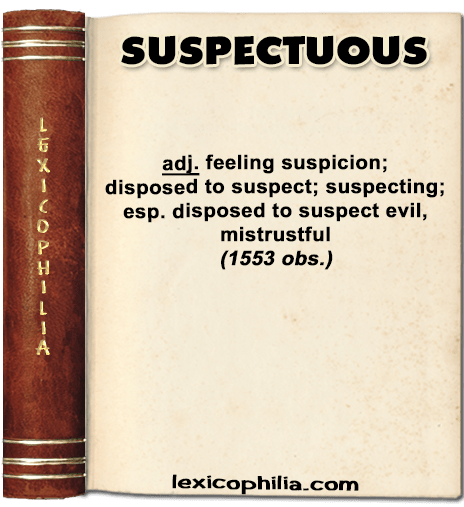
Word of the Day: SUSPECTUOUS


ETYMOLOGY
from Latin suspectus (u-stem) (suspect n.) + -ous


EXAMPLE
“…I thynke as our Cytezens be suspectuous and full of coniectoures; so dyd hee feare the comodyte of the place, and woulde eschewe the occasyon …”

From: The goodli history of the moste noble and beautyfull Ladye Lucres of Scene in Tuskane, and of her louer Eurialus verye pleasaunt and delectablevnto ye reder
By Pope Pius II, 1553

Word of the Day: STIVER-CRAMPED


ETYMOLOGY
– a stiver was a small coin (originally silver) of the Low Countries:
applied to the nickel piece of 5 cents of the Netherlands


EXAMPLE
“…as, according to a very nice calculation, that cutaneous reservoir, vulgarly called the breeches-pocket, and notorious for its unaffected sympathy with the animal spirits, will be stiver-cramped: I shall then indulge them with a touch of the sublime!…”

From: The Life and Extraordinary Adventures of James Molesworth Hobart
By N. Dralloc, 1794

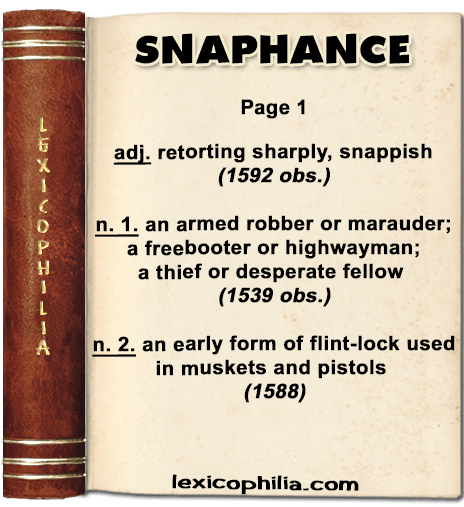
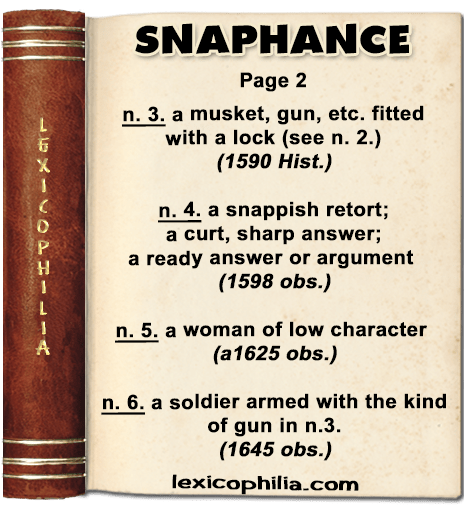
Word of the Day: SNAPHANCE

ETYMOLOGY
From OED: Of Continental origin, representing Dutch and Flemish snaphaan (in Kilian snap-haen ), Middle Low German snaphân , Low German snapphân , German schnapphahn (†-han ),
from snappen , schnappen (snap v.) + haan, hahn (cock).
It is not quite clear whether the sense is ‘snapping cock’ or ‘cock-snapper’ (i.e. cock-stealer).
In English the second element may have been confused with the personal name Hans; but Heyne (in Grimm’s Dict.) cites an early example of German schnaphons.

EXAMPLE
“…Fyrste to make this realme a praye to al venturers, al spoylers, all snaphanses, all forlornehopes, all cormerauntes, all rauenours of the worlde, that wyll inuade this realme…”

From: A Sermon of Cuthbert Tonstall, Bishop of Durham,
Preached on Palm Sunday, 1539, Before King Henry VIII;
By Cuthbert Tunstall

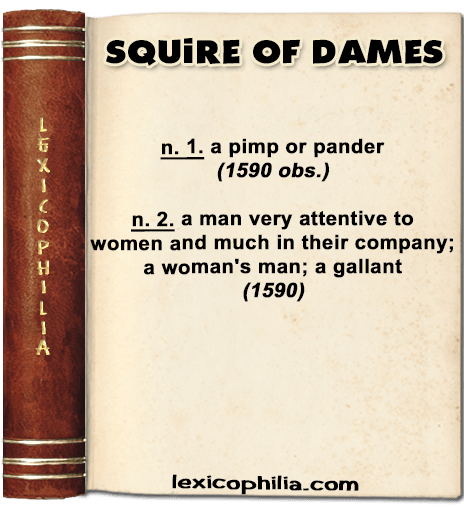
Word of the Day: SQUIRE OF DAMES

ETYMOLOGY
from squire

EXAMPLE
“…Me, silly wretch, she so at vantage caught,
After she long in wait for me did lie,
And meant unto her prison to have brought,
Her loathsome pleasure there to satisfy;
That thousand deaths me lever were to die
Than break the vow that to fair Columbell
I plighted have, and yet keep steadfastly.
As for my name, it mistreth not to tell;
Call me the Squire of Dames, that me beseemeth well
…”

From: The Faerie Queene
By Edmund Spenser, 1590

Word of the Day: SUPERSTITIATE

ETYMOLOGY
from superstiti- + -ate 

EXAMPLE
“…Wherefore I will say to such, as one wiser than Solomon said to the Jews, when they superstitiated the gift, in counting it more honourable than the altar, ‘Ye fools, and blind, for whether is greater, the gift, or the altar that sanctifieth the gift?…”

From: The Saints’ Privilege and Profit
Or, The Throne of Grace
By John Bunyan, a1688

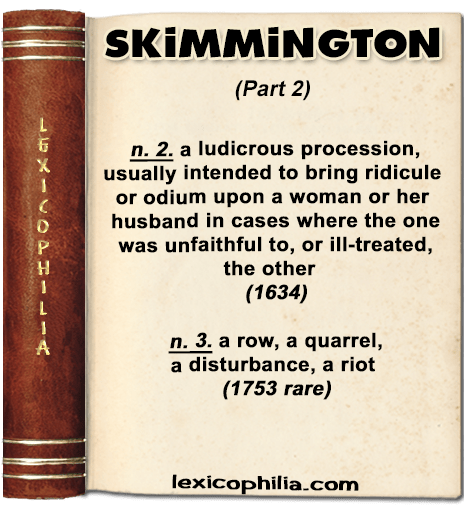
Word of the Day: SKIMMINGTON

ETYMOLOGY
possibly from skimming + -ton as in simpleton, with the object of simulating a personal name

EXAMPLE
“…And then, if they meere with such dull Lubbers as these Drones are; they may may with lesse blame borrow a point of the Law, and enjoy their longing. Yet when they haue it, let them vse poore Skimmington as gently as they may especially in publike, to hide his shame…”

From: The Feminine Monarchie,
Or the Historie of Bees
By Charles Butler, 1623

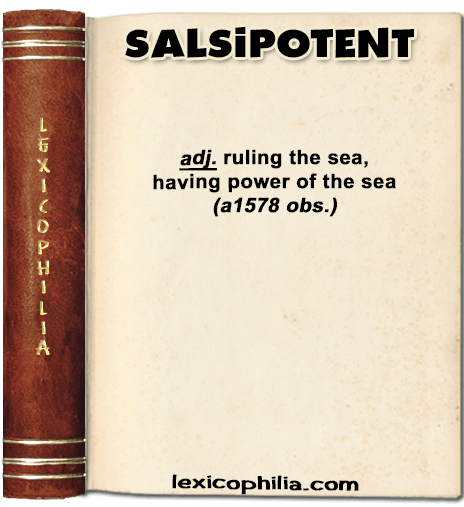
Word of the Day: SALSIPOTENT

ETYMOLOGY
from Latin salsipotentem, a false reading for salipotentem,
from salum (salt water) + potentem (having great authority or influence)

EXAMPLE
“…whearunto he made hiz fish to swim the swifter, and hy then declared: how the supream salsipotent Monarch Neptune, the great God of the swelling Seaz, Prins of profunditees, and Soouerain Segnior of all Lakez, freshwaterz, Riuerz, Créekes, and Goolphs…”

From: A Letter whearin part of the Entertainment vntoo the Queenz Maiesty at Killingwoorth Castl in Warwik Sheer
By William Patten, a1578

Word of the Day: SURQUIDANT

ETYMOLOGY
from Old French surcuidant (present participle of surcuidier
from popular Latin supercōgitāre ,
from super- (super- prefix) + cōgitāre (to think, to cogitate)

EXAMPLE
“…and yet they were but febly enformed in maister Porphiris problemes, and haue waded but weakly in his thre maner of clerkly workes, analeticall, topicall, and logycall: howbeit they were puffed so full of vaynglorious pompe and surcudant elacyon, that popholy and peuysshe presumpcion proyoked them to publysshe and to preche to people imprudet perilously…”

From: Honorificatissimo: Replycacion agaynst Yong Scolers
By John Skelton, 1528