Word of the Day: TENTIGINOUS


ETYMOLOGY
from Latin tentigo, -inis, (a tension, lecherousness) + –ous


EXAMPLE
“…O wife, the rarest man! yet there’s another
To put you in mind o’ the last.
Such a brave man, wife!
Within, he has his projects, and do’s vent ‘hem,
The gallantest! where you tentiginous? ha?
Would you be acting of the Incubus?
Did her silkes rustling move you?
…”

From: The Divell is an Asse A Comedie
By Ben Jonson
First performed 1616
First published In Workes of Benjamin Jonson, 1631

Word of the Day: LABION


ETYMOLOGY
from Latin labion-labio  also Latin labeon-labeo (a person who has large lips)
from labealabia ‑o


EXAMPLE
“…for it must necessarily be a meanes to hinder their speech by thickning their lips, as experience teacheth in those who either by Nature or by accident have thick, swoln, blabber lips, causing them to speak in their mouth, uttering their words very baldly and indistinctly, and assuredly the same or worse must befall these artificiall Labions, for their Lips must needs hang in their light, and their words stick in the birth, when such unwealdy Pourers out of speech occasion a hinderance to their delivery …”

From: Anthropometamorphosis: = Man Transform’d:
Or, The Artificiall Changling
By John Bulwer, 1653

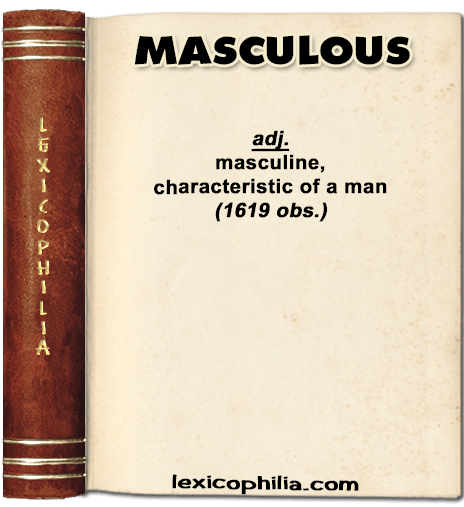
Word of the Day: MASCULOUS


ETYMOLOGY
from Latin masculus (male) + -ous


EXAMPLE
“…I doubt not but he will send a Copy of it to your L. and then it will speak for it self; believe me I never heard him do any thing like it, and so thinketh every one in the Synod; it was learned, devout, and the stile masculous …”

From: Golden Remains of the Ever Memorable, Mr. John Hales
By John Hales, 1659
Dr. Balcanquals Letters from the Synod of Dort, March, 1619

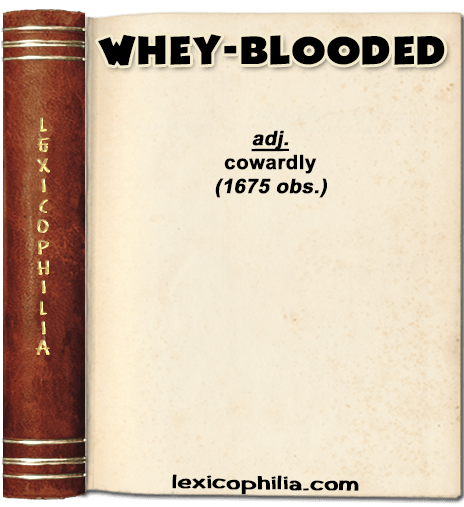
Word of the Day: WHEY-BLOODED


ETYMOLOGY
from whey  + blooded


EXAMPLE
“…Beantosser
Here here, a pox o’ these full mouth’d Fox hounds.

Hectorio
They hunt devilish hard, I’me affrai’d they’l earth us.

Stephania
Give Hectorio a dram of the Bottle, the Whey-Blooded Rogue looks as if his heart were melted into his Breeches…”

From: The Mock-Tempest, or, The Enchanted Castle
By Thomas Duffett, 1675

Word of the Day: ELF-LOCKED


ETYMOLOGY
from elf-lock (a tangled mass of hair, superstitiously attributed to the agency of elves, especially Queen Mab: ‘which it was not fortunate to disentangle’),
from elf & lock


EXAMPLE
#1

“…Had VIRGIL had nor house-room, nor a Boy
Whom he about his bus’ness might imploy:
The elfe-lockt Fury all her Snakes had shed,
His Pipe play’d nothing rare, but flat and dead.
We tragick Poets now would think it fair,
If that, which kept th’ old Buskins in repair,
Might not from RUBREN LAPPA be with-drawn,
Whose Cloak and Papers ATREUS hath in pawn…”

From: Mores hominum – The Manners of Men described in Sixteen Satyrs by Juvenal,
Translation by Robert Stapleton, 1647


#2

“…At my question, the young wonder coolly winked, nodded his elf-locked head, wounded up his top-cord, pouched his toy, and urged me laconically to accompany him with a beck and a shout thus – “Here it’s! – yont here, sir!” and immediately trotted off before me to point out where,,,”

From: Rural Rhymes and Sketches in East Lothian
By James Lumsden, 1885
‘Country Chronicles’

Word of the Day: RUVID


ETYMOLOGY
from Italian ruvido (rough, rugged, rude, uncivilized, ill-mannered),
from Latin rugidus (creased, wrinkly),
from ruga (crease, small fold, wrinkle) + ‑idus (‑id)


EXAMPLE
for adj. 1

“…Gaza now is called Habalello, and is composed of twelve hundred fire-houses, and sensible against the incursions of Arabs: The ruvid Cittizens, being Turkes, Moores, Jews, domeseticke Arabians, with a few Georgians, & Nostranes …”

From: The Totall Discourse of the Rare Adventures & Painefull Peregrinations of long Nineteene Yeares Travayles from Scotland, to the most famous Kingdomes in Europe, Asia, and Affrica.
By William Lithgow, 1632

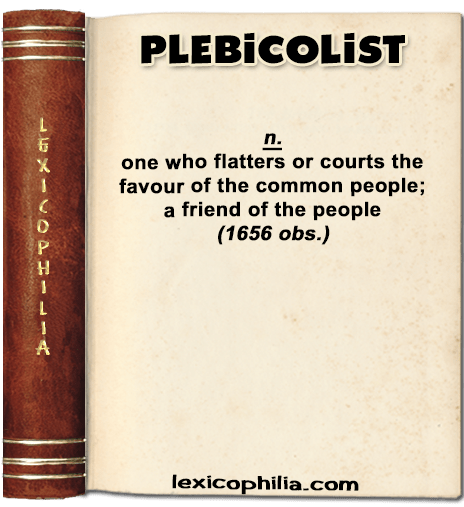
Word of the Day: PLEBICOLIST


ETYMOLOGY
from Latin plebicola one who courts the common people,
from plebs (the ordinary people) + –cola (cole) + -ist


EXAMPLE
“…Alva Adams, the plausible plebicolist who for so many years had prostituted Colorado to the lust of lucre and enslaved her to the corporations to serve his personal ends, was in his political death-struggle and fighting with the desperation of a dog-doomed rat…”

From: The Scarlet Shadow
A Story of the Great Colorado Conspiracy 
By Walter Hurt, 1907

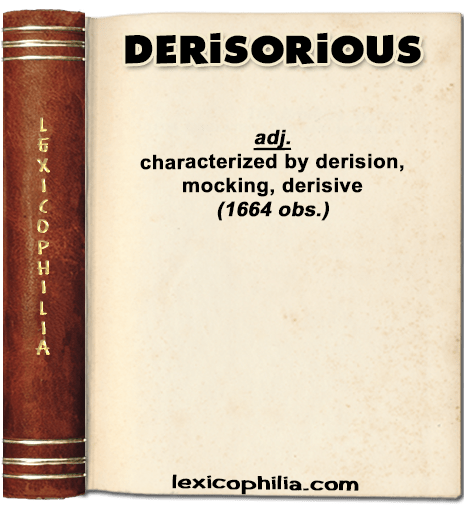
Word of the Day: DERISORIOUS


ETYMOLOGY
from Latin derisorius, from derisor (derider, mocker) + -ous


EXAMPLE
“…And that therefore the Spirit of Prophecy foreseeing these times, whenas for such a space he called Rome Pergamus, this succeeding Scene coming on, he might very well change the title of Pergamus into that of Thyatira, with a derisorious Allusion to the occasion of the name of that City, from the news of a Daughter being born to Nicanor.…”

From: An Antidote Against Idolatry
By Henry More, 1664