
ETYMOLOGY
from cormorant (a greedy or rapacious person)
EXAMPLE
“…There would be many money-cormorants, and their profit great….”
From: The Scales of Commerce and Trade
By Thomas Willsford, 1660
ETYMOLOGY
from cormorant (a greedy or rapacious person)
EXAMPLE
“…There would be many money-cormorants, and their profit great….”
From: The Scales of Commerce and Trade
By Thomas Willsford, 1660

ETYMOLOGY
from Latin pedestr-, pedester, also pedestris (going on foot), in prose, prosaic
(from pedes a person who goes on foot
(from ped-, pēs (foot) + -es (after eques) + -ter + -al
PRONUNCIATION
puh-DESS-tree-uhl
EXAMPLE
“…For, the formall esteemed causes (which are pedestriall, equestriall, or nauti∣call) stand either at the disposition of the efficient; or pretend perfection and vse from the finall…”
From: An Essay of the Meanes Hovv to Make our Trauailes, into Forraine Countries,
the More Profitable and Honourable
By Sir Thomas Palmer, 1606
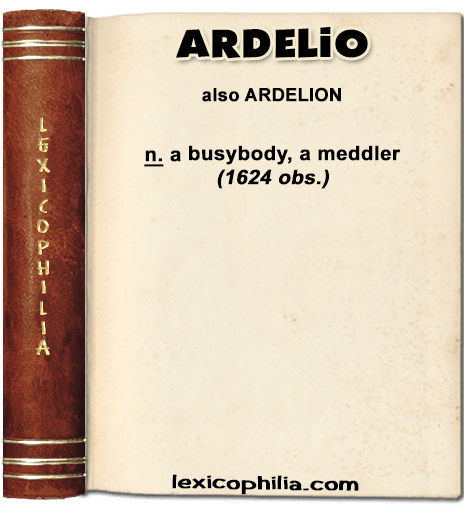
ETYMOLOGY
from Latin ardelio, from ardere (to burn, be eager or zealous)
EXAMPLE
“…we run, ride, take indefatigable pains, all up early, down late, striving to get that which we had better be without, (Ardelion’s busybodies as we are) it were much fitter for us to be quiet, sit still, and take our ease…”
From: The Anatomy of Melancholy
By Robert Burton, 1624

ETYMOLOGY
from Latin arguit- ppl. stem of arguere + -ive, as if from Latin arguitivus (attacking or accusing)
EXAMPLE
“…But, as it is, the only knowledge of God to which the mind of man can naturally attain, is arguitive, being deduced from his cognitions of the creature; and therefore in the enunciation of the Thesis, the direct measure of the human intellect is restricted to finite Being…”
From: The Metaphysics of the School
By Thomas Harper, 1879
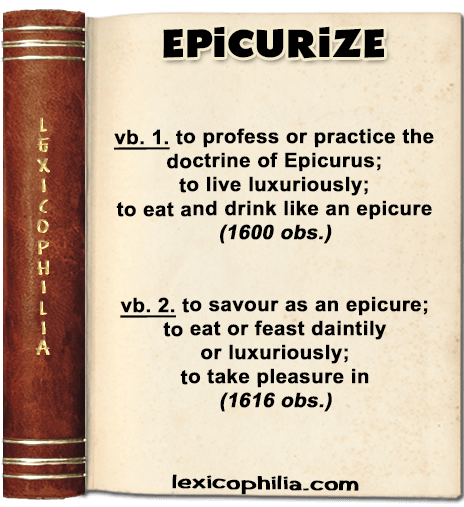
ETYMOLOGY
from Epicurus (or epicure) + -ize
EXAMPLE
“…See whether in our time this be not a custom among some people, that if a man were disposed to epicurize a little, he would not rather choose to fast as some hold fasting, than to feast at a sober banquet…”
From: An Exposition Upon the Prophet Jonah
By George Abbot, 1600
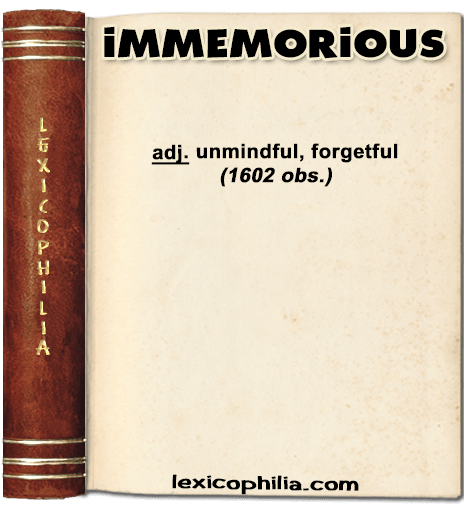
ETYMOLOGY
from im- + memorious
EXAMPLE
“…And we like wretches, carelesly oreseene
Neglecting all continuance of our good,
Of our owne birth haue immemorius beene,
And quite forgot the Nephewes of our blood,
And of neere kin are growne meere strāgers rather,
Almost forgetting we had all one father…”
From: Svvord and Buckler, or, Seruing-Mans Defence
By William Basse, 1602

ETYMOLOGY
from frost + brained
EXAMPLE
“…MARTIANUS: Madam, we all have so importund him
Laying unto his judgement every thing
That might attract his sences to the crowne;
But he, frost-braind, will not be obtaind
To take upon him this Realmes government…”
From: No-Body and Some-Body, 1606
“Printed for John Trundle, and are to be sold
at his shop in Barbican, at the signe of No-body.”

ETYMOLOGY
adj. 1: ? from side (adj.) + -y
adj. 2: from side (pretentiousness, swagger, conceit )
PRONUNCIATION
SIGH-dee
EXAMPLE
She is such a sidy woman – happy one minute, then angry the next.

ETYMOLOGY
from Latin novus (new) + antique
EXAMPLE
“…yet as they will not counterbalance the weight of those other arguments that militate on the contrary side, so they will without any difficulty be answered by the assertors of this Novantique philosophy…”
From: Treatise Concerning Eternal and Immutable Morality
By Ralph Cudworth, a1688

ETYMOLOGY
? from Latin imago, imaginem (image) + -ous,
or ? from imagine (vb.) + -ous
PRONUNCIATION
uh-MAJ-uh-nuhss
EXAMPLE
“…I oft haue heard there is a kind of cure
To fright a lingring Feuer from a man
By an imaginous feare, which may be true,
For one heate (all know) doth driue out another,
One passion doth expell another still,
And therefore I will vse a fainde deuice
To kindle furie in her frozen Breast,
That rage may fire out griefe, and so restore her
To her most sociable selfe againe…”
From: Monsieur D’Oliue
By George Chapman, 1606
 Lexicophilia