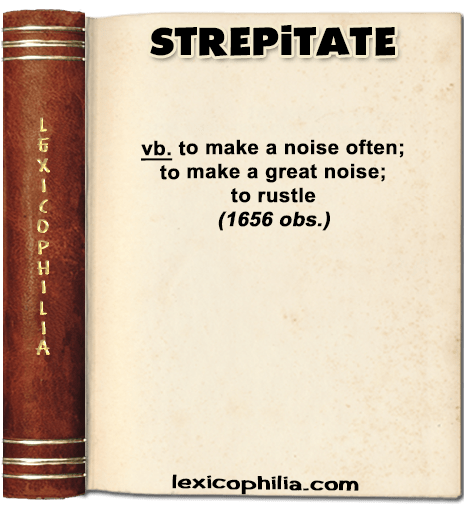
Word of the Day: STREPITATE


ETYMOLOGY
from Latin strepitat-, ppl. stem of strepitare (to make a repeated noise),
frequentative of strepere (to make a noise)


EXAMPLE
“…It’s yet, I say, to be mentioned to Uncle Harcourt, who’ll blow a stout gale, I know, enough to wreck some of us, when it is mentioned. He’ll strepitate finely, to use one of his own great words…”

From: Farquhar Frankheart; Or, Incidents in the Introduction of Methodism into Yorkshire
By Farquhar Frankheart, 1860
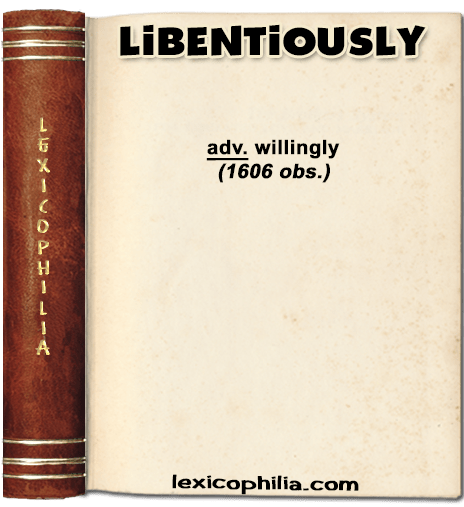
Word of the Day: LIBENTIOUSLY


ETYMOLOGY
as if from libentious (from Latin libentia, from libentemlibens (willing)) + -ous + -ly


EXAMPLE
“…Most-what by Women, sillie Girles, youths, firie-wits, Ambitious,
By great, by needy Mal-Contents, by Credulous, and Vitious,
Work Romes Committees, & from flesh to fare much more delicious
Penance their Puples: whitest Sons these Seedsters and Seditious.
And, that for them libentiously Fooles-Catholike should erre,
Pensions, Canonizing at least, on Rome-wrights they conferre
…”

From: A Continuance of Albions England
By William Warner, 1606

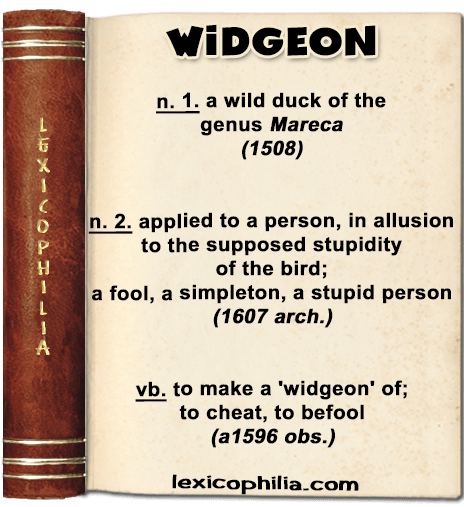
Word of the Day: WIDGEON


ETYMOLOGY
of uncertain origin

From the Oxford English Dictionary:
The form appears to suggest a French origin (compare pigeon n.), but French forms are first attested significantly later than the English word: compare †vigeon kind of West Indian duck (1667), †vingeon kind of duck observed in Madagascar (1690), kind of West Indian duck (1767 or earlier), Eurasian wigeon (Buffon 1783, also as †gingeon), American wigeon (J. Latham 1785), and it is even possible that the French word was borrowed < English.


PRONUNCIATION
WIJ-uhn


EXAMPLE (for n. 2)
“…Such as you shall like too: what say you to this young Gent. He is the widgen that wee must feed vpon…”

From: The Miseries of Inforst Mariage
By George Wilkins, 1607

Word of the Day: MONTIVAGANT


ETYMOLOGY
from Latin monti-mons (mountain) + vagantem, pres. pple. of vagari (to roam) + -ant


EXAMPLE
“…Downward he speeds to mingle in the fray
As headlong rolls the torrent of the hills
When wintry storms montivagant outpour
Their pluvious treasures from the deep purloined
…”

From: Rogvald: An Epic Poem
By John Fitzgerald Pennie, 1823

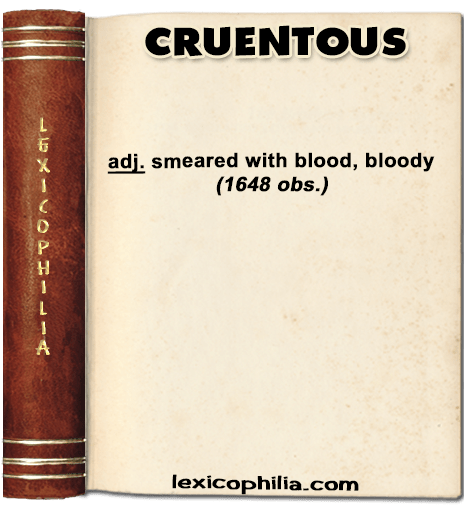
Word of the Day: CRUENTOUS


ETYMOLOGY
from Latin cruentus (bloody) + -ous


EXAMPLE
“…Thus a cruell and most cruentous civill war began which lasted neer upon foure yeers without intermission, wherin there happen’d more battailes, sieges and skirmishes, then passed in the Netherlands in fourescore yeers, and herein the Englishmen may be said to get som credit abroad in the world, that they have the same blood running in their veines (though not the same braines in their sculls) which their Ancestors had, who were observed to be the activest peeple in the field, impatient of delay, and most desirous of battaile then any Nation…”

From: A Venice Looking-Glasse
By J.B.C., 1648