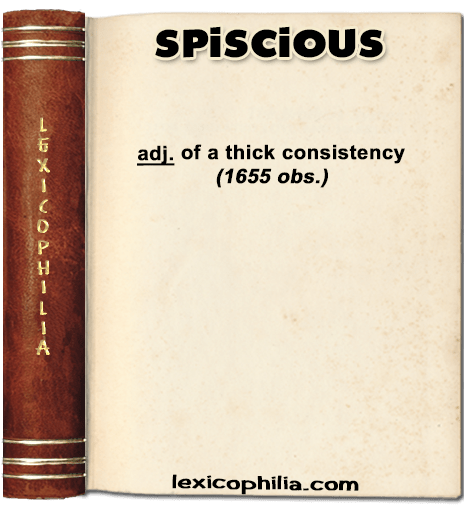
Word of the Day: SPISCIOUS


ETYMOLOGY
from Latin spissus (thick, close, compact)


EXAMPLE
“…Methought this Drink had a kind of a sweet taste, like Asses Milk, yet it could not properly be called a liquor, but rather a certain concreted Mist or spiscious Froath; for being with no small paine got out againe, I found it had not so much as moistned my Cloaths…”

From: The Comical History of Francion
By Charles Sorel, 1655

Word of the Day: SNUFFY


ETYMOLOGY
from snuff + -y


EXAMPLE
“…I’m sure she makes a very Tarquinius Sextus of me, and all about this Serenade,—I protest and vow, incomparable Lady, I had begun the sweetest Speech to her—though I say’t, such Flowers of Rhetorick—’twou’d have been the very Nosegay of Eloquence, so it wou’d; and like an ungrateful illiterate Woman as she is, she left me in the very middle on’t, so snuffy I’ll warrant…”

From: Sir Patient Fancy
By Aphra Behn, 1678

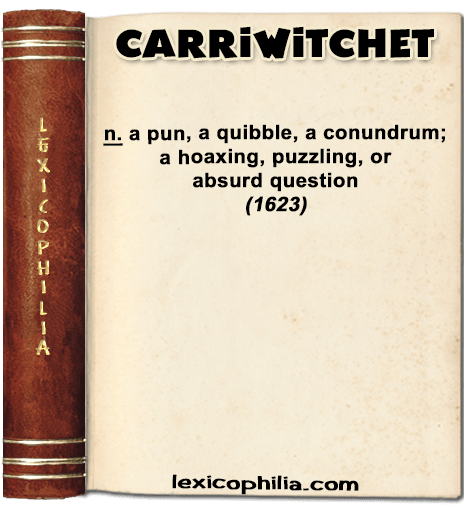
Word of the Day: CARRIWITCHET


ETYMOLOGY
of unknown origin


EXAMPLE
“…That tells vs of Proiects beyond the Moone, of Golden Mines, of Deuices to make the Thames run on the North side of London (which may very easily be done, by remouing London to the Banke-side) of planting the Ile of Dogs with Whiblins, Corwhichets, Mushromes and Tobacco. Tut I like none of these, Let mee see, as I take it, it is an inuectiue against Coaches, or a proofe or tryall of the Antiquitie of Carts and Coaches…”

From: All the vvorkes of Iohn Taylor the Water-Poet 
By John Taylor, 1623
The VVorld runnes on VVheeles

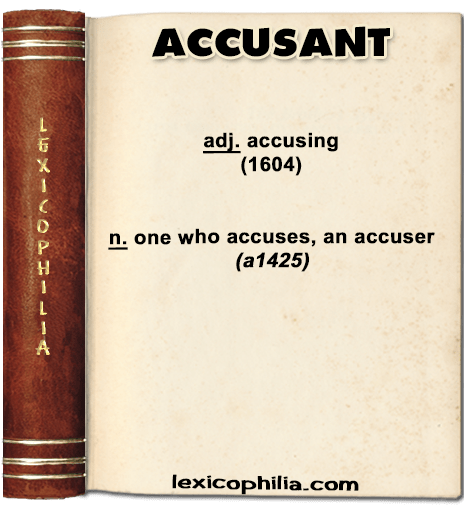
Word of the Day: ACCUSANT


ETYMOLOGY
from French accusant (n. person who accuses), (adj. that accuses)


PRONUNCIATION
uh-KYOO-zuhnt


EXAMPLE
“…The whole Councell beeing afterward called together, they gaue them-selues to the vnderstanding of the matter. As for the crime and the punishment, was of the accusant called vpon in these wordes: The Iudgement of death is due to this man, because hee hath done this or that. But the Defendant repelled it, with these wordes. The Iudgement of death is not due this man, because hee hath not done it, or because hee hath doone it righteously …”

From: A Defence of the Government Established in the Church of Englande
By John Bridges, 1587

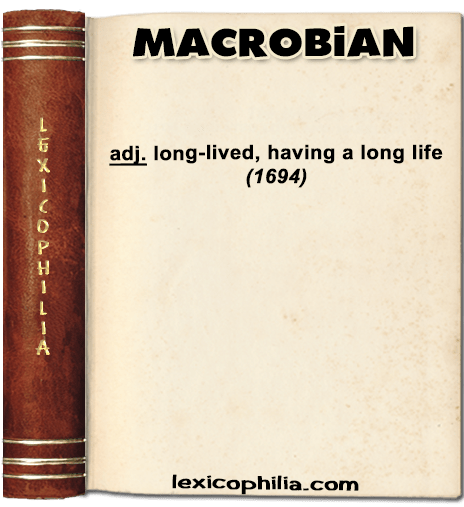
Word of the Day: MACROBIAN


ETYMOLOGY
formed on Greek.µακρόβιος (long-lived (from µακρός (long) + βίος (life)) + -an


PRONUNCIATION
muh-KROH-bee-uhn


EXAMPLE
“…Nor did we think it more reasonable to doubt of the Transmogrification of the Macrobian Children into Swans, or that of the Men of Pallene in Thrace into Birds, as soon as they have bath’d themselves in the Tritonie Lake. After this the Devil a word we could get out of him but of Birds and Cages…”

From: The Fifth Book of The Works of Francis Rabelais, M.D.
Translated by Peter Anthony Motteux, 1694

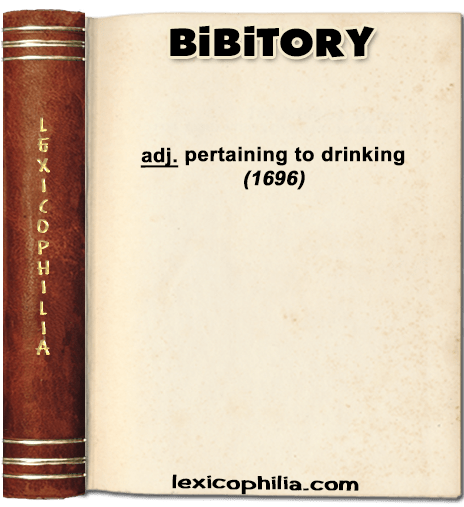
Word of the Day: BIBITORY


ETYMOLOGY
from modern Latin bibitorius, from  bibit- ppl. stem of bibere (to drink)


EXAMPLE
“…The verdict does not favour total abstinence, though it is decidedly against bibitory indulgence. It was clear from the close study of the patient – who was so well-formed and healthy that hey may be regarded corporeally as a typical man – that alcohol was not necessary to him…”

From: The Gentleman’s Magazine and Historical Chronicle
Volume 229, 1870
Notes and Incidents

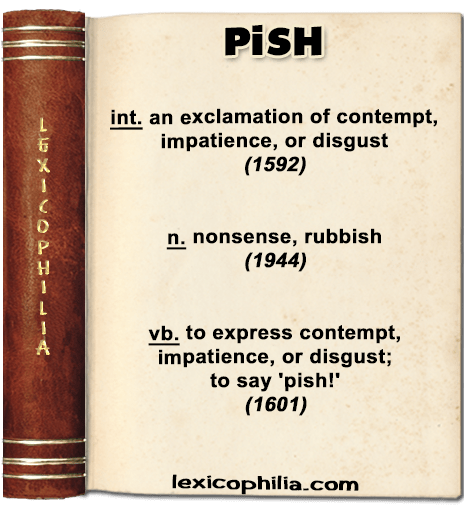
Word of the Day: PISH


ETYMOLOGY
an imitative or expressive formation


EXAMPLE
“…Hoe! God, be here! on their bald, burnt, parchment pates. Pish, pish! what talke you of olde age or balde pates? Men and women that haue gone vnder the south pole, must lay of theyr furre night-caps in spyght of their teeth, and become yeomen of the vineger bottle…”

From: Pierce Penilesse, His Supplication to the Diuell
By Thomas Nashe, 1592

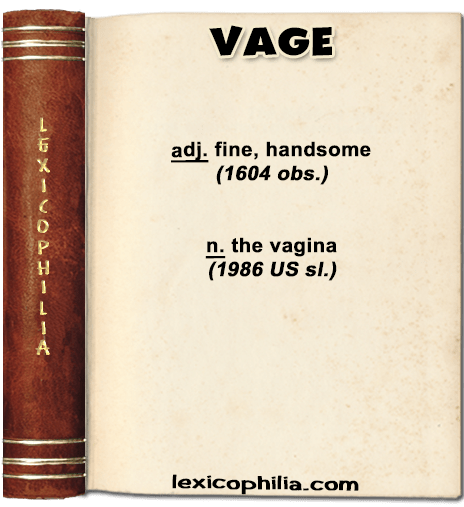
Word of the Day: VAGE


ETYMOLOGY
adj,: apparently from Italian vago


EXAMPLE
“…no doubt but better parts, finer colours, purer lights proportionably combined, cause a more excellent beautie, shew, and lustre: as the siner gold, the richer stones (if art bee correspondent) the more vage and beautifull iewell…”

From: The Passions of the Minde in Generall
By Thomas Wright, 1604

Word of the Day: TETTY


ETYMOLOGY
for adj.: of obscure origin
for n.1.: from teat () + -y 


EXAMPLE
“…but if they loose, though it be but a trifle, two or three games at tables, or a dealing at Cards for 2d a game, they are so cholericke and tetty that no man may speake with them, and breake many times into violent passions, oaths, imprecations, and vnbeseeming speeches, little differing from mad men for the time…”

From: The Anatomy of Melancholy
By Robert Burton, 1621