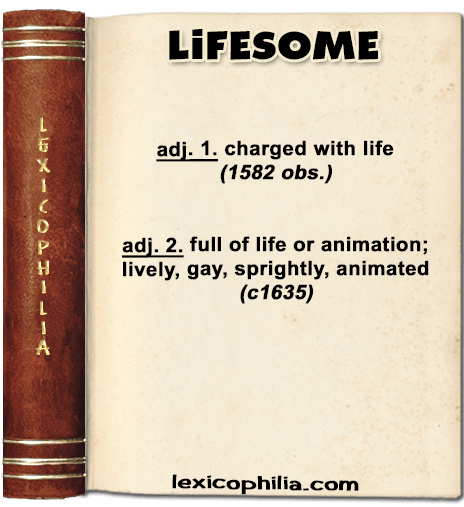
Word of the Day: LIFESOME


ETYMOLOGY
from life (n.) + -some


EXAMPLE (for adj. 1)
“…If badd, how happ’s that none his hurtes disproue?
If willingly I burne, how chance I waile?
If gainst my will, what sorrow will auaile?
liuesome death, O sweete and pleasant ill,
Against my minde how can thy might preuaile?
If I bend backe, and but refraine my will,
If I consent, I doe not well to waile
…”

From: ἐκατομπαθία: The Hekatompathia or Passionate Centurie of Loue
By Thomas Watson, 1582
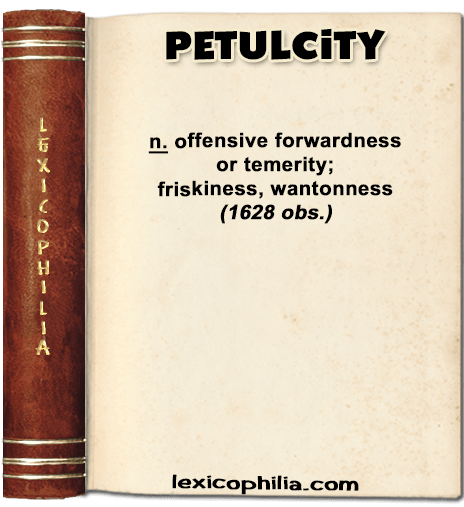
Word of the Day: PETULCITY


ETYMOLOGY
from Latin petulcus (butting, wanton, frisky)


EXAMPLE
“…I do therefore much blame the petulcity of whatsoever author that should dare to impute a popish affection to him, whom, besides his excellent writings and sermons, God’s visible, eminent, and resplendent graces of illumination, zeal, piety, and eloquence have made truly honourable and glorious in the Church of Christ…”

From: The Works of the Right Reverend Joseph Hall, 1837
Letter to Joseph Hall from Thomas Morton, 1628

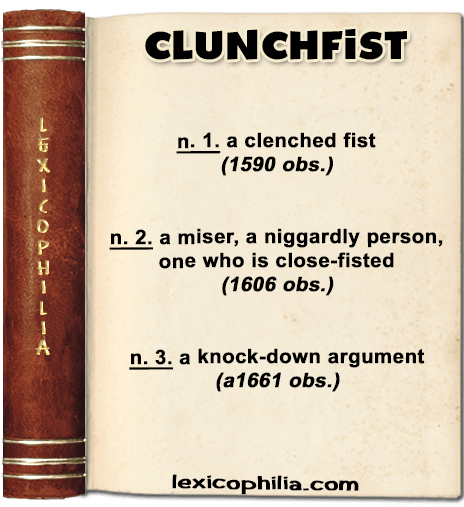
Word of the Day: CLUNCHFIST


ETYMOLOGY
from clunch (to clench) + fist


EXAMPLE
“…such a quoile with pro and con, such vrging of Ergoes, til they haue gone fro Art togither by the eares, and made their conclusions end with a Clunchfist, right like the old description of Logicke…”

From: Plaine Percevall, the Peace-maker of England:
Being a Reply to Martin Mar-Prelate
By Richard Harvey, 1590

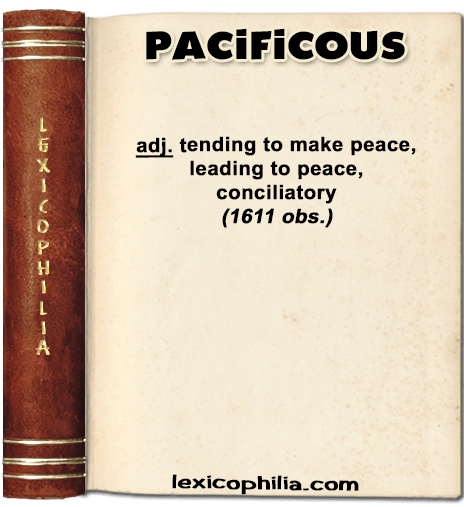
Word of the Day: PACIFICOUS


ETYMOLOGY
from Latin pacificus (peace-making, peaceful) + -ous,
from paxpacem (peace) + -ficus (-fic)


EXAMPLE
“…These, belike, were not acquainted with the Exploits of the Graecian Xenophon, the Roman Caesar, the English Sidney, Montjoy and Ra∣leigh, Gentlemen that were renowned both in Arms and Letters. Yet such as were transported with Warmth to be a sighting, prevail’d in Number, before the Pacificous…”

From: Scrinia Reserata A Memorial offer’d to the Great Deservings of John Williams
By John Hacket, 1693

Word of the Day: CLUSTERFIST


ETYMOLOGY
from cluster in sense of lump, clumsy mass + fist


EXAMPLE
“…Saturday Night passed with much Perplexity to the Monks, who were at their Wits Ends, and Lives too (they could not hope better things) about the Charter, which was no where extant but in the Noddles of these Cluster-fists. But Day and Comfort broke out together upon them; suddenly this Overflow of Pride, and Arrogancy abated, their Loftiness fell, and their Bristles were somewhat laid…”

From: The Works of Mr. John Cleveland
By John Cleveland, 1687
The Rustick Rampant, or Rural Anarchy Affronting Monarchy, a1658

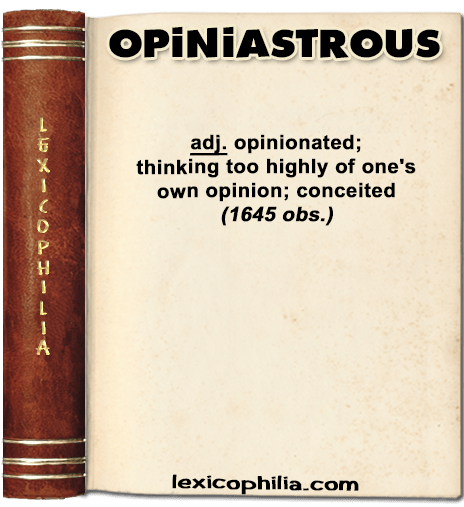
Word of the Day: OPINIASTROUS


ETYMOLOGY
either from French opiniastre (adj. – opinionated) + -ous,
or from opiniastre (n. – an opinionated person) + -ous 


EXAMPLE
“…Next, in matter of death, the Laws of England, wherof you have intruded to bee an opiniastrous Sub advocate, and are bound to defend them, conceave it not enjoyn’d in Scripture, when or for what cause they shall put to death, as in adultery, theft, and the like; your minor also is fals, for the Scripture plainly sets down for what measure of disagreement a man may divorce…”

From: Colasterion
A Reply to a nameless Answer against the Doctrine and Discipline of Divorce
By John Milton, 1645

Word of the Day: HALF-HEADED


ETYMOLOGY
from half + headed


EXAMPLE
“…And there is not a man that is for Paritie, all Fellows in the Church, but he is not for Monarchie in the State. And certainly either he is but Halfe-headed to his owne Principles, or he can be but Halfe-hearted to the House of David…”

From: Seven Sermons Preached Upon Severall Occasions
By William Laud, 1625

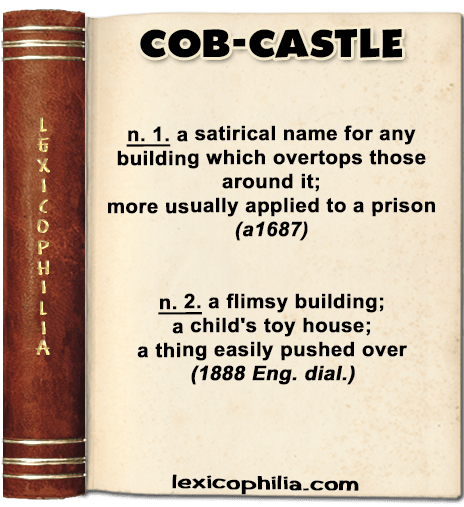
Word of the Day: COB-CASTLE


ETYMOLOGY
? from cob (a big man, a great man, a leading man) + castle


EXAMPLE
“…’Twixt the wood and the castle they see at high water
The storm, the place makes it a dangerous matter;
And besides, upon such a steep rock it is founded,
As would break a man’s neck, should he’scape being drowned:
Perhaps though in time one may make them to yield,
But ’tis prettiest Cob-castle e’er I beheld
…”

From: Poems on Several Occasions written by Charles Cotton, 1689
A Voyage to Ireland in Burlesque