Word of the Day: MEDITABUND

ETYMOLOGY
from Latin meditabundus
from meditari (to meditate) + -bundus (suffix forming verbal adjectives)

EXAMPLE
“…While this he spoke, his Horse he lights off,
And with his Handkerchief he dights off
Tears from his eyes, then on the ground
He grovelling lyes meditabound,
His Horses grievous succussation
Had so excoriat his Foundation,
That till the Hide his Hips did come on,
The earth he could not set his Burn on
…”

From: Mock Poem,
Or, Whiggs Supplication
– Samuel Colvil, 1681

Word of the Day: SALADING

ETYMOLOGY
from salad + -ing

EXAMPLE
“…Sow also (if you please) for early Colly-flowers.
Sow Chervil, Lettuce, Radish, and other (more delicate) Sal­letings; if you will raise in the Hot-bed.
In over wet, or hard weather, cleanse, mend, sharpen and prepare Garden-tools
…”

From: Kalendarium Hortense:
Or, The Gard’ners Almanac
– John Evelyn, 1666

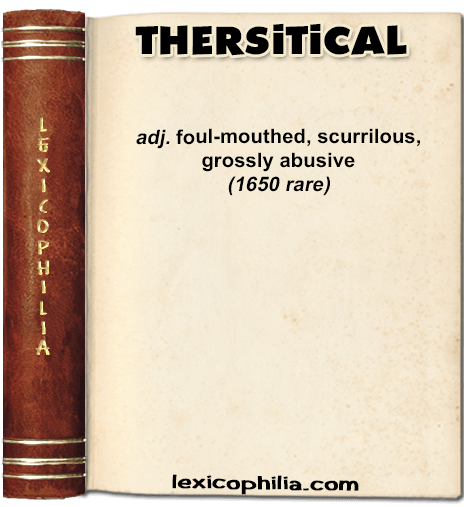
Word of the Day: THERSITICAL

ETYMOLOGY
from Greek θερσίτης Thersites (‘the Audacious’), an ill-tongued Greek at the siege of Troy + -ical

EXAMPLE
“…The Genuensians saith he, having received from the Mauritanians their Progenitors this Custome, to compresse the Temples of their Infants as soon as they are Borne, now, without that Compression, are Borne with a Thersiticall Head and Heart…”

From: Anthropometamorphosis: = Man Transform’d: or, The Artificiall Changling
– John Bulwer, 1650

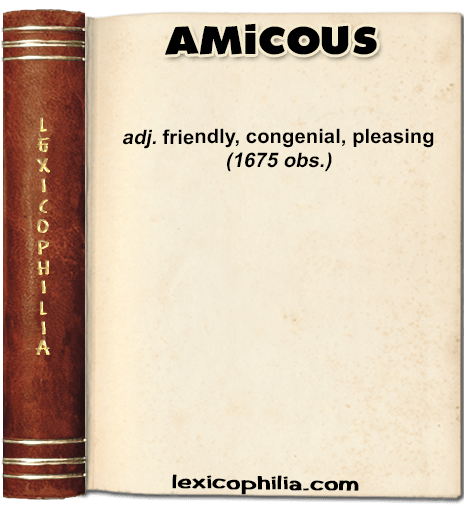
Word of the Day: AMICOUS

ETYMOLOGY
from Latin amicus (friendly, loyal, loving, favourable) + -ic-ous

EXAMPLE
“…as by which each single species draws and assimilates that only to it self, which it finds most amicous and congruous to its nature; and if so it be, then have we no more to do, than to learn how to prepare our Ferments, and apply them accordingly…”

From: A philosophical discourse of earth relating to the culture and improvement of it for vegetation,
and the propagation of plants, &c. as it was presented to the Royal Society
– John Evelyn, 1675

Word of the Day: SLIP-SKIN

ETYMOLOGY
from slip + skin

EXAMPLE
“…A pretty slip-skin conveyance to sift Masse into no Masse, and Popish into not Popish; yet saving this passing fine sophistical boulting hatch, so long as she symbolises in form, and pranks herself in the weeds of Popish Mass…”

From: Animadversions upon the Remonstrants Defence against Smectymnuus
by John Milton, 1641

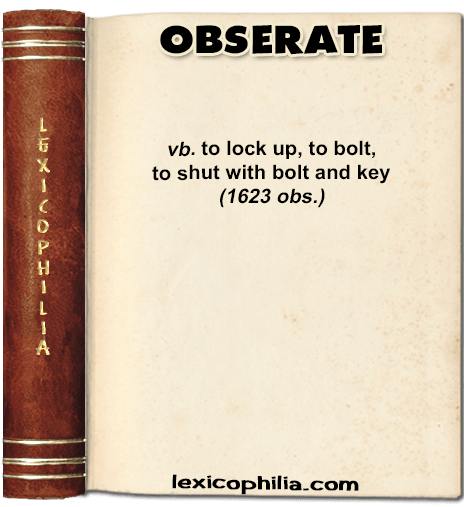
Word of the Day: OBSERATE

ETYMOLOGY
from. Latin obserat-, past participial stem of obserare (to bolt),
from ob- + sera (bolt)

EXAMPLE
“…he commenced to supparasite the juratory bevy relative to their noetical habilitation to sarse Fritz’s maleficence, and adjudicate to ablegate him to a lobspound, and have him there immured and securely obserated…”

From: Frontier Experience
Or Epistolary Sesquipedalian Lexiphanicism from the Occident
by J.E.L. Seneker, 1906

Word of the Day: CREBROUS

ETYMOLOGY
from Latin crēbrum (frequent) + -ous

EXAMPLE
“…Now at the lengthe not onlie harde necessitie, but also most principallie the crebrous phame of your clemencie, and the right worshipfull and Godlie reporte of your bountefull humanitie and gentlenes vnto all men…”

From: Original Letters of Eminent Literary Men of the Sixteenth, Seventeenth, and Eighteenth Centuries
– J. Leach. c1600
Edited by Henry Ellis

Word of the Day: TWITTERLIGHT

ETYMOLOGY
? alteration of twilight after twitter (vb. to move tremulously, shake, quiver) + light

EXAMPLE
“…You can steale secretly hether, you misticall queane you, at twylight, twitterlights,
You haue a priuiledge from your hat forsooth,
To walke without a man, and suspition,”
But we poore gentlewomen that goe in Tires
Haue no such liberty, we cannot do thus
…”

From: Your fiue gallants
As it hath beene often in action at the Black-friers
By Thomas Middleton, 1608