Word of the Day: OFFENCEFUL

ETYMOLOGY
from offence (n.) + -ful

EXAMPLE
” …Now will I let the little squire shift and cleanse himselfe without me, that he may be longer about fetching the Prouost, and in the meane time will I take my Masters sute (of which the little squire tooke note) and put it on my sweet heart Francischina, who shall presently come and sup ply my Masters place, with his Mistris; for the little squire amaz’d with his late affrights and this suddaine offencefull spectacle of his daughter, tooke no certaine note who it was that accosted her; for if he had, he would haue blam’d me for my Master, only the colour of his garment sticks in his fancie, which when he shall still see where he left it, he will still imagine the same person weares it, and thus shall his daughters honour and my Masters be preseru’d with the finest sugar of inuention. …”

From: May-Day A VVitty Comedie
By George Chapman, 1611

Word of the Day: INNOCENTIOUS

ETYMOLOGY
from Latin innocentia (innocence)

EXAMPLE
“… To conclude, hee read vnto her so strict and austere a Lecture, concerning her base and debosht life, that from an impudent Strumpet, hee wrought her to be a repentant Conuertite. Her Brasen forhead melted at his fierie zeale, and all those skales of Immodestie (like a Maske plucked off) fell from her face, and shee appeared to him in her former simple and innocentious life. When further questioning with her of her birth and countrey, shee freely confessed vnto him, That shee was borne in the North countrey, her father a gentleman, once of faire Reuenue; but being impouerished by peeuish Suites in Law, her mother first, and hee (whether by age, or griefe, shee knew not) soone after died. …”

From: Γυναικεῖον [Gynaikeion]: or, Nine Bookes of Various History Concerninge Women
By Thomas Heywood, 1624

Word of the Day: MALEVOLO

ETYMOLOGY
from Italian malevolo, from Latin malevolus (enemy, foe, ill-wisher)

EXAMPLE
“… We had many pamphlets commended daily unto us, The integrity of a parliament; how that it could have no sinister end: as if a multitude could be void of knaves to contrive, and of fools to concur in mischief. Many plots were discovered daily against our religion and our laws, in which ye Machiavels of Westminster, ye Malevolos might have claimed the chiefest livery, as Beelzebub’s nearest attendants in that kind: but they must be fathered still upon our old justicers; and indeed they can do little, that cannot bely an enemy. …”

From: The British Bellman
Printed in the Year Of the Saints Fear. 1648

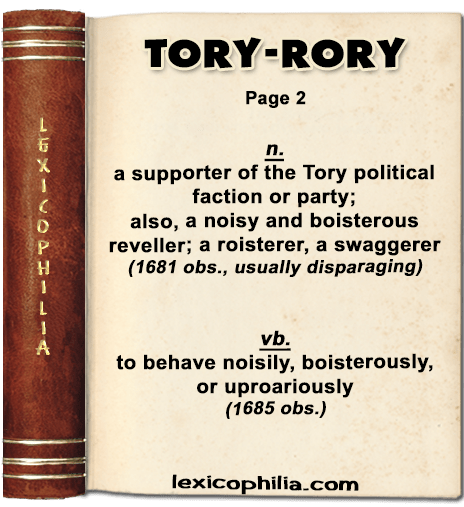
Word of the Day: TORY-RORY

ETYMOLOGY
Probably a reduplication (with consonant variation) of Tory (n.), perhaps after roary (loud, noisy, roaring)

EXAMPLE (for adj. 2.)
“… ‘Tis strange two of such different Tempers should so well agree: Methinks you look like two as roaring, ranting, tory rory Sparks as one would wish to meet withall. …”

From: Friendship in Fashion A Comedy
By Thomas Otway, 1678

Word of the Day: CHILD-GREAT

ETYMOLOGY
from child + great (big)

EXAMPLE
“… Swines-Bread, sovsed, doth not onely speed
A tardy Labour; but (without great heed)
If ouer it a
Child-great Woman stride,
Instant abortion often doth betide.
The burning Sun, the banefull Aconite,
The poysonie Serpents that vnpeople quite
Cyrenian Desarts, neuer Danger them
That wear about them th’ Artemisian Stem.
…”

From: Du Bartas his Deuine Weekes and Workes
By Guillaume de Saluste Du Bartas
Translated by Joshua Sylvester, 1605

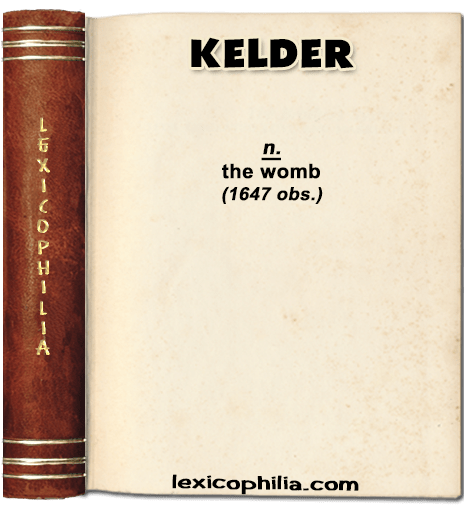
Word of the Day: KELDER

ETYMOLOGY
from Dutch kelder a (cellar)

EXAMPLE
“… Angell of light, und darknesse too, I doubt,
Inspir’d within, and yet posses’d without.
Majestick twilight in the state of grace,
Yet with an excommunicated face.
Charles and his Mask are of a different mint,
A Psalme of mercy in a miscreant print.
The Sun wears Midnight, Day is beetle-brow’d,
And Lightning is in
Keldar of a cloud. …”

From: The Character of a London-Diurnall with Severall Select Poems
By John Cleveland, 1647
The Kings Disguise

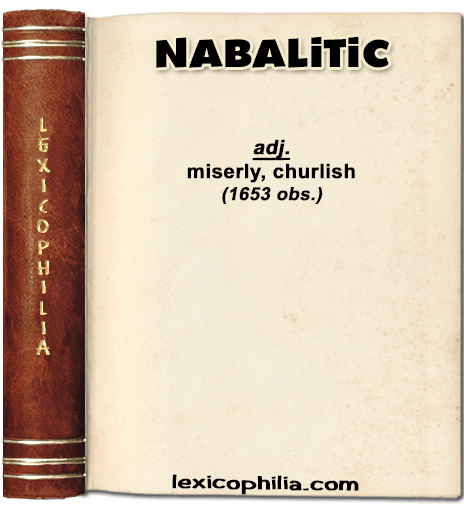
Word of the Day: NABALITIC

ETYMOLOGY
either  from nabal (a churlish or miserly person) + -itic;
or from nabalite (a foolish person) + -ic

EXAMPLE
“… since they see no reason, why these, as Christs Agents, and Gods Embassadours, should not as well deserve, and enjoy a competent, and comely maintenance, as any publique Officers, either Civill, or Military: Who have more of power to exact, but not more of right, either humane or divine; nor yet more of merit, to require their payes, and fees; Yea, Ministers still dare to hope, that those in power have not any such Nabalitick and churlish humor, as to feast those that shear, and sometimes slay the sheep; while they starve the Shepheards: …”

From: Hieraspistes a Defence by way of Apology for the Ministry and Ministers of the Church of England
By John Gauden, 1653

Word of the Day: DECUMANAL

ETYMOLOGY
from Latin decumanus (very large, immense; usually of waves) + -al

EXAMPLE
“… till in the closure of the luxuriant period, the decumanal wave of the oddest whimzy of al, enforced the charmed spirits of the auditory (for affording room to its apprehension) suddenly to burst forth into a laughter; which commonly lasted just so long, as he had leasure to withdraw behind the skreen, shift off with the help of a Page, the suite he had on, apparel himself with another, and return to the stage to act afresh; for by that time their transported, disparpled, and sublimated fancies, by the wonderfully operating engines of his solacious inventions, had from the hight to which the inward scrues, wheeles, and pullies of his wit had elevated them, descended by degrees into their wonted stations, he was ready for the personating of another carriage; …”

From: Εκσκυβαλαυρον [Ekskybalauron]: or, The Discovery of a Most Exquisite Jewel, More Precious Then Diamonds Inchased in Gold, the Like Whereof Was Never Seen in Any Age
By Thomas Urquhart, 1652

Word of the Day: RATTLE-NODDLED

ETYMOLOGY
from rattle (succession of short, sharp sounds) + noddled

EXAMPLE
“… Well, take this monster all together, and hees a clubfooted, hamble shanck’t, burstengutted, long-neck’t, rattlenodled, large lugg’d eagle eyd Hircocerous, a meere chimera, one of the devils best boys ; but having served him an apprentiship he’s now set up for himself and came out with his wares the last summer cave tertio. …”

From: Confused Characters of Conceited Coxcombs
By K.W., 1661

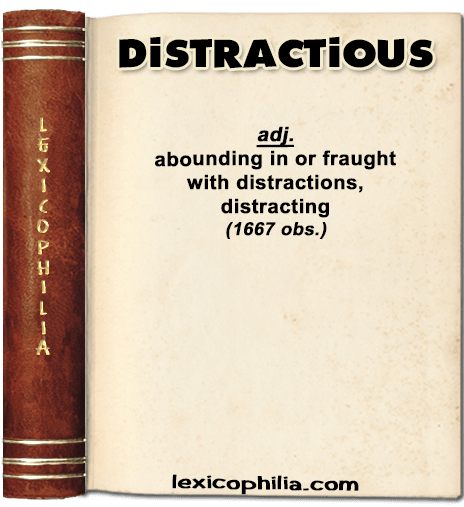
Word of the Day: DISTRACTIOUS

ETYMOLOGY
from distraction + -tious

EXAMPLE
“… There were indeed bruits of fear, and there were companies of suspicious persons who at the best, live upon the vices of the Nation, and who like Coasters ride out at Sea, to expect prey from wrecks, and small Boats which they can Master and prey upon, such Cormorants of pillage and snaps of ruine My Lodgings were an eminent instance of before they were burned yet open violence there was none to speak of, but much even of exemplary Justice, and charitable Mercy, In the time of the Fires raging, and of the distractious impetuosity; which I write not to vindicate the dissolute Multitude of pretended Labourers, and other instruments of carriage (who exhansed the rates of their own portadge, while perhaps their Wives, Children, and Servants, or some of them, were busie at other work, all becoming theirs which their hook could reach, or their Net drag away.) …”

From: A short narrative of the late dreadful fire in London
By Edward Waterhouse, 1667