Word of the Day: STERQUILINIOUS

ETYMOLOGY
from Latin sterquilinium (a dunghill), (from stercus (dung))

EXAMPLE
“… The itching of scriblers, was the scab of the time; It is just so now, that any triobolary pasquiller evry tressis agaso, any sterquilinious raskall, is licenc’d to throw dirt in the faces of Soveraign Princes in open printed language: But I hope the times will mend, and your Man slo if he hath any face, you have so well corrected him, So I rest …”

From: A New Volume of Letters
By James Howell, 1647
Letter to Dr. D. Featley, 1 Aug. 1644

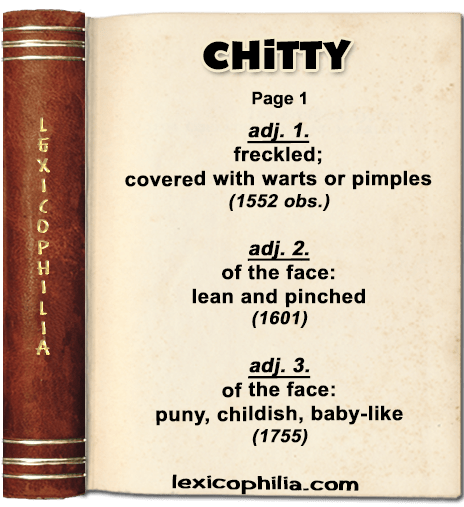
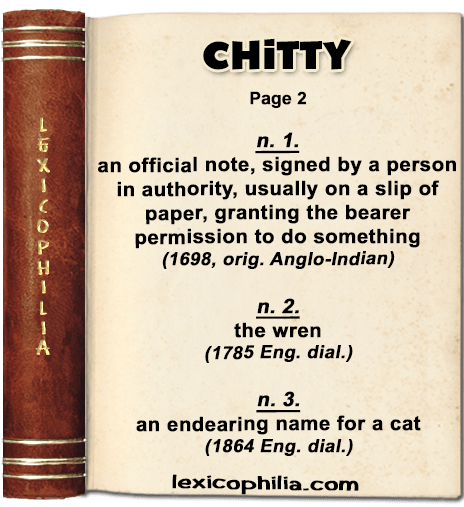
Word of the Day: CHITTY

ETYMOLOGY
adj. 1.: from chit (a freckle or wart, obsolete) + -y
adj. 2. & 3..: apparently deduced from chitty-face, (thin face), but afterwards associated with chit (the young of a beast)
n. 1.:  from Hindi chiṭṭhi, Marathi chitthi, chithi and its cognate
Hindi ciṭṭhi (document, letter, note, promissory note, pass), of uncertain origin

EXAMPLE (for adj. 1.)
“… How shall I stifle now my rising Phlegm,
Are all, are all his Thoughts employ’d on them
Shall they such
Chitty Jades so happy be,
And can he not bestow one word on me;
Hence from my Sight, avoid this wicked Room,
Go you ungracious Minxes, get you home.
…”

From: The Rival Milliners: or, the Humours of Covent Garden
A Tragi-Comi-Operatic-Pastoral Farce
By Robert Drury, 1737

Word of the Day: CELEBRIOUS

ETYMOLOGY
from Latin celebris (crowded, much frequented; festive), variant of celeber (famous, well-known) + -ous

EXAMPLE (for adj. 1.)
“… Howe happy are those men, who for their constant standing in the gappe, against Sathan & Antichrist, are every day illustrated, and made celebrious, by the maligning
of the adversaries of truth? Their soules are in peace, and their glory is promulgated by their enemies trumpets, who the more they oppugne them, the more we doe loue them, and eternise the memory of them.
…”

From: The Reasons vvhich Doctour Hill hath brought, for the vpholding of papistry, which is falselie termed the Catholike religion
By George Abbot, 1604

Word of the Day: FAM

ETYMOLOGY
short for famble;
for n. 4.: shortened from family

EXAMPLE (for n. 1.)
“… Jenny being very genteely dressed, he observed a Gentleman who was a very Rum Muns, (that is, a great Beau) who had a very Glim Star, (that is, a Ring) upon his Feme, (that is, Hand} which she longed to make, so giving the Hint to her Companions to Bulk the Muns forward, (that is, Push) they pushed him quite in; …”

From: Select trials at the Sessions-House in the Old-Bailey, for murder, robberies, rapes, sodomy, coining
From the year 1720, to this time. 1742
The following is a particular Account of the Transactions of the Life of Mary Young, alias Jenny Diver, &c. &c. &c.

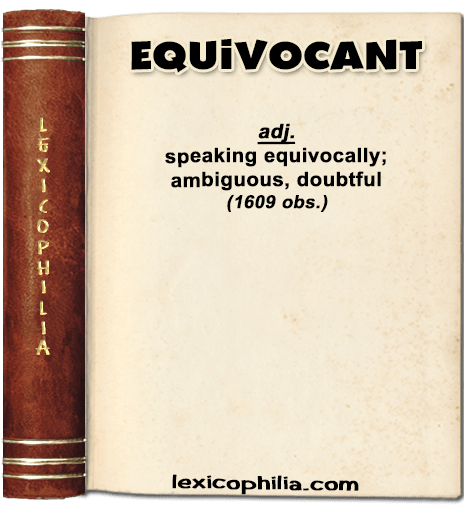
Word of the Day: EQUIVOCANT

ETYMOLOGY
from Latin aequivocantem, present participle of aequivocare, from aequivocus (ambiguous)

EXAMPLE
“… to trie battaile with the Medes: yea, and and answere by Oracle later than these before cited, which verily was true, but no lesse ambiguous and equivocant, …”

From: The Roman History Of Ammianus Marcellinus
Translated by Philemon Holland, 1609

Word of the Day: LUDIBUND

ETYMOLOGY
from Latin ludibundus, from ludere (to play)

EXAMPLE
“… I promise you, Hylobares, tho’ the fancy of Cuphophron may seem more ordinarily ludibund and lightsomely sportful, yet what he points at seems to be overlamentably true …”

From: Divine Dialogues, Containing Sundry Disquisitions & Instructions Concerning the Attributes and Providence of God
By Henry More, 1668

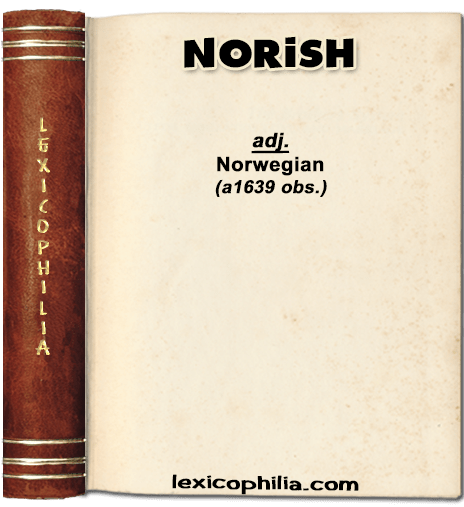
Word of the Day: NORISH

ETYMOLOGY
either an alteration of Norse (adj.) after Scottish, or directly from Norwegian norsk (Norse), with suffix substitution

EXAMPLE
“… for he was in prayer more frequent then yong ones are usually seen to be, of a spare diet, and so compassionate of the poor, as all that came in his hands he distributed among them: Servanus his Master loving him beyond others, was ordinarily wont to call him Mongah, which in the Norish tongue, signifieth a deare friend; and this way came he to be called Mungo. …”

From: The History of the Church of Scotland, beginning in the year of our Lord 203 and continued to the end of the reign of King James the VI
By John Spottiswood, 1677

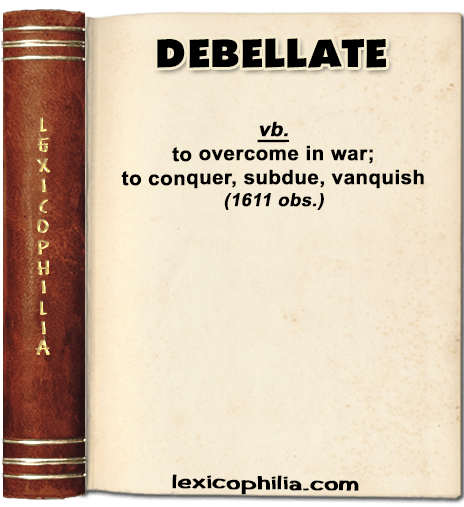
Word of the Day: DEBELLATE

ETYMOLOGY
from Latin debellat-, participial stem of debellare (to subdue in fight)

EXAMPLE
“… But let vs proceed: for now all claimes & quarrels were as open, as if no obstacle had euer beene interposed: the ignominie of their late terrible toiles wounded all true French hearts, and they desire (king Edward growne aged) not to seeme by sitting still vpon so many thornes of disgrace, and losse, to haue beene outwarred, though ouer-warred, and though in two or three battels inferior, yet not to haue beene clearely debellated. …”

From: The History of Great Britaine under the Conquests of ye Romans, Saxons, Danes and Normans
By John Speed, 1611

Word of the Day: PIGRITUDE

ETYMOLOGY
from Latin pigritudo (laziness); from Latin pigr-piger (lazy) + ‑itudo (itude)

EXAMPLE
“… But, with a little thoughtful frequenting, those deserted river-sides become contemplative and pleasant rambling-places, and, if some whim of fashion do not make the bank of the Hudson like the Marina of Smyrna, a fashionable resort, I have my Sunday afternoons provided for, during the pigritude of city durance. …”

From: Dashes at Life With a Free Pencil
By Nathaniel Parker Willis, 1845