Word of the Day

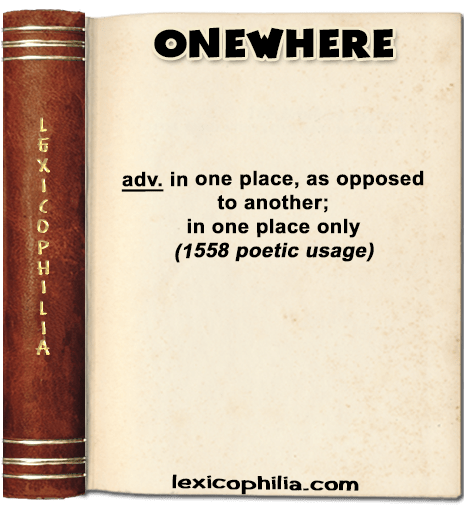
Word of the Day: ONEWHERE


ETYMOLOGY
from one + where, after somewherenowhere


EXAMPLE
“…if we translate the Hebrew or the Greek word once by purpose, never call it intent; if onewhere journeying, never traveling, if one where think, never suppose; if one where pain, never ache; if one where joy, never gladness…”

From: Bible (King James)
Translator Miles Smith, 1611

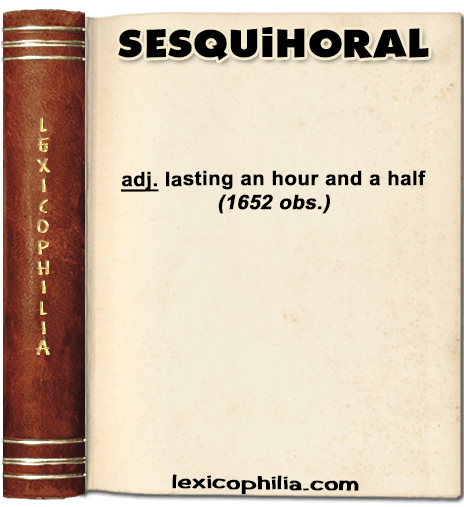
Word of the Day: SESQUIHORAL


ETYMOLOGY
from Latin sesquihora (an hour and a half)


EXAMPLE
“…but the greater part of those that were commissionated with the Scot-Ecclesiastical approbation) their rancour and spleen being still more and more sharpned against the English Nation, they in their tedious pharisaical prayers before Supper, and Sesquihoral Graces upon a dish of Skink, and leg of Mutton, would so imbue the mindes of the poor swains (on whose charge they were) with vaticinations of help from heaven…”

From: Εκσκυβαλαυρον (Ekskybalauron) (The Jewel)
By Thomas Urquhart, 1652

Word of the Day: EDIBILATORY


ETYMOLOGY
badly formed on edibilis (edible),
after adjs. in –atory


EXAMPLE
“…“Amen to your creed!” said I: “edibilatory Epicurism holds the key to all morality: for do we not see now how sinful it is to yield to an obscene and exaggerated intemperance?…”

From: Pelham, Or, Adventures of a Gentleman
By Edward Bulwer Lytton, 1828

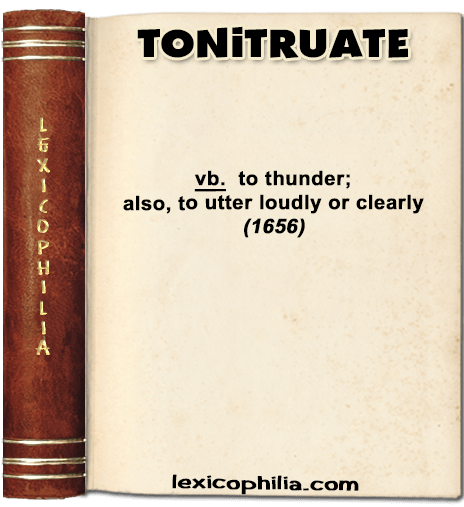
Word of the Day: TONITRUATE


ETYMOLOGY
from Latin tonitruare (to thunder)


EXAMPLE
“…I cannot fulminate or tonitruate words,
To puzzle intellects; my ninth lassaffords
No Lycophronian buskins, nor can strain
Garagantuan lines to gigantize thy vein;
Nor make a jusjurand, that thy great plays
Are tierra-del-fuegos or incognitas;
Thy Pegasus, in his admir’d career,
Curvets no caprioles of nonsense here
…”

From: Panegyric to James Shirley’s Grateful Servant, (preface verses)
By Thomas Randolph, 1630

Word of the Day: WRITINGER


ETYMOLOGY
from writing (vbl. n.) + -er


EXAMPLE
“…and that of the shape of the x from a form like theMS. & to the modern one, which occurs towards the end of the volume, may help some future and more learned writinger to settle the date more closely than I can…”

From: Bishop Percy’s Folio Manuscript
By F. J. Furnivall (Forewords)
J.W. Hales, 1867