Word of the Day: APPROPINQUE


ETYMOLOGY
from Latin appropinquāre (to approach),
from ad (to), and propinquus, from prope (near)


EXAMPLE
“…The knotted bloud within my hose,
That from my wounded body flows,
With mortal Crisis doth portend
My dayes to appropinque an end.
I am for action now unfit,
Either of fortitude or wit…”

From: Hudibras, Written in the Time of the Late Wars
By Samuel Butler, 1663
Canto III. The Argument

Word of the Day: AMNICOLIST

ETYMOLOGY
from Latin amnicola (growing beside a river)
(from amnis (river) + -cola (inhabitant, worshipper)) + -ist


EXAMPLE
“…society without seleection, constitutional bumpers, and stale anecdotes, I determined to explore the banks of the Liffey, and to search among the amnicolists for that entertainment which eluded my pursuit in the urbanity of the capital…”

From: Hibernian Magazine
By Robert Jephson, 1782

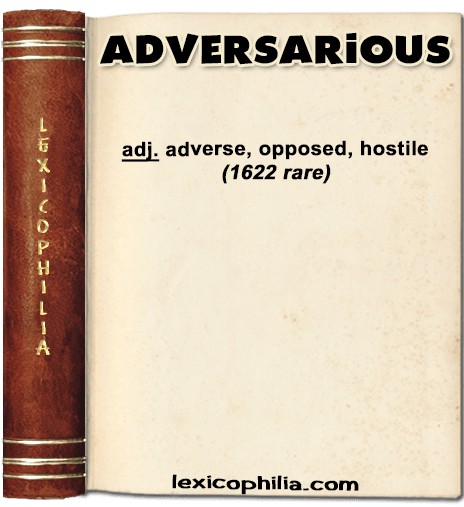
Word of the Day: ADVERSARIOUS

ETYMOLOGY
from Latin adversarius (opposed, hostile, adverse, harmful, injurious) + -ous

EXAMPLE
“…This resisting and aduersarious Empire, while it fought against Christ it serued Christ, while it killed his Church it increased his Church, and while it fought against Religion, it became a meanes to spread and inlarge it…”

From: Diseases of the Time Attended by their Remedies
By Francis Rous, 1622

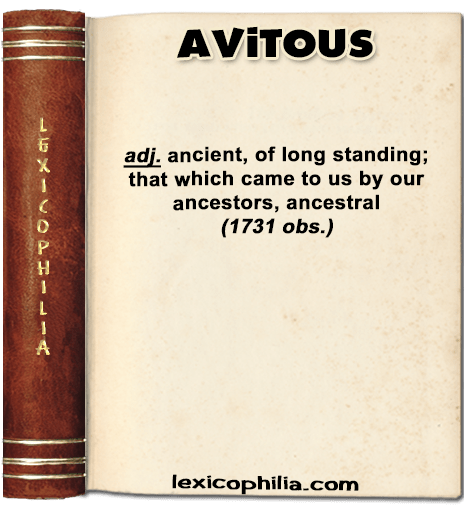
Word of the Day: AVITOUS

ETYMOLOGY
from Latin avītus of or pertaining to the avus (grandfather) + -ous

EXAMPLE
“…Being a leucothiop, he was not even a mediocrist, but a mere polypragmatical hafter or barrator. His inscience of avitous justicements, and of lexicology, his perissology and battology, imparted to his tractation of his cause, an imperspecuity which rendered it immomentous to the juratory audients…”

From: Letters to Squire Pedant in the East
Letter No. IX, 1843
By Lorenzo Altisonant (pseudonym Samuel Klinefelter Hoshour),
an Emigrant to the West, 1856

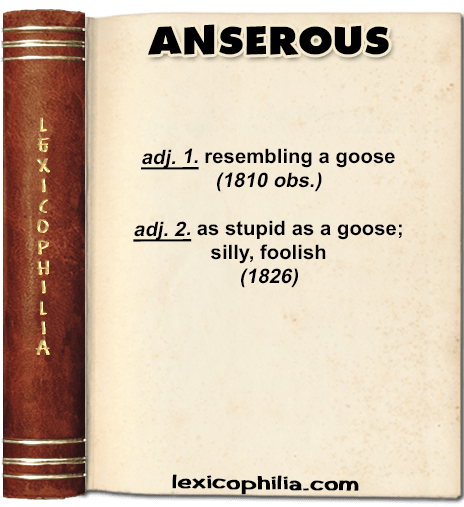
Word of the Day: ANSEROUS

ETYMOLOGY
from Latin anser (goose) + -ous

EXAMPLE
“…Can any one be so anserous as to suppose, that the faculties of young men cannot be exercised, and their industry and activity called into proper action, because Mr. Hamilton teaches, in three or four years, what has (in a more vicious system) demanded seven or eight?…”

From: The Edinburgh Review, June, 1826
Hamilton’s Method of Teaching Languages

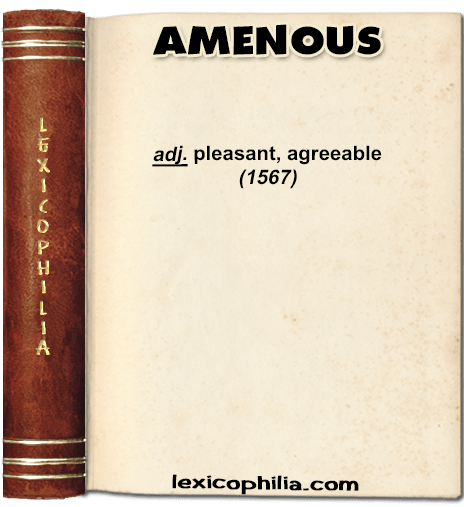
Word of the Day: AMENOUS

ETYMOLOGY
from Latin amœnus (pleasant) + –ous

EXAMPLE
“…Whose mynde was none other but to pass the time, and their predestinate perpetual captivitie in the amenous varietie of over reading and revoluting many volumes and sundry books of divers sciences and strange matters…”

From: Some Specimens of the Poetry of the Antient Welsh Bards
By the Rev. Mr. Evan Evans, 1764
A Poem Entitled, The Ode of the Months, composed by Bwilym Ddu of Arfon, to Sir John Griffydd Llwyd, of Tregarnedd and Dinornig

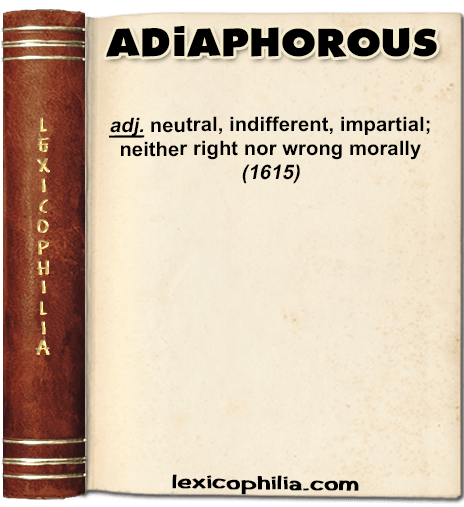
Word of the Day: ADIAPHOROUS

ETYMOLOGY
from Greek ἀδιάϕορ-ος (indifferent) + -ous

EXAMPLE
“…From all which may be inferred, that dissentions among the protestantes are not merely personall, or but pointes adiaphorous, indifferent, being as it were but peccant humors, and not true or formed diseases in their church, but they do concerne most profound doubtes of their religion, since otherwaies they would neuer anathematize, or condemne one an other with such acerbity of wordes…”

From: Whyte Dyed Black
Or A discouery of many most foule blemishes, impostures, and deceiptes
– Thomas Worthington, 1615