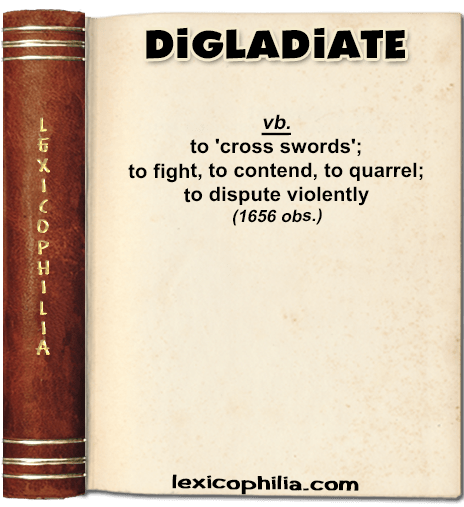
Word of the Day: DIGLADIATE

ETYMOLOGY
from Latin digladiari from di-dis- (asunder, in different directions) + gladius (a sword)

EXAMPLE
“…For what else are the Writings of many men, but mutual Pasquils and Satyrs against each others lives, wherein digladiating like Eschines and Demosthenes, they reciprocally lay open each others filthiness to the view and scorn of the world. The fear therefore of being stained, and publickly disgraced, might be reason enough to keep them back from entring these contentions. …”

From: Golden Remains of the Ever Memorable Mr. John Hales
By John Hales, 1659

Word of the Day: DUBEROUS

ETYMOLOGY
corruption of ‘dubious’

EXAMPLE
“…The Squire,” said he, ” hadn’t a-made him no proposal at all, and was duberous if his charackter would serve. Now, says I to myself, seeing as how the cat jumps, if so be as I steps in, before nothing and scrape of pen, where ‘s the harm ? …”

From: Lawrie Todd, or, The Settlers in the Woods
By John Galt, 1830

Word of the Day: DRY-FIST

ETYMOLOGY
from dry (miserly, stingy) + fist

EXAMPLE
“…Ferentes. Yet again ? nay, an if you be in that mood, shut up your fore-shop, I’ll be your journeyman no longer. Why, wise Madam Dryfist, could your mouldy brain be so addle to imagine I would marry a stale widow at six-and-forty? Marry gip! are there not varieties enough of thirteen? come, stop your clap-dish, or I’ll purchase a carting for you. By this light, I have toiled more with this tough carrion hen than with ten quails scarce grown into their first feathers …”

From: Loves Sacrifice
By John Ford, 1633

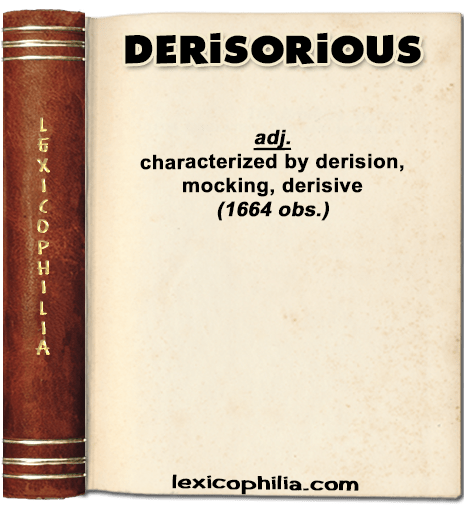
Word of the Day: DERISORIOUS


ETYMOLOGY
from Latin derisorius, from derisor (derider, mocker) + -ous


EXAMPLE
“…And that therefore the Spirit of Prophecy foreseeing these times, whenas for such a space he called Rome Pergamus, this succeeding Scene coming on, he might very well change the title of Pergamus into that of Thyatira, with a derisorious Allusion to the occasion of the name of that City, from the news of a Daughter being born to Nicanor.…”

From: An Antidote Against Idolatry
By Henry More, 1664

Word of the Day: DULCARNON


ETYMOLOGY
from Latin dulcarnon Pythagoras’ theorem
from Arabic ḏu’l-qarnayn (two-horned, lit. ‘possessor of the two horns’)
from ḏu (lord, possessor) + al (the) + qarnayn, dual of qarn (horn)


EXAMPLES
“…Criseyde answerde, :As wisly God at reste
My soule bringe, as me is for hym wo!
If that ich hadde grace to do so.
And eem, y-wis, fayn wolde I doon the beste,
But whether that ye dwelle or for him go,
I am, til God me bettre mynde sende,
At dulcarnoun, right at my wittes ende
…”

From: Letter from Mrs. M. Roper in Thomas More’s Works, 1441


“…Siva holds the drums of creation in one hand and the fires of destruction in the other—an either/or dulcarnon from which there seems no escape…”

From: A Wake Newslitter
December, 1974

Word of the Day: DEBATOUS


ETYMOLOGY
from debat (debate, a controversy or discussion + -ous


EXAMPLE
“…Appetytes of auaryce be to them so amerous
Abusyon and arrogaunce ben of one affynyte
Aduenture and angre ben aye so debatous.
Faynynge estate of counterfet auctoryte
Adulacyon of aduenture mayst thou not auaunt the
As a lyer in goodnes in thyne araye doest appere
Englande may wayle that euer it came here
…”

From: Here Begynneth a Treatyse of this Galaunt
By John Lydgate (attributed name), ?1510

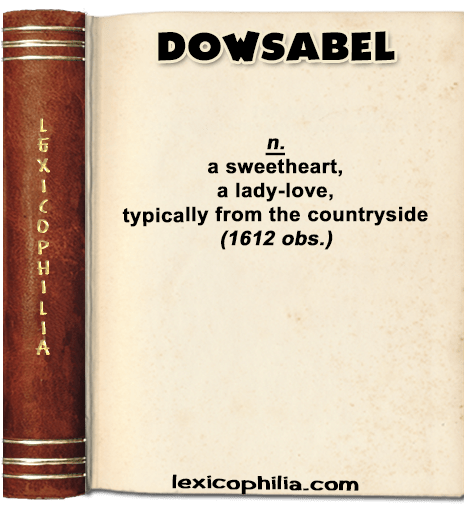
Word of the Day: DOWSABEL


ETYMOLOGY
from the female forename Dowsabel (also DowsabellDousabella);
probably from Anglo-Norman and Old French douce (quiet, sedate, prudent) + ‑abel (in the female forenames AmabelIsabelMirabel);
perhaps originally used as the name of a character in a lost romance


EXAMPLE
“…With thinking on the booties, Dol., brought in
Daily, by their small parties. This deare houre,
A doughtie Don is taken, with my Dol.;
And thou maist make his ransome, what thou wilt,
My Dousabell: He shall be brought here, fetter’d
With my faire lookes, before he sees thee; and throwne
In a downe-bed, as darke as any dungeon
…”

From: The Alchemist
By Ben Jonson, 1612

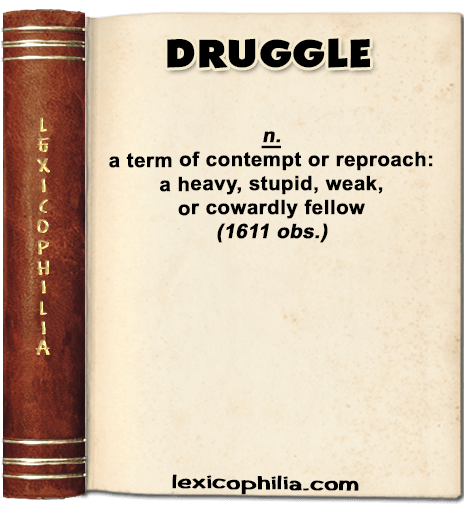
Word of the Day: DRUGGLE


ETYMOLOGY
of uncertain origin;
possibly from drug (n.) + ‑le


EXAMPLE
“…The Bunsellers or Cake-bakers were in nothing inclinable to their request; but (which was worse) did injure them most outragiously, calling them pratling gablers, lickorous gluttons, freckled bittors, mangie rascals, shiteabed scoundrels, drunken roysters, slie knaves, drowsie loiterers, slapsauce fellows, slabberdegullion druggels, lubbardly lowts, cosening foxes, ruffian rogues, paultrie customers, sycophant-varlets, drawlatch hoydons, flouting milksops, jeering companions, staring clowns, forlorn snakes, ninnie lobcocks, scurvie sneaksbies, fondling fops, base lowns, sawcie coxcombs, idle lusks, scoffing Braggards, noddie meacocks, blockish grutnols, doddi-pol-jolt-heads, jobernol goosecaps, foolish loggerheads, slutch calf-lollies, grouthead gnatsnappers, lob-dotterels, gaping changelings, codshead loobies, woodcock slangams, ninnie-hammer flycatchers, noddiepeak simpletons; Turdie gut, shitten shepherds, and other such like defamatory epithetes...”

From: The Works of the Famous Mr. Francis Rabelais
Translated by Thomas Urquhart, 1653

Word of the Day: DELITIGATE


ETYMOLOGY
from Latin delitigare (to scold to exhaustion; to dispute wholeheartedly)


EXAMPLE
“…Were our author to change sides (which fanatics oftenest do), we should in all likelihood find him delitigating just as copiously and as loudly against his present idol; perhaps somewhat after this fashion – “He has debauched his visual taste by the use of stimulant colours…”

From: The Athenaeum: Journal of Literature, Science, and the Fine Arts
“Modern Painters: their Superiority in the Art of Landscape Painting”
By a Graduate of Oxford, February 10, 1844