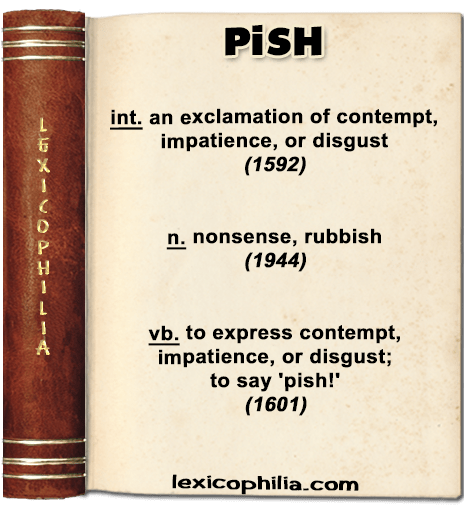
Word of the Day: PISH


ETYMOLOGY
an imitative or expressive formation


EXAMPLE
“…Hoe! God, be here! on their bald, burnt, parchment pates. Pish, pish! what talke you of olde age or balde pates? Men and women that haue gone vnder the south pole, must lay of theyr furre night-caps in spyght of their teeth, and become yeomen of the vineger bottle…”

From: Pierce Penilesse, His Supplication to the Diuell
By Thomas Nashe, 1592

Word of the Day: PEDESTRIAL


ETYMOLOGY
from Latin pedestr-pedester, also pedestris (going on foot), in prose, prosaic
(from pedes a person who goes on foot
(from ped-pēs (foot) + -es (after eques) + -ter + -al 


PRONUNCIATION
puh-DESS-tree-uhl


EXAMPLE
“…For, the formall esteemed causes (which are pedestriall, equestriall, or nauti∣call) stand either at the disposition of the efficient; or pretend perfection and vse from the finall…”

From: An Essay of the Meanes Hovv to Make our Trauailes, into Forraine Countries,
the More Profitable and Honourable
By Sir Thomas Palmer, 1606

Word of the Day: POCULENT


ETYMOLOGY
from Latin poculentus (drinkable, suitable for drinking),
from poculum (a cup, a drinking vessel) + -lentus (-lent), after vinolentus (addicted to drinking wine)


EXAMPLE
“…As for radish and tarragon, and the like, they are for condiments, and not for nourishment. And even some of those herbs which are not esculent, are notwithstanding poculent; as hops, broom, &c…”

From: Sylva Sylvarum
By Francis Bacon, 1626

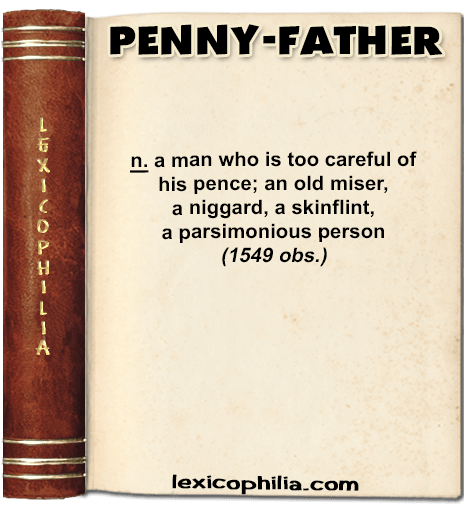
Word of the Day: PENNY-FATHER


ETYMOLOGY
from penny + father


EXAMPLE
“…This skapethrifte, throweth his good{is} against the walles. That pennie father, skrapeth it togethers, bothe by God, and by the diuell…”

From: The Praise of Folie
Moriæ encomium a booke made in Latine by that great clerke Erasmus Roterodame,
Translated by Thomas Chaloner Knight, 1549

Word of the Day: PEDISSEQUOUS


ETYMOLOGY
from Latin pedisequus (following on foot, a foot-follower), 
from pedi- (foot) + -sequus (following), sequī (to follow)


EXAMPLE
“…not onely melancholical and contumacious ones, but viscid and pituitous also, which sometimes put on the habit of Melancholly, and some adust bilious humours: and therefore we adde Rhabarb and Turbith, that we may with the Melancholical Captain-humour, educe the Pituitous, his companion inseparable, and also the Bilious, which is pedissequous.
And because this Medicament most respects melancholy, we have selected black Hellebore for this black humour; rejecting the white, as more convenient for Phlegm…”

From: A Medicinal Dispensatory: Containing the Whole Body of Physick
By Jean de Renou
Translated by Richard Tomlinson, 1657
The Apothecaries Shop: Of Liquid Electuaries

Word of the Day: PLUME-PLUCKED


ETYMOLOGY
from plume (mark of honour or distinction) + plucked


EXAMPLE
“…Yorke. Great Duke of Lancaster, I come to thee
From plume-pluckt Richard, who with willing Soule
Adopts thee Heire, and his high Scepter yeelds
To the possession of thy Royall Hand…”

From: The Tragedie of King Richard the Second
By William Shakespeare, 1597