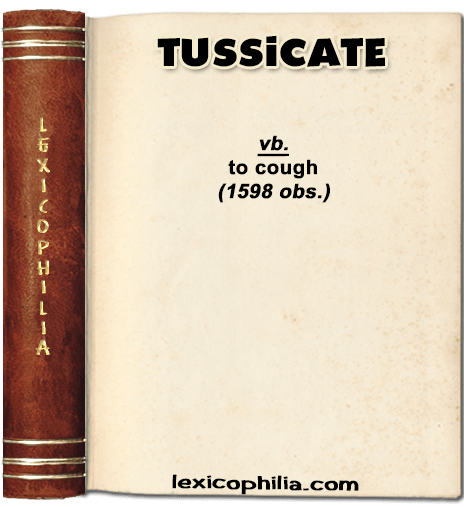
Word of the Day: TUSSICATE


ETYMOLOGY
from Latin tussicus (afflicted with tussis a cough)


EXAMPLE
“…Phisition Mirus talkes of saliuation,
Of Tophes and Pustules, and Febricitation;
Who doth ingurgitate, who tussicate,
And who an vlcer hath inueterate.
Thus while his Inkehorne termes he doth apply,
Euacuated is his ingenie.
..”

From: Chrestoleros. Seuen Bookes of Epigrames
By Thomas Bastard, 1598
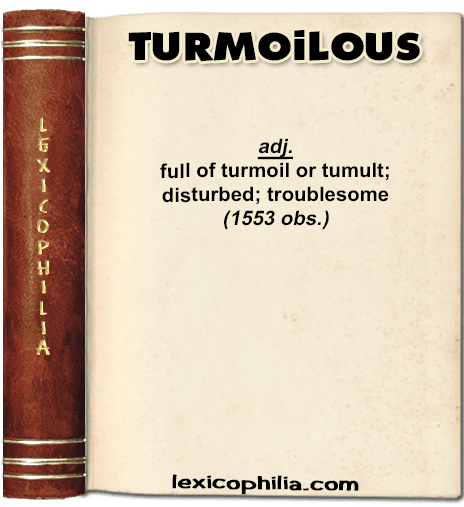
Word of the Day: TURMOILOUS


ETYMOLOGY
from turmoil + -ous


EXAMPLE
“…but trueth hys frende more then they bothe, euen so I thinke it no iniurye nor contumelye to Saynct Augustyne, yf the same were sayde of hym also geuynge hym otherwyse hys dewe commendacions, as he was surelye an excellent man, of dyuyne wytte, and knowledge, and so trauayled in settynge foorth Christes true Relygion in those turmoylous dayes, in perpetual combatte, agaynste learned heretykes and Prynces of the worlde, that he is worthelye called a Doctour and Pyller of Christes Churche…”

From: A Treatyse of the Newe India with other New Founde Landes and Islandes
By Sebastian Münster
Translated by Richard Eden, 1553

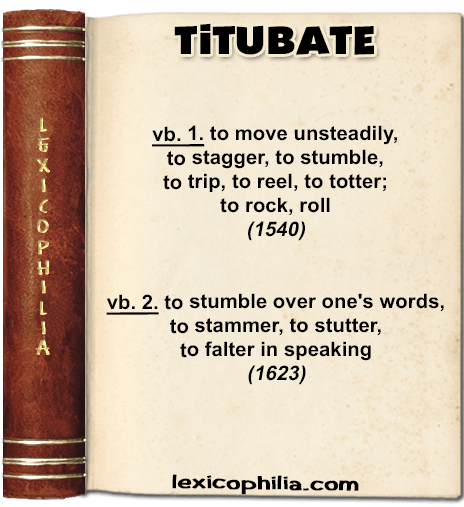
Word of the Day: TITUBATE


ETYMOLOGY
from Latin titubat-, past participial stem of titubare (to walk unsteadily, to totter, to stagger, to falter, to vacillate or dither, to make a mistake, slip up, or stumble (in speech or action)


PRONUNCIATION
TIT-yuh-bayt


EXAMPLE
“…Repercussed by the ryght redolent & rotounde rethorician R. Smyth P. with annotacios of the mellifluous and misticall Master Mynterne, marked in the mergent for the enucliacion of certen obscure obelisques, to thende that the imprudent lector shulde not tytubate or hallucinate in the labyrinthes of this lucubratiuncle…”

From: An Artificiall Apologie (title page)
By R. Smyth, 1540

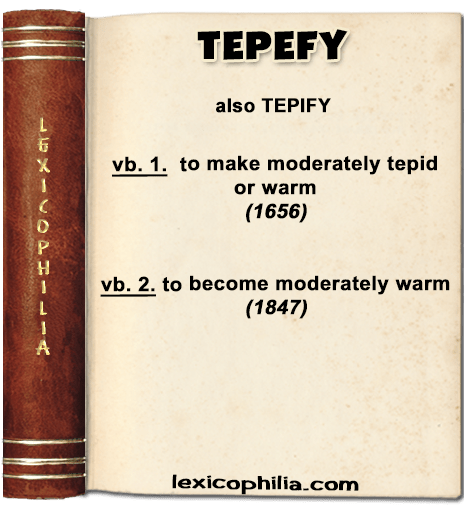
Word of the Day: TEPEFY


ETYMOLOGY
from Latin tepefacere (to make tepid),
from tepere (to be lukewarm)


EXAMPLE (for vb. 1)
“…Sonorous, thro’ the patient’s bosom pours
Its antidotal notes, the flood of life,
Loos’d at its source by tepefying strains,
Flows like some frozen silver stream unthaw’d
At a warm zephyr of the genial spring
…”

From: The Power of Harmony
By John Gilbert Cooper, 1745

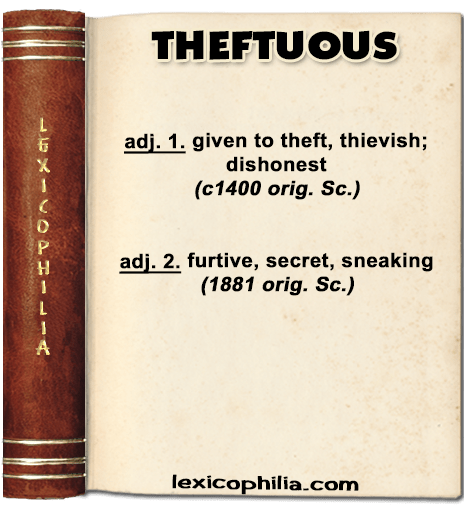
Word of the Day: THEFTUOUS


ETYMOLOGY
alteration (influenced by -uous) of Middle English thiftwis,
from thifte (theft) + wis (wise)


PRONUNCIATION
THEFF-tyoo-uhss


EXAMPLE
“…It is declared, that whosoever intercommuns with Thieves, or assists them in their theftous stealings, or deeds, either in going, or coming, or gives them meat, harbour, or assistance, or trysts with them any manner of way, they shall be pursued, either Civilly, or Criminally; but this act strikes not against such as have entertained the Thief any considerable time, after the committing of the Theft, and before Letters of Intercommuning were execute…”

From: The Laws and Customes of Scotland
By Sir George Mackenzie, 1678

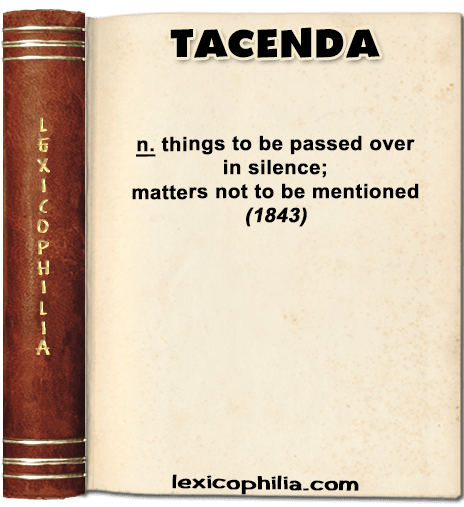
Word of the Day: TACENDA


ETYMOLOGY
Latin, gerundive neuter pl. of tacere (to be silent)


EXAMPLE
“…With due rigour, Willelmus Sacrista, and his bibations and tacenda are, at the earliest opportunity, softly, yet irrevocably put an end to. The bibations, namely, had to end; even the building where they used to be carried on was razed from the soil of St. Edmundsbury, and ‘on its place grow rows of beans:’ Willelmus himself, deposed from the Sacristry and all offices, retires into obscurity, into absolute taciturnity unbroken thenceforth to this hour…”

From: Past and Present
By Thomas Carlyle, 1843

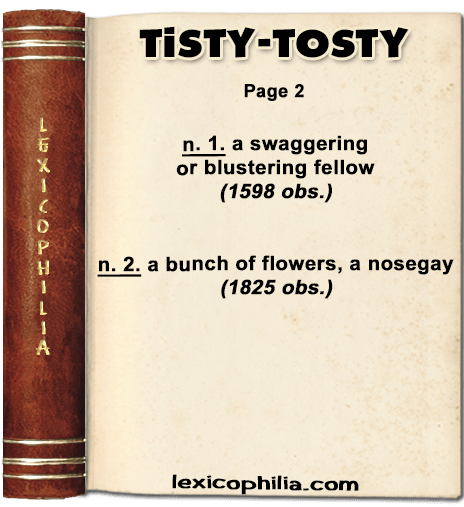
Word of the Day: TISTY-TOSTY


ETYMOLOGY
for int.: perhaps a mere ejaculation
for n. 2.: it has been compared with obsolete tyte tust(e) or obsolete tussemose (a nosegay)


EXAMPLE
“…And now I wil daunce, now wil I praunce,
For why I haue none other woork:
Snip snap Butter is no bone meat:
Knaues flesh is no Porke.
Hey tisty tosty an Ole is a bird,
Iack a napes hath an olde face:
You may beleeue me at one bare woord,
how like you this mery cace?
…”

From: A Pleasant Enterlude, Intituled, Like Will to Like Quoth the Deuill to the Collier
By Ulpian Fulwell, 1568

Word of the Day: TETTY


ETYMOLOGY
for adj.: of obscure origin
for n.1.: from teat () + -y 


EXAMPLE
“…but if they loose, though it be but a trifle, two or three games at tables, or a dealing at Cards for 2d a game, they are so cholericke and tetty that no man may speake with them, and breake many times into violent passions, oaths, imprecations, and vnbeseeming speeches, little differing from mad men for the time…”

From: The Anatomy of Melancholy
By Robert Burton, 1621

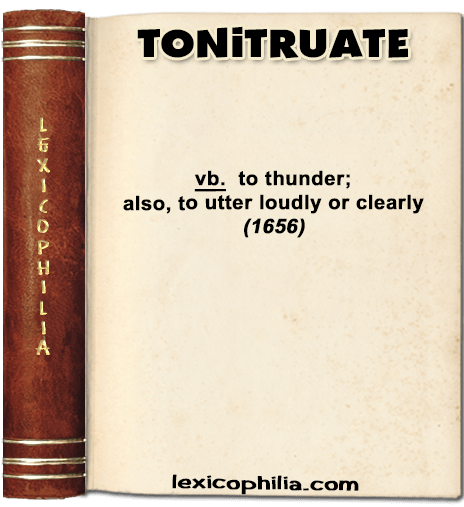
Word of the Day: TONITRUATE


ETYMOLOGY
from Latin tonitruare (to thunder)


EXAMPLE
“…I cannot fulminate or tonitruate words,
To puzzle intellects; my ninth lassaffords
No Lycophronian buskins, nor can strain
Garagantuan lines to gigantize thy vein;
Nor make a jusjurand, that thy great plays
Are tierra-del-fuegos or incognitas;
Thy Pegasus, in his admir’d career,
Curvets no caprioles of nonsense here
…”

From: Panegyric to James Shirley’s Grateful Servant, (preface verses)
By Thomas Randolph, 1630