ETYMOLOGY
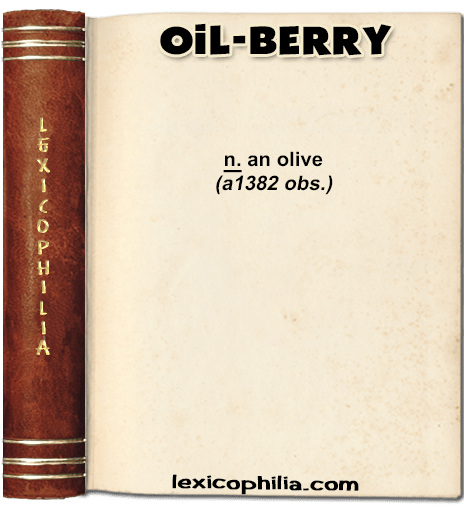
from oil + berry
EXAMPLE
“…And þer ſhal ben laft in it as þe braunche of a cluſter, and as þe ſhaking out of þe oile berie, as of two or of þre olyues in þe cop of þe braunch…”
From: Bible (Wycliffe, early version), a1382
ETYMOLOGY
from oil + berry
EXAMPLE
“…And þer ſhal ben laft in it as þe braunche of a cluſter, and as þe ſhaking out of þe oile berie, as of two or of þre olyues in þe cop of þe braunch…”
From: Bible (Wycliffe, early version), a1382
ETYMOLOGY
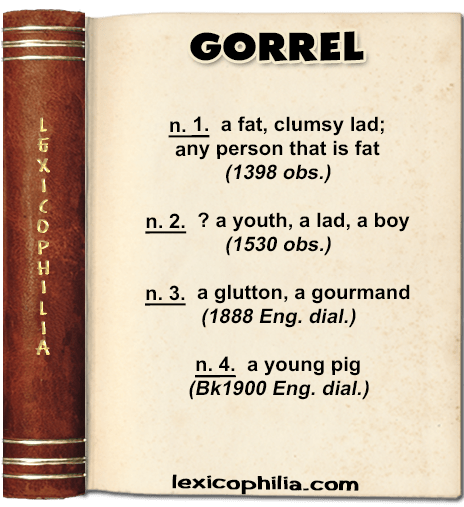
from Old French gorel, gorreau (a pig, hog);
related to Old French gore (sow): of unknown origin.
EXAMPLE (for n. 1.)
“…Crampe that comyth of replycyon fallyth ofte to fatte men and flesshly and well fedde and gorrelles…”
From: Bartholomew de Glanville’s De Proprietatibus Rerum,
Translated by John Trevisa, 1495

ETYMOLOGY
diminutive of faunt: aphetic form of Old French enfaunt, enfant;
the shortened form has not been found in French, but Italian has the corresponding fante (boy, servant, foot-soldier), whence German fant
EXAMPLE
“…”Þat is soth,” quod clergye “I se what þow menest,
I shal dwelle as I do my deuore to shewen,
And conformen fauntekynes and other folke ylered,
Tyl pacience haue preued þe and parfite þe maked…”
From: The Vision of William concerning Piers the Plowman,
By William Langland, 1377
ETYMOLOGY
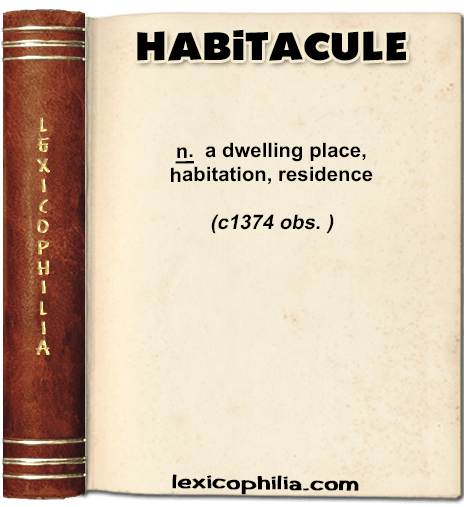
from Latin habitaculum (dwelling-place)
EXAMPLE
“…of maneres and ek of resoun of hir lyuynge ben enhabyted in the clos of thilke lytul habytacule to the whiche naciouns what for deficulte of weyes and what for deficulte of langages…”
From: Boethius’ De Consolatione Philosophiae,
By Geoffrey Chaucer, 1374

ETYMOLOGY
from recray (to tire or wear out), from Anglo-Norman recreire, recreere and Middle French recroire (to desist, give up, to acknowledge oneself defeated, to yield in battle, to fail to go back on what one has said, to tire (something) out, to become tired out (especially of a horse), to confess (something), to go back on one’s sentiments or beliefs)
EXAMPLE
“…The toke[n]s ar not good
To be true Englysh blood
For if they vnderstood
His traytourly dispyght
He was a recrayed knyght
A subtyll sysmatyke
Ryght nere an heretyke
Of grace out of the state
And dyed excomunycate…”
From: Agaynst the Scottes
By John Skelton, a1529

ETYMOLOGY
either from a) high (adj.) + -ful;
or perhaps from b) the same word as eyeful (arousing or inspiring awe, fear, or dread; terrible, dreadful)
EXAMPLE
“…So þat he was riche him sulf · & þat lond pouere al out
Sturne he was þoru out al · & heiuol & prout
Suiþe þikke mon he was · & of grete strengþe…”
From: The Metrical Chronicle of Robert of Gloucester, c1325-c1425
ETYMOLOGY
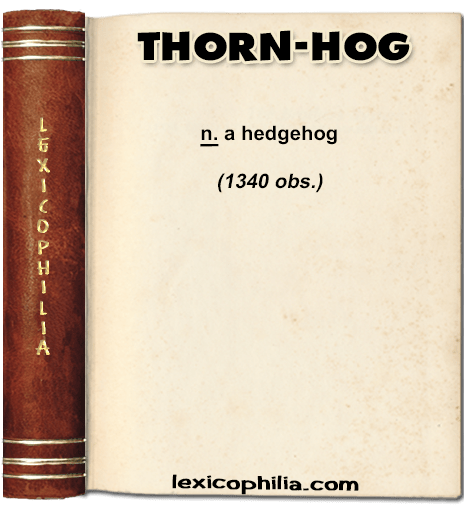
from Middle English thornhog, equivalent to thorn + hog
(hog was also used for hedgehog, aardvark, capybara)
EXAMPLE
“… zuyche men byeþ anlykned to þe þorn-hog. þet ys al ywryȝe myd prikyinde eles. and hit is to moche fel..”
From: Dan Michel’s Ayenbite of Inwyt : or, Remorse of Conscience, 1340
ETYMOLOGY
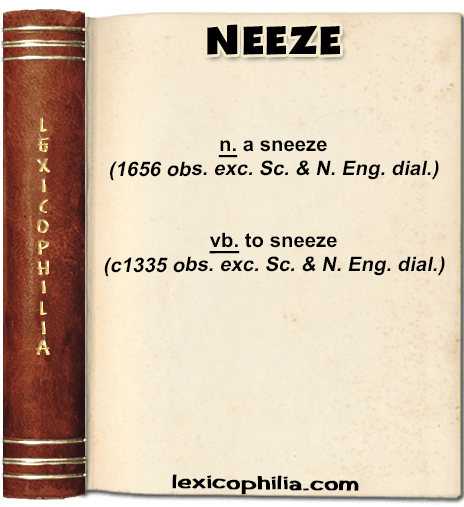
From Oxford English Dictionary: either from early Scandinavian (compare Old Icelandic hnjósa , Norwegian nyse , †njosa , Old Swedish niusa (Swedish nysa ), Danish nyse ), or the reflex of an unattested Old English word from the same Germanic base, as is perhaps suggested by the number of cognates in other West Germanic languages: Middle Dutch niesen (Dutch niezen ), Middle Low German nēsen , neysen , neesen , etc., Old High German niesan , niosan , niusan (German niesen)
EXAMPLE (for noun)
“…Soto was in an exteam Agony for his Master: Lamia was grieved and her Hand-Maids heavie, but the Inchantress soon recovered him by watering his Visnomy with her warm Urine (the customary way (it seems) of that Countrey to revive the enfeebled) which not onely illuminated his dim eyes, but circumgyring about his weasand, enforced him to a manly neese, so that within a little time (to their great comfort) he sate up, calling for some Wine, which being brought, he drank a hearty draught to the Inchantress, though one might perceive (with half an eye) wrath and disdain in Capitall Characters on his front; which Lamia perceiving, administred this Julip to allay his fiery Choller….”
From: Don Zara del Fogo; A Mock-Romance
By Samuel Holland, 1656
ETYMOLOGY
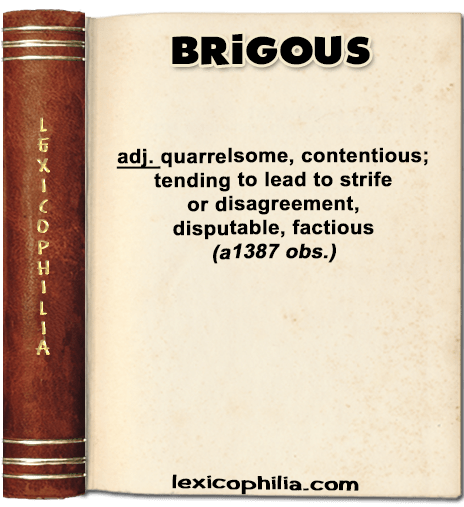
either from:
a) Middle French brigeux (from brigue (a quarrel, an argument; strife, contention)) + -eux (-ous)
b) from Latin brigosus (from briga (quarrel, dispute, strife) + -ōsus (-ous) + -ous
c) or directly from brigue (a quarrel, an argument) + -ous
EXAMPLE
“…Þis answere assoileth noght at all This brigous questioun…”
From: De Consolatione Philosophiae (on The Consolation of Philosophy)
By Anicius Manlius Severinus Boethius
Translated by John Walton, c1450

ETYMOLOGY
from wlat (nausea, loathing, disgust) from Old English wlætta
EXAMPLE
“…þe thrid pine es hard to drei,
O wormes þat sal neuer dei,
Fell dragons and tades bath
þat ar apon to lok ful lath,
Ful wlatsum on to here or se,
Ful wa es þam þat þare sal be;
Als we se fixs in water suim,
Sua liue þai in þat lou sa dim….”
From: Cursor Mundi
A Northumbrian poem of the 14th century
 Lexicophilia