ETYMOLOGY
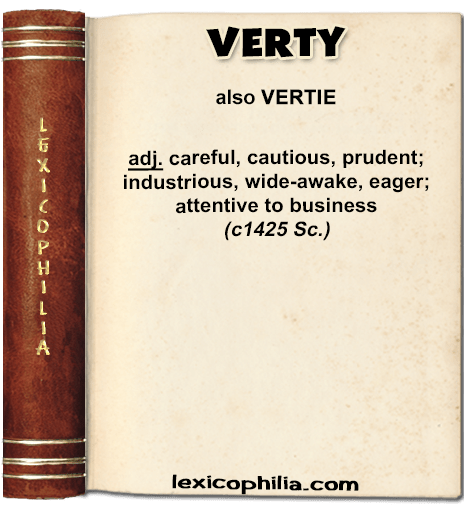
aphetic from averty (well-advised, prudent, cautious)
EXAMPLE
“…He wes wys and rycht werty…”
From: The Orygynale Cronykil of Scotland
By Andrew of Wyntoun, c1425
ETYMOLOGY
aphetic from averty (well-advised, prudent, cautious)
EXAMPLE
“…He wes wys and rycht werty…”
From: The Orygynale Cronykil of Scotland
By Andrew of Wyntoun, c1425

ETYMOLOGY
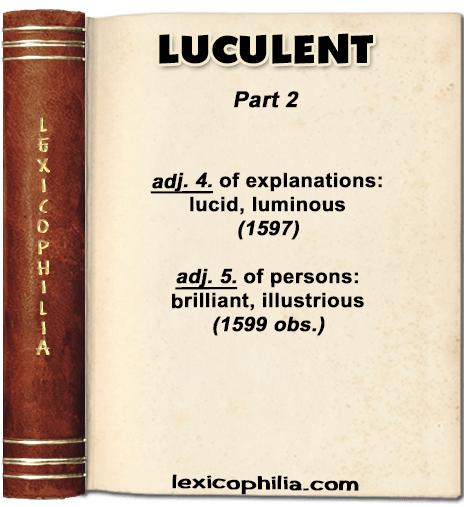
from Latin luculentus, from luc-, lux (light)
EXAMPLE
“…Trie out the grape vnhurt, neither to ripe
Neither to sowre, as gemmys luculent,
Of soft and hard as goodly is to gripe…”
From: The Middle-English translation of Palladius De Re Rustica

ETYMOLOGY
from Old French orafle (giraffe),
from Arabic zarāfa , zurāfa (giraffe)
EXAMPLE
“…Þere also be many bestes þat ben clept Orafles, In Arabye þei ben clept Gerfauntz, þat is a best pomelee or spotted…”
From: Mandeville’s Travels, a1425
Edited by Paul Hamelius, 1919
ETYMOLOGY
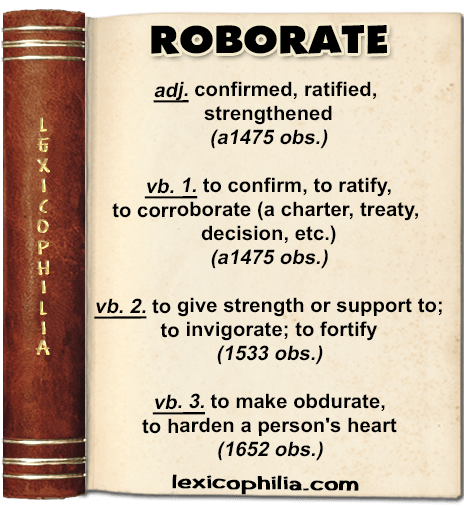
from Middle English roboraten, from Latin roboratus,
past participle of roborare (to strengthen, confirm),
from robor-, robur (strength)
EXAMPLE
“…This pope roborate the sentence of excommunicacion ageyne Frederyke the emperoure…”
From: Ranulf Higden’s Polychronicon
Translated by John Trevisa, a1475

ETYMOLOGY
from Old French type couardos + -ous
EXAMPLE
“…The cowardous pees that was ordeyned…”
From: The Chronicles of England
By: William Caxton (1480)
ETYMOLOGY
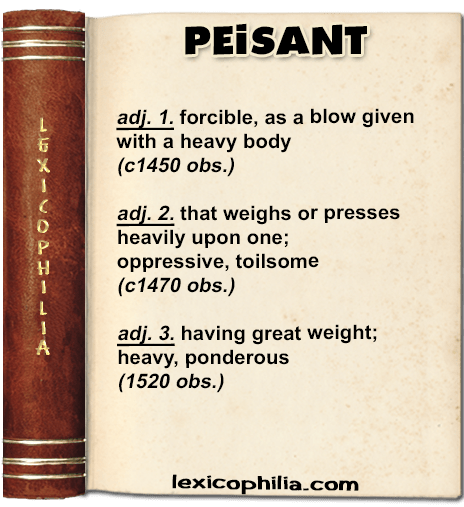
from Anglo-Norman peisant, peisaunt, pesaunt, Anglo-Norman and Middle French pesant (of things – heavy, massive, oppressive, wearisome, difficult), (of the hand, a blow, etc. – forcible, coming down heavily), (of people – slow, sluggish), use as adjective of present participle of peiser , peser (to weigh)
EXAMPLE
“…But as for so poure a man as I, there would none aduocate pleden without wages paid byfore in honde; for pledours in worldly courtes hauen tonges lyke to t he languet of the balaunce that draweth hym alwey to the more peysaunt party, that better wyl rewarden…”
From: The Booke of the Pylgremage of the Sowle,
Translated from the French of Guillaume de Deguileville
ETYMOLOGY
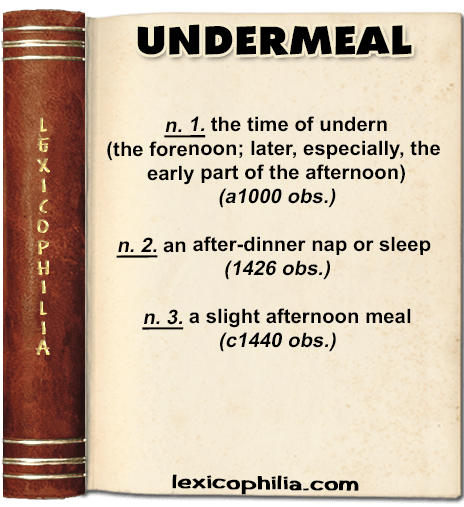
Old English undernmǽl
EXAMPLE
(for n. 2.)
“…that drawes deepe, and by that time his Tobacco marchant is made even with, and hee hath dinde at a tauerne, and slept his vnder-meale at a bawdy house, his purse is on the heild and only fortie shillings hee hath behinde, to trie his fortune with at the cardes in the presence…”
From: Lenten Stuffe
– Thomas Nashe, 1599

ETYMOLOGY
from Old French delaieus, from delai (delay) + -ous
EXAMPLE
“…Neuyrthelesse I remembere well that ye delt wythe ryght delayous peple, my lord Archbyshop and othere of my lordys, and I dempte by-cawse of youre long tarryng that by youre sad dyscrescyon all hadde ben sett thorow…”
From: Paston letters and papers of the fifteenth century
– John Paston, 1469
– Edited by Norman Davis, Richard Beadle, and Colin Richmond, 2004

ETYMOLOGY
from way (a track, a road, a path) + leader
EXAMPLE
“…who shall perfeitely accomplyshe and fulfyll the lawe in the right kynde as it ought to be, but thy sonne beeyng as a waye leader vnto the heauenly preaching of thissame Messias, shall prepare the heartes of menne, that he may deliuer vp vnto Messias at his cumming…”
From: The First Tome or Volume of the Paraphrase of Erasmus vpon the Newe Testamente
– Erasmus, Desiderius
– Translated by Nicholas Udall et al, 1548
ETYMOLOGY
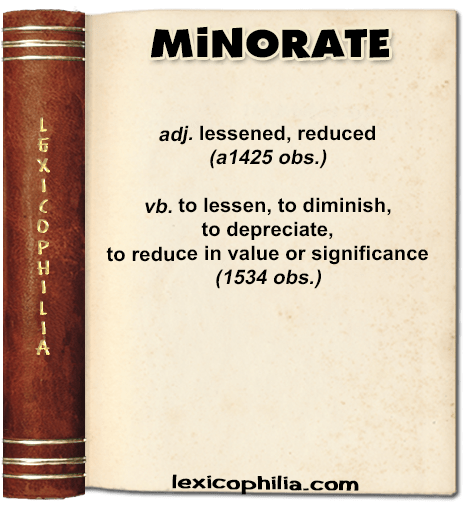
from Latin minorātus, past participle of minorāre (to make less)
EXAMPLE
“…When forsoþ þe sanie þat first was indigeste goþ out digeste & minorate, i. lessed
[?c1425 Paris lesse; L. minorata], it is signe þat þe fistule is mortified…”
From: Guy de Chauliac’s Grande Chirurgie. a1425
 Lexicophilia