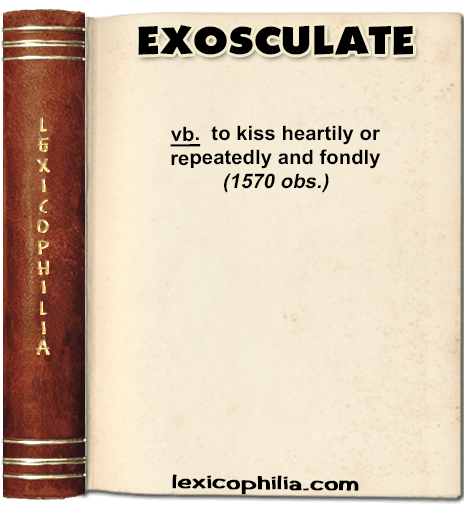
Word of the Day: EXOSCULATE


ETYMOLOGY
from participle stem of Latin exosculari, from ex- + osculari (to kiss), from osculum (a kiss)


EXAMPLE
“…And thus having copulated our plebeian endeavours, we exosculate the subumbrations of your subligacles; and sooner shall the surges of the sandiferous sea ignify and evaporate, than the cone of our duty towards you be in the least uncatenate or dissolved; always wishing you health and happiness…”

From: The Works of Jonathan Swift
By Jonathan Swift, 1814

Word of the Day: NIMBLE-CHOPS


ETYMOLOGY
from nimble + the plural of chop (the jaws and cavity of the mouth)


EXAMPLE
“…Why frend Nimblechaps me thinks you seeme rather ready to play with ye shadowe of euery thing then wi[l]ling to vnderstand the substantiall matter in a­ny thing: can you rightly gather vpon my speech that a woman is euill? if you do well vnderstande mee, you shal finde nothing lesse, but rather that shee is for the most parte one of the greatest good thinges in this world, and most necessa­ry of any thing els besydes…”

From: A Short Inuentory of Cer­tayne Idle Inuentions
The Fruites of a Close and Secret Garden of Great Ease, and Litle Pleasure
By C. Thimelthorpe, 1581

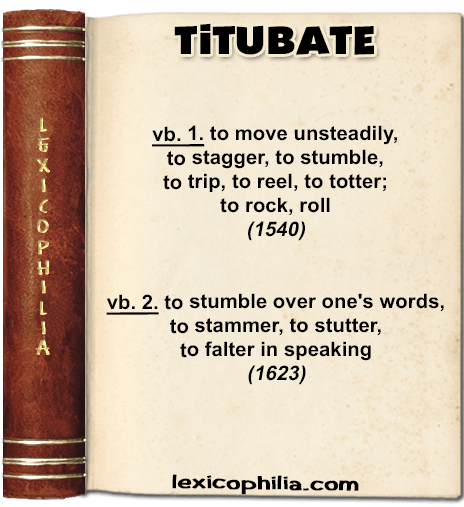
Word of the Day: TITUBATE


ETYMOLOGY
from Latin titubat-, past participial stem of titubare (to walk unsteadily, to totter, to stagger, to falter, to vacillate or dither, to make a mistake, slip up, or stumble (in speech or action)


PRONUNCIATION
TIT-yuh-bayt


EXAMPLE
“…Repercussed by the ryght redolent & rotounde rethorician R. Smyth P. with annotacios of the mellifluous and misticall Master Mynterne, marked in the mergent for the enucliacion of certen obscure obelisques, to thende that the imprudent lector shulde not tytubate or hallucinate in the labyrinthes of this lucubratiuncle…”

From: An Artificiall Apologie (title page)
By R. Smyth, 1540

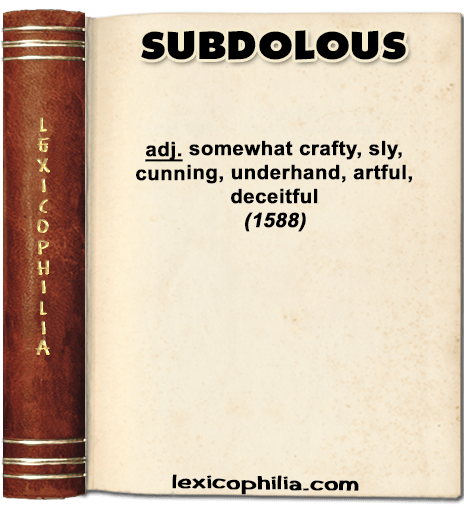
Word of the Day: SUBDOLOUS


ETYMOLOGY
either from late Latin subdolosus (rather cunning), from classical Latin subdolus (sly, deceitful, treacherous) + -osus (-ous),
or from classical Latin subdolus (sly, deceitful, treacherous) (from sub- (sub-) + dolus (dole the corrupt, malicious, or evil intention essential to the guilt of a crime)) + -ous


PRONUNCIATION
SUB-duh-luhss


EXAMPLE
“…The subdolous crafte and deceate of Satan…”

From: Ane Cathechisme or Schort Instrvction of Christian Religion
By Peter Canisius
Translated by Adam King, 1588

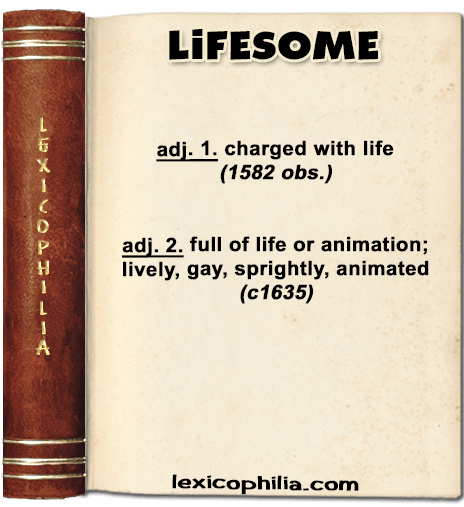
Word of the Day: LIFESOME


ETYMOLOGY
from life (n.) + -some


EXAMPLE (for adj. 1)
“…If badd, how happ’s that none his hurtes disproue?
If willingly I burne, how chance I waile?
If gainst my will, what sorrow will auaile?
liuesome death, O sweete and pleasant ill,
Against my minde how can thy might preuaile?
If I bend backe, and but refraine my will,
If I consent, I doe not well to waile
…”

From: ἐκατομπαθία: The Hekatompathia or Passionate Centurie of Loue
By Thomas Watson, 1582

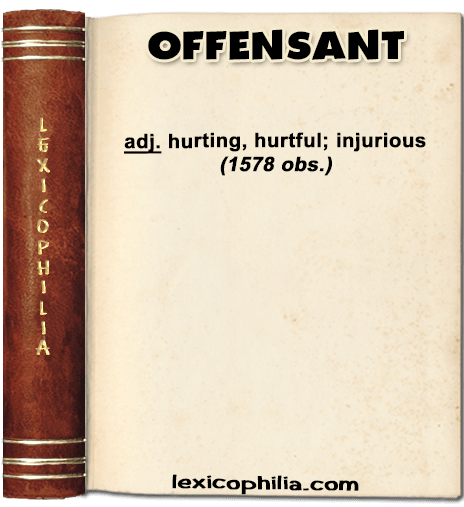
Word of the Day: OFFENSANT


ETYMOLOGY
from offence (to offend) + -ant


EXAMPLE
“…Now agayne because the ribbes, in their inner region or side, are succinged and clothed with a most sensible Membran called Pleura, and to the end that, the asperitie and roughnes of the ribbes, might not be at any time, to the sensibilitie of the same, offensaunt, it was therfore carefully prouided for, they beyng inwardly, wrought so smooth & easie for the same as may be deuised…”

From: The Historie of Man 
By John Banister, 1578

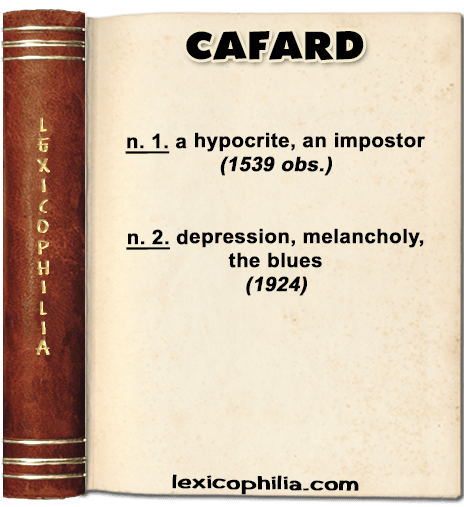
Word of the Day: CAFARD


ETYMOLOGY
from French cafardcaphard, of doubtful origin:
some have proposed to identify it with Catalan cafre (infidel), Spanish, Portugese cafre (cruel), which are apparently adapted from Arabic kafir


PRONUNCIATION
kaff-AR


EXAMPLE
“…wherat he woundred, and sayd that he thought Your Grace the Prince best furnished thereof in Christendom. We commoned of the cafart, Cornibus, that slanderose frere. He said that Your Majesties Ambassadour, the Bishop of Hereford, hath sued and proposed certayn articles against him, athe copie whereof he hath promessed to sende unto me…”

From: State Papers Published Under the Authority of His Majesty’s Commission
King Henry the Eighth, 1830
Crumwell to King Henry VIII, 1539

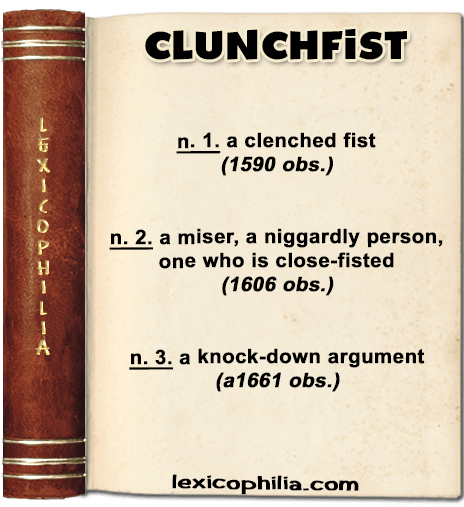
Word of the Day: CLUNCHFIST


ETYMOLOGY
from clunch (to clench) + fist


EXAMPLE
“…such a quoile with pro and con, such vrging of Ergoes, til they haue gone fro Art togither by the eares, and made their conclusions end with a Clunchfist, right like the old description of Logicke…”

From: Plaine Percevall, the Peace-maker of England:
Being a Reply to Martin Mar-Prelate
By Richard Harvey, 1590