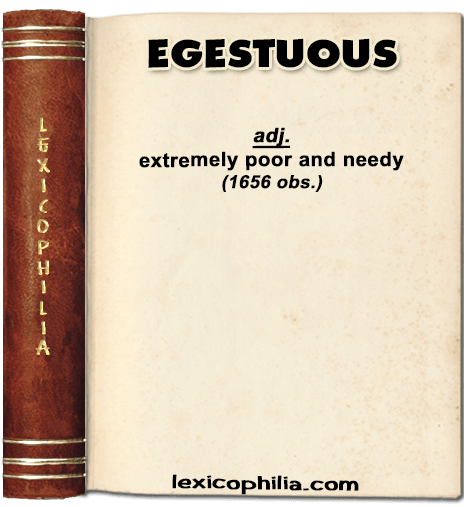
Word of the Day: CIRCUMFORANEOUS

ETYMOLOGY
from Latin circumforaneus (from circum + forum (market)) + -ous

EXAMPLE
“…  Water is good for any thing: It will part dogs, it will make Pottage, and howsoe’r and wheresoe’r the Barber found out this recipe for a dead sleep, it was no dry device, Veritatem è puteo hauriunt tantam, the truth of it is, the very Probatum for a Lethargy, and drawn out of a deep well cures a deep sleep. The Moon was alwaies beholding to the Pleiades, for waking of Endymion. I doe believe the Barber learned it of a Mountebanck, and ’twas first taught him to awaken drunken customers, who fell asleep in trimming-while, and with the sprinkling of this Frigida, were restor’d to their senses againe, and paid for the nap, as well as the snip. But the circumforaneous Emperick rais’d his Fame, in using this admirable Element upon any other disease. …”

From: Pleasant Notes upon Don Quixot
By Edmund Gayton, 1654

Word of the Day: LEPID

ETYMOLOGY
from Latin lepidus (pleasant; charming; witty)

EXAMPLE
“… In his daily walks into the fields, nothing pleased him so much as the chat of some well-informed fellow of the college, who would join him in quoting ‘sweet extemporaries’ from Gelius or Macrobius, or ‘in guessing at the lepid derivation’ of English words. To those who were of his own standing, it is to be feared that his conceit and pedantry proved in many cases offensive. …”

From: Simonds D’Ewes in John Howard Marsden’s College Life in the Time of James the First, 1851
Chapter IV: D’ewes’s Diligence in Study, and His Strict Observance of the Duties of Religion, c1619

Word of the Day: CONTRADICTORIOUS

ETYMOLOGY
from Latin contradictorius (contradictory) + -ous

EXAMPLE (for adj. 1.)
“… after the grete clerk Plinius, libro quinto, capitulo decimo octavo, what distaunce is betwene cenit of oure hedde and a poynte contradictorious to hit in heuyn, soe moche distaunce is from the este in to the weste;…”

From: Polychronicon 
By Ranulf Higden
Translated by John Trevisa, a1475

Word of the Day: DOG-BOLT

ETYMOLOGY
of origin uncertain

EXAMPLE (for n.1.)
“… And as for Ser John Hevenyngham, Ser John Wyndefeld, and othere wurchepfull men ben mad but here doggeboltes, the which I suppose wull turne hem to diswurchep here-after…”

From: Paston Letters and Papers of the fifteenth century
Edited by Norman Davis, Richard Beadle, and Colin Richmond, 2004
Letter from Margaret Paston to John Paston, 1465

Word of the Day: PLURANIMOUS

ETYMOLOGY
from Latin plusplur- (more) + animous;
after unanimous (from Latin unanimisunanimus [from unus (one) + animus (mind)] + -ous)

EXAMPLE
“… Should I make a parallel of this present Basis with the former, & were I sure my Mare would not stumble, I could demonstrate it to be Heterogeneous, Heterodoxous, Incongrous, Omnigenous, Pluranimous, Versipellous, Centireligious, Nummiamorous; I thought I should hit it at length, but I take in Army and all, or else my Mare would soone stand on her head. …”

From: Discolliminium, or, A most obedient reply to a late book, called, Bounds & bonds, so farre as concerns the first demurrer and no further
By B. (Nathaniel Ward), 1650

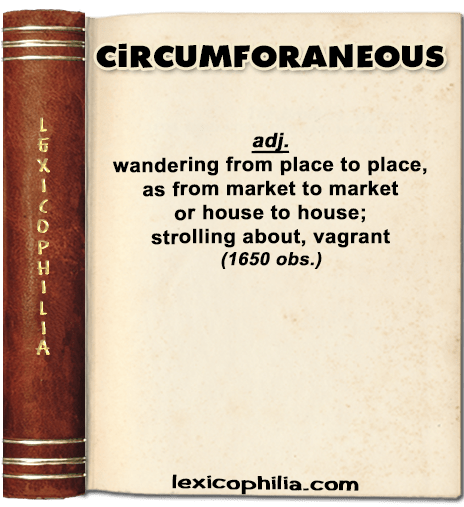
Word of the Day: EGESTUOUS

ETYMOLOGY
from late Latin egestuosus, irregularly from egestas (poverty)

EXAMPLE
“… You call me oscitant, – ah! well,
Obtenebration hides my tears;
I may become sejungible,
When labefaction comes with years.
Exequial nights,
egestuous days
No nummary relief can soothe, –
No xenodochium allays
Radicate thirst with “Bass” or “Booth.”
…”

From: The Savage-Club Papers
Edited by Andrew Halliday, 1867
A Social Science Valentine, By Thomas Archer

Word of the Day: INNUBILOUS

ETYMOLOGY
from Latin innubilus, (from in- + nubilus (nubilous, cloudy, foggy, misty)) + -ous

EXAMPLE
“… Through the benignity of our largifical essence always inclin’d to succour the egestuosity of our votaries conceptions, and to inlighten their offuscated intellects upon the least petitionary susurration, we will now descend from our innubilous empireum to infuse some rays of knowledge for solving the problem of our obsequious querist, so far as is fit to be communicated to the humble spawn of earth; …”

From: The British Apollo,
Containing Two Thousand Answers to Curious Questions in Most Arts and Sciences, Serious, Comical, and Humorous
1st Edition, 1708-1711