Word of the Day: RESPECTUOUS

ETYMOLOGY
from respect (n.) + -uous
originally after French respectueux (showing respect, respectful)

EXAMPLE
“… Howbeit, they are themselves partly the cause that they doe incurre this obscuritie and igno­rance: who being of divers and contrarie natures, yet fall into one and the selfesame inconveni­ence. For some upon a certaine respectuous reverence which they bare unto their Reader and Doctour, or because they would seeme to spare him, are afraid to aske questions, and to be con­firmed and resolved in doubts arising from the doctrine which he delivereth: and so give signes by nodding their heads that they approove all, as if they understood everie thing verie well. …”

From: The Philosophie, commonlie called, The Morals
By Plutarch of Chæronea
Translated out of Greeke into English, and conferred with the Latine translations and the French, by Philemon Holland, 1603
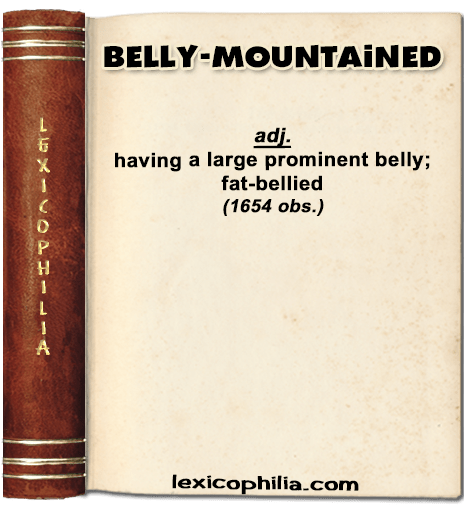
Word of the Day: BELLY-MOUNTAINED

ETYMOLOGY
from belly + mountain + -ed

EXAMPLE
“… and such a one he confesseth himself, that some of his own kindred (whom therefore he styles Jewish Presbyterians) suspect him to be; yea he complains of, or exclaims rather against one, (whom he calls a man of pufpast, like that fat bellie-mountaind Bishop) who lighting on one of his Works, said no more of it, but wrote onely upon it, Spalatensis. …”

From: A Discours Apologetical; wherein Lilies lewd and lowd lies in his Merlin or Pasqil for the yeer 1654. are cleerly laid open
By Thomas Gataker, 1654

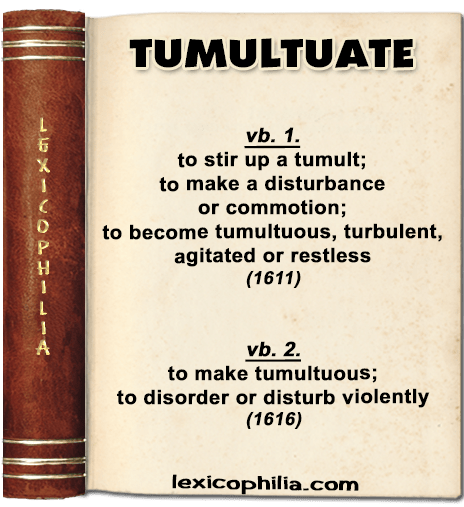
Word of the Day: TUMULTUATE

ETYMOLOGY
from participial stem of Latin tumultuari (to make a bustle or disturbance) + -ate

EXAMPLE
“… Secondly, beeing sued, and Iudgement passed against you, Acquiesce in the Iudgement, and doe not tumultuate against it; and take example from mee, whom you haue heard here protest, that when euer any Decree shall be giuen against me in my priuate right, betweene me and a Subiect, I will as humbly acquiesce as the meanest man in the Land. Imitate me in this, for in euery Plea there are two parties, and Iudgement can be but for one, and against the other; so one must alwayes be displeased. …”

From: James I of England
Speach Starre-chamber, 1616

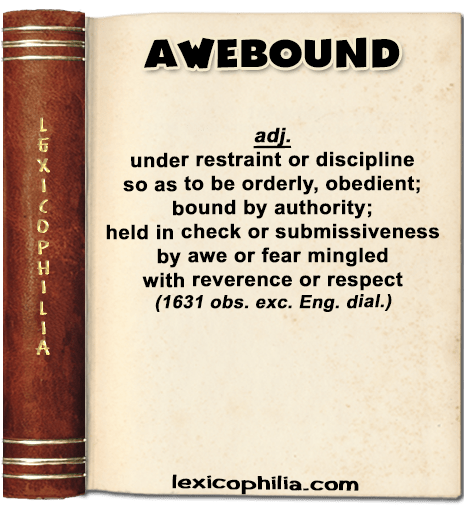
Word of the Day: AWEBOUND

ETYMOLOGY
from awe (a feeling of terror or dread mixed with reverence) + bound (compelled, obliged)

EXAMPLE
“… As she uttered the interrogatory, she raised the rattle-snake in her hands, holding it so that it might be distinctly seen by those whom she addressed. The reptile hissed, accompanying the sibilation with a sharp “skirr” of its tail. Who could doubt that it was an answer in the affirmative?
Not the Yamassees, who stood
awe-bound and trembling in the presence of the mighty sorceress. …”

From: Osceola the Seminole,
Or, The Red Fawn of the Flower Land
By Capt. Mayne Reid, 1858

Word of the Day: SMUCKLE

ETYMOLOGY
earlier form of smuggle (vb.)

EXAMPLE
“… Which computation is sufficiently justified by the Customs of the Three Kingdoms, whose intrinsick value are thought to be near a Million per annum, viz. Six hundred thousand pounds, payable to the King; 100 thousand Pounds, for the charges of Collecting, &c. Two hundred thousand pounds smuckled by the Merchants, and one Hundred thousand pounds gained by the Farmers; according to common Opinion, and Mens Sayings: And this agrees also with that proportion, or part of the whole Trade of the World, which I have estimated the Subjects of the King of England to be possessed of; viz, of about Ten of Forty Five Millions. …”

From: Political Arithmetick
By Sir William Petty, 1691

Word of the Day: FUDDLECAP

ETYMOLOGY
from fuddle one’s cap or nose (to get drunk);
from fuddle (to tipple, to booze)

EXAMPLE
“… The Fuddlecap, whose God’s the Vyne,
Lacks not the Sun if he have Wine;
By th’ Sun he only finds a way
To some cool Spring, to spend the day.
Shrill Flutes and Trumpets Souldiers love,
And scorn those fears that Women move.
…”

From: The Poems of Horace consisting of Odes, Satyres, and Epistles
Rendred in English verse by several persons
A Paraphrase upon the first Ode by S. W. Esq To MECOENAS

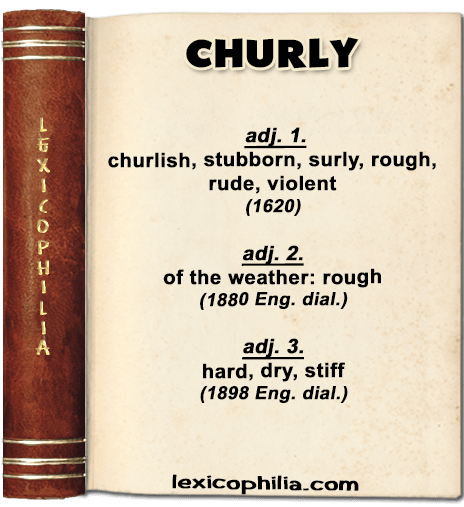
Word of the Day: CHURLY

ETYMOLOGY
from churl -y

EXAMPLE
“… But all this while, the shop where Jonah sleeps,
Is tost, and torne, and batter’d on the deeps,
And well-nigh split upon the threatning Rock,
With many a boystrous brush, and
churley knock.
God help all desp’rate voyagers, and keepe
All such, as feele thy wonders on the deepe.
…”

From: Divine poems: containing the History of -Jonah. Ester. Job. Samson.; Sions – sonets. Elegies.
By Francis Quarles, 1638

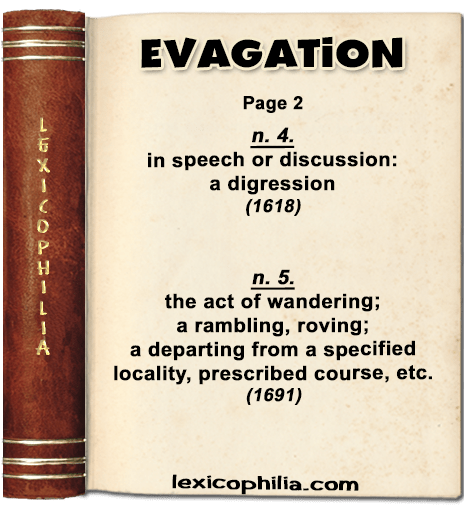
Word of the Day: EVAGATION

ETYMOLOGY
First introduced in the fig. n.1; from French evagation, Latin evagationem, noun of action from evagari, from e (out) + vagari (to wander)

EXAMPLE (for noun 1)
“… Clarefie me with fy clernesse of euerlastinge lijt, and bringe oute of fe liabitacle of myn herte aH maner of derkenes. Restreyne all euel evagacions & all miȝty temptacions. …”

From: The earliest English translation of the first three books of the De imitatione Christi
By Thomas à Kempis, c1425