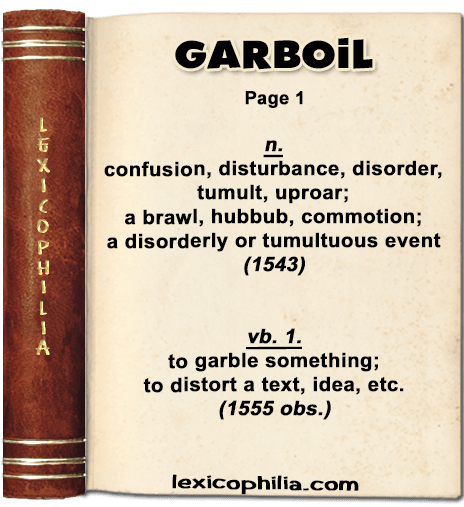
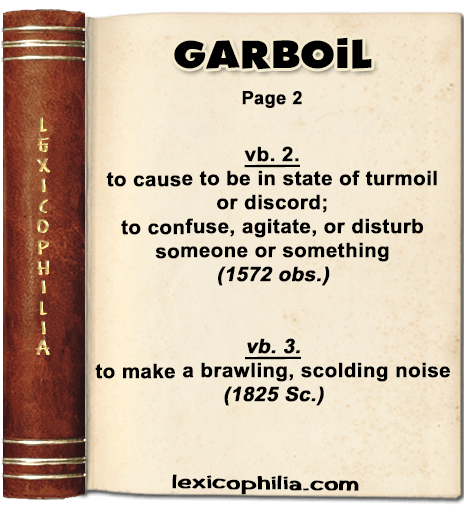
Word of the Day: GARBOIL


ETYMOLOGY
apparently from Old French garbouille (confused mess, confusion, disorder), of uncertain and disputed origin;
From the O.E.D.: “it is likely that this word and the related garboil v. have been associated with garble v. and garble n., and probably regarded as variants of these”


EXAMPLE
“…and after long and mature debating off the mattar, forasmuch as itt appeared the Mayor to have ben a great sturrer of this garboyle, and to be a man that att sondry tymes hadde deluded wyth delayes the sayde commissioners whereby the matter cowlde grow to none ende…”

From: Selections from the Records of the City of Oxford
Edited by Willilam H, Turner, 1880
1543, May 22. Decree of the Privy Councell in the matters of Difference between the University and City.

Word of the Day: MALLIFUFF


ETYMOLOGY
from Mallie (= English Molly (a girl,. a woman)) + fuff (something easily blown about, a puff)


EXAMPLE
“…And what for should I not be early abroad if I have business? Am I like one of your windlestrae mallifuff madams that cannot stir from their arm-chair till they are drammed up with their green-tea?…”

From: Elizabeth de Bruce
By Christian Isobel Johnstone, 1827

Word of the Day: NEBSIE


ETYMOLOGY
from neb (the beak or bill of a bird) + -sie -sy


EXAMPLE
“…“I’ll tell you aboot Mark,: he said next time; ‘we’ll no be disturbed again till the men want their forenoon – that’s the drop whisky, you ken. Simon’s wife’s a nebsy clatterin’ body, but for a’ that, I wish ehre were mair like her…”

From: The Red Scaur
A Novel of Manners
By P. Anderson Graham, 1896

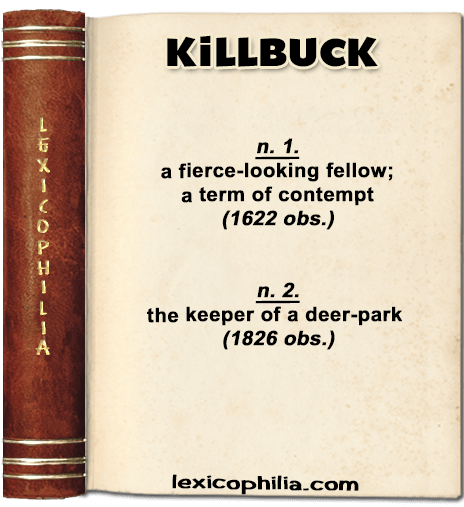
Word of the Day: KILLBUCK


ETYMOLOGY
from kill (vb.) + buck (the male of several animals)


EXAMPLE
“…Tharsalio.  Out, you young hedge-sparrow; learn to tread
afore you be fledge!
[He kicks her out.]
Well, have you done now, lady?


Arsace..  O, my sweet kilbuck!


Tharsalio.  You now, in your shallow pate, think this a
disgrace to me; such a disgrace as is a battered helmet
on a soldier’s head; it doubles his resolution. Say, shall
I use thee?


Arsace.  Use me?
…”

From: The Widdowes Teares
By George Chapman, 1612

Word of the Day: OPSIGAMY


ETYMOLOGY
from Greek ὀψιγαµία (opsigamia, marriage late in life),
from ὀψίγαµ-ος (late-married),
formed on ὀψέ, ὀψι– (late) + γάµος (marriage)


EXAMPLE
“…Nor is there any danger of Donald’s being flogged for opsigamy by the Highland nymphs, as the Spartans were of old. Marriage is here as much matter of course as eating and drinking; and as the sexes are more truly balanced than in Arabia, no pining damsel need sing, “Oh what will I do for a man…”

From: The Highlands and Western Isles of Scotland
By John Macculloch, 1824

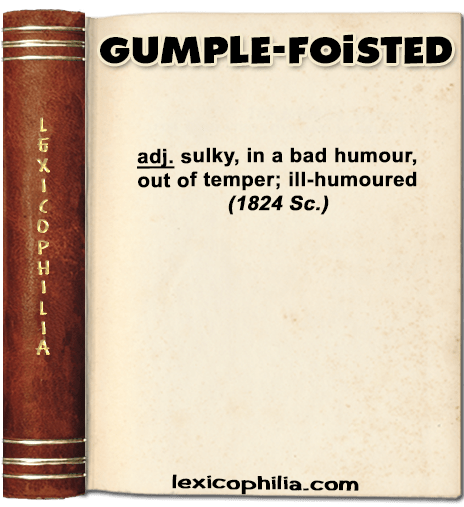
Word of the Day: GUMPLE-FOISTED


ETYMOLOGY
from Scots gumple (to be in a bad mood, to sulk, and as a noun, a fit of the sulks) + feist (found in other formations of similar meaning, e.g. bumple feist (the sulks), amplefeist (a sulky mood)) + -ed


EXAMPLE
“…Aweel, aweel,’ said Peter Peebles, totally unabashed by the repulse, ‘e’en as ye like, a wilful man maun hae his way; but,’ he added, stooping down and endeavouring to gather the spilled snuff from the polished floor, ‘I canna afford to lose my sneeshing for a’ that ye are gumple-foisted wi’ me‘….”

From: Redgauntlet: A Tale of the Eighteenth Century
By Sir Walter Scott, 1824

Word of the Day: BEFLUM


ETYMOLOGY
from be-flum;
perhaps influenced by Scots blaflum, bleflum (to cajole)


EXAMPLE
“…that are but ill settled yet, till they durst na on ony errand whatsoever gang ower the door-stane after gloaming, for fear John Heatherblutter, or some siccan dare-the diel, should tak a baff at them: then, on the hand, I beflum’d them wi’ Colonel Talbot – wad they offer to keep up the price again the Duke’s friend? did na they ken wha was master?…”

From: Waverley; or, ‘Tis Sixty Years Since,
By Walter Scott, 1814

Word of the Day: YONDERLY


ETYMOLOGY
from yonder (adv., adj., pron., & n.) + -ly


EXAMPLE
“…Poor lass, hoo were kinder becose aw were quare;
“Come, Jamie, an’ sattle thisel in a cheer;
Thae’s looked very yonderly mony a day;
It’s grievin’ to see heaw thae’rt wearin’ away,
            An’ trailin’ abeawt,
            Like a hen at’s i’th meawt;
    Do, pritho, poo up to thi tay!
…”

From: Lancashire Songs
By Edwin Waugh, 1863
Jamie’s Frolic