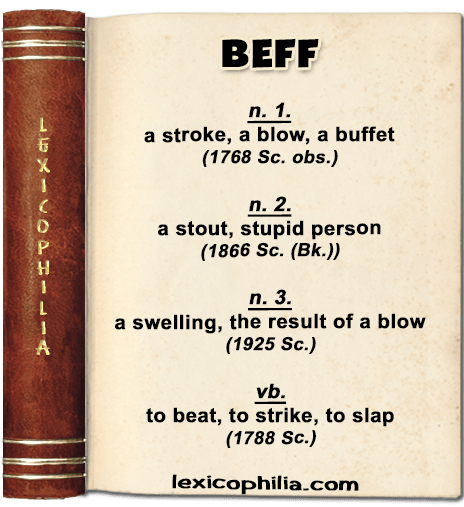
Word of the Day: BEFF

ETYMOLOGY
n. 1. possibly a variant of baff (a blow with anything flat or soft)
n. 2. possibly a variant of baff (a big, clumsy person)
vb. possibly a variant of beft (to strike, to give blows)

EXAMPLE (for n. 1.)
“… Ye shak your head, but o’ my fegs,
Ye’ve set auld Scota on her legs;
Lang had she lien wi’
beffs and flegs,
Bumbaz’d and dizzie,
Her fiddle wanted strings and pegs,
Wae’s me, poor hizzie.
…”

From: Aberdeen Journal, June 1768
The Poems of Beattie
By James Beattie

Word of the Day: FLIBBERTIGIBBET

also in forms FLEBERGEBET, FLEBERGEBIT, FLEBERGIBET, FLIBBER DE’ JIBB, FLIBBERGIB(BE), FLIBBER-GIBBET, FLIBBERTY-GIBBET, FLIBERDEGIBEK, FLIBERDIGIBBET, FLIBERDIGIBET, FLIPPERTY-GIBBET, FLYBBERGYBE

ETYMOLOGY
apparently an onomatopœic representation of unmeaning chatter or garrulous speech

EXAMPLE (for n. 1.)
“… Better vnborne then vntaught, I haue herde saie,
But ye be better fed than taught far awaie.
Not veraie fat fed, saied this
flebergebet,
But nede hath no lawe, nede maketh her hither iet.
She comth nece Ales (quoth she) for that is her name
More for nede, then for kyndnes, payne of shame.
…”

From: A dialogue conteinyng the nomber in effect of all the prouerbes in the englishe tongue compacte in a matter concernyng two maner of mariages
By John Heywood, 1546

PRONUNCIATION
FLIB-uh-tee-jib-uht

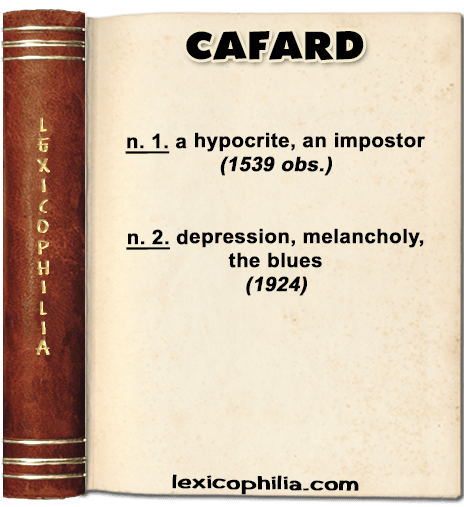
Word of the Day: CAFARD


ETYMOLOGY
from French cafardcaphard, of doubtful origin:
some have proposed to identify it with Catalan cafre (infidel), Spanish, Portugese cafre (cruel), which are apparently adapted from Arabic kafir


PRONUNCIATION
kaff-AR


EXAMPLE
“…wherat he woundred, and sayd that he thought Your Grace the Prince best furnished thereof in Christendom. We commoned of the cafart, Cornibus, that slanderose frere. He said that Your Majesties Ambassadour, the Bishop of Hereford, hath sued and proposed certayn articles against him, athe copie whereof he hath promessed to sende unto me…”

From: State Papers Published Under the Authority of His Majesty’s Commission
King Henry the Eighth, 1830
Crumwell to King Henry VIII, 1539

Word of the Day: SNUFFY


ETYMOLOGY
from snuff + -y


EXAMPLE
“…I’m sure she makes a very Tarquinius Sextus of me, and all about this Serenade,—I protest and vow, incomparable Lady, I had begun the sweetest Speech to her—though I say’t, such Flowers of Rhetorick—’twou’d have been the very Nosegay of Eloquence, so it wou’d; and like an ungrateful illiterate Woman as she is, she left me in the very middle on’t, so snuffy I’ll warrant…”

From: Sir Patient Fancy
By Aphra Behn, 1678

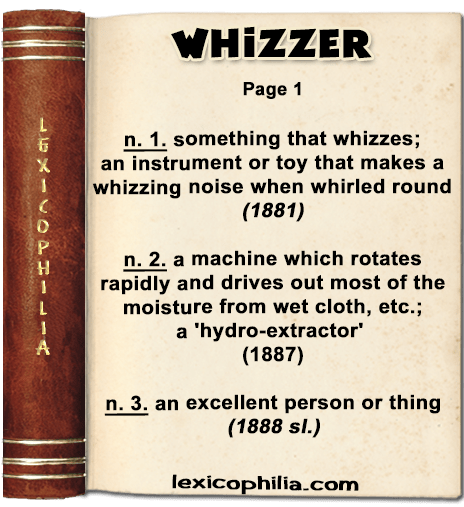
Word of the Day: WHIZZER


ETYMOLOGY
from whizz (to move swiftly or with such a sound) + -er


EXAMPLE
“…The washerwoman finds her occupation almost gone through the introduction of machinery. The larger part of the city of Troy is devoted to the manufacture of engines, whizzers, starchers, and other machines of the steam laundry. The most interesting machine is the whizzer, which dries clothes in 1,000 revolutions a minute…”

From: The Pall Mall Budget, July 1887
Volume 35

Word of the Day: SPARROW-FART


ETYMOLOGY
from sparrow + fart


EXAMPLE (for n. 2.)
“…Miss This Miss That Miss Theother lot of sparrowfarts skitting around talking about politics they know as much about as my backside anything in the world to make themselves someway interesting Irish homemade beauties soldiers daughter am I ay and whose are you bootmakers and publicans I beg your pardon coach I thought you were a wheelbarrow…”

From: Ulysses
By James Joyce, 1922

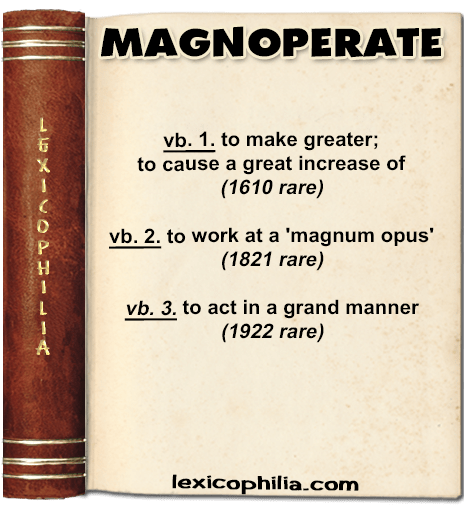
Word of the Day: MAGNOPERATE

ETYMOLOGY
from Latin magnopere (greatly) (short for magno opere [with great labour, especially, much]) + -ate

EXAMPLE
“…so that after-ages may rightly admire what noble Mecaenas it was that so inchayned the aspiring wits of this understanding age to his only censure, which will not a little magnoperate the splendor of your well knowne honor to these succeeding times…”

From: Baculum Geodæticum 
By Arthur Hopton, 1610