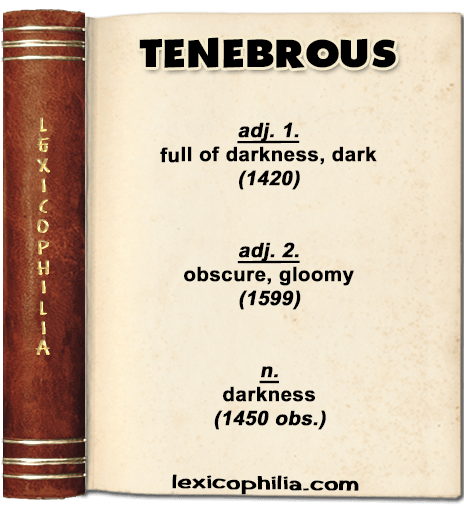
Word of the Day: TENEBROUS

ETYMOLOGY
from Old French tenebrus, modern French tenebreux, Provencal tenebros
Spanish, Italian tenebroso, from Latin tenebrosus (dark, gloomy)

EXAMPLE
“… The name of thys lady was callyd Prescience.
She neuer left Vyce, ne noon that wold hym folow,
Tyll they wer commyttyd by the diuine sentence
All to peyne perpetuell and infynyte sorow.
Ryghtwysnes went to see that no man shuld hem borow.
Thus all entretyd sharpely were they, tyll Cerberus
Had hem beshut withyn hys gates
tenebrus. …”

From: The Assembly of Gods:
or, The Accord of Reason and Sensuality in the Fear of Death
By John Lydgate, c1420

PRONUNCIATION
TEN-uh-bruhss
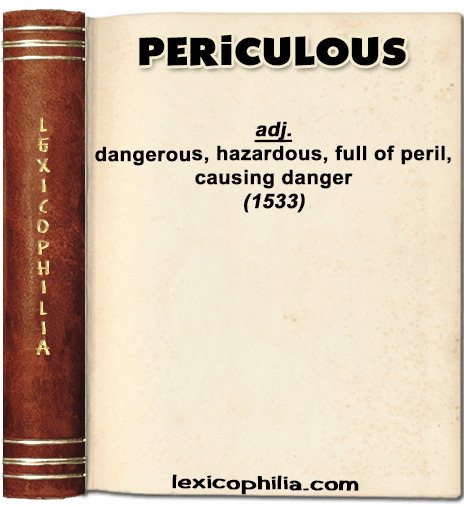
Word of the Day: PERICULOUS

ETYMOLOGY
from Latin periculosus (dangerous, full of danger), from periculum (danger, peril) + –osus (-ous)

EXAMPLE
“… That Saturn the enemy of life, comes almost every seventh year, unto the quadrate or malevolent place; that as the Moon about every seventh day arriveth unto a contrary sign, so Saturn, which remaineth about as many years, as the Moon doth daies in one sign, and holdeth the same consideration in years as the Moon in daies; doth cause these periculous periods. Which together with other Planets, and profection of the Horoscope, unto the seventh house, or opposite signs every seventh year; oppresseth living natures, and causeth observable mutations, in the state of sublunary things. …”

From: Pseudodoxia Epidemica, 
Or, Enquiries Into Very Many Received Tenents, and Commonly Presumed Truths.
By Thomas Brown, 1650
Chapter XII Of the great Climacterical year, that is, Sixty three.

PRONUNCIATION
puh-RICK-yuh-luhss

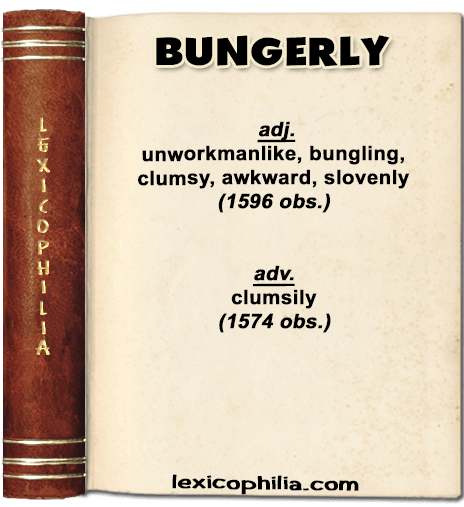
Word of the Day: BUNGERLY

ETYMOLOGY
? from bunger (? for bungler) + -ly

EXAMPLE (for adj.)
“… I saw her conferring with no worseman then Master Snagge. The bungerliest vearses they were that euer were scande, beeing most of them bought and cut off by the knees out of Virgill, and other Authors. …”

From: Haue vvith you to Saffron-vvalden. Or, Gabriell Harueys hunt is vp.
By Thomas Nashe, 1596

Word of the Day: ALIICIDE

ETYMOLOGY
from. Latin alius (another) + -icide (the killing of), in allusion to suicide

EXAMPLE
“… Would the Lord Chief Justice be at all surprised if one of his amiable and interesting, but insane, correspondents were to take a mad freak into her head some day, and commit suicide or allicide? If, instead of adorning the Queen’s Bench, he honoured the chair of an insurance company, what would he think of the rate of payment requisite on the lives of such persons going at large? …”

From:  Punch, or The London Charivari,
December 19, 1868
Look After Lunatics

Word of the Day: VIRIPOTENT

ETYMOLOGY
adj. 1: from Latin viripotent-viripotens, from vir (man, husband) + potens (able)
adj. 2: from Latin viripotent-viripotens, from vires (strength)

EXAMPLE
“… The king thus hauing vanquished and ouercome the Welshmen, placed garisons in sundrie townes & castels, where he thought most necessarie, and then returned to London with great triumph. Thither shortlie after came ambassadours from the emperour, requiring the kings daughter affianced (as before you haue heard) vnto him, and (being now viripotent or mariable) desired that she might be deliuered vnto them. …”

From: The first and second volumes of Chronicles. [vol. 3 (i.e. The Third Volume of Chronicles)] comprising 1 The description and historie of England, 2 The description and historie of Ireland, 3 The description and historie of Scotland:
First collected and published by Raphaell Holinshed, William Harrison, and others: now newlie augmented and continued (with manifold matters of singular note and worthie memorie) to the yeare 1586. by Iohn Hooker aliàs Vowell Gent and others.
Henrie the first, yoongest sonne to William the Conquerour. (Book Henry I)

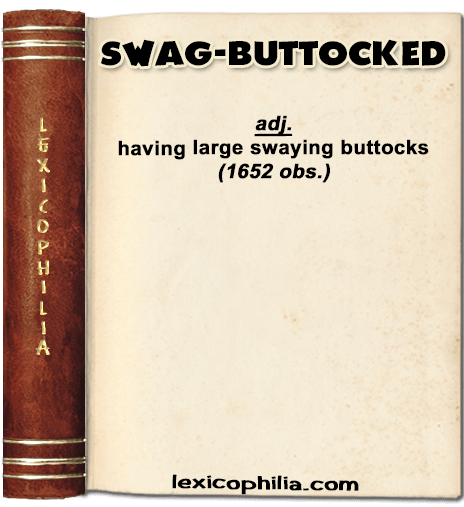
Word of the Day: SWAG-BUTTOCKED

ETYMOLOGY
from swag (to move heavily from side to side or up and down) + buttock

EXAMPLE
“… Mag. Look you heare then.
Fra. O see, see — dat is de gross english Douck, for
de
swagbuttock’d-wife of de Pesant.
Mag. How like you this then? There’s a Reverence
I warrant you.
…”

From: Five new playes, (viz.) The Madd Couple Well matcht. Novella. Court begger. City witt. Damoiselle
The Damoiselle, Or The New Ordinary
By Richard Brome, 1653

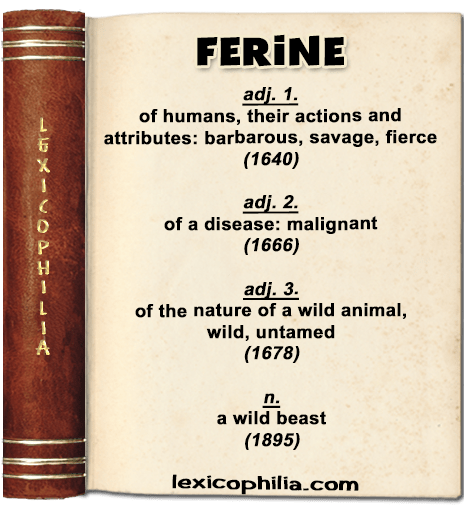
Word of the Day: FERINE

ETYMOLOGY
from Latin ferinus, from fera (wild beast)

EXAMPLE (for adj. 1)
“… Secondly there are brutish and unnaturall Desires, which the Philosopher calleth 
ferine and inhumane, instancing in those barbarous Countries, where they use to eat mens flesh and raw meat; and in the Woman who ripped up Women with childe that shee might eat their young ones: …”

From: A Treatise of the Passions and Faculties of the Soule of Man
By Edward Reynolds, 1640

Word of the Day: COVER-SLUT

ETYMOLOGY
from cover (to put or something over an object, with the effect of hiding from view or protecting) + slut (an untidy, dirty, or slovenly woman; a woman who is habitually careless, lazy, or negligent with regard to appearance, household cleanliness, etc.)

EXAMPLE
“… But as it is a sad thing that the grace of God pretended, should be used as a pander unto wantonness, so it is no less hateful, that the providence of God should be misapplied as a cover-slut of idleness, ignorance, and unconscionableness: for who knowes not that our life is so in Gods hand, as it is ordinarily preserved ro lost by the use or want of things proper thereto? even hunger if self would be certainly mortal, if not appeased by meat appropriated thereto by the appointment of God. …”

From: Natures explication and Helmont’s vindication.
Or A short and sure way to a long and sound life.
By George Starkey, 1658

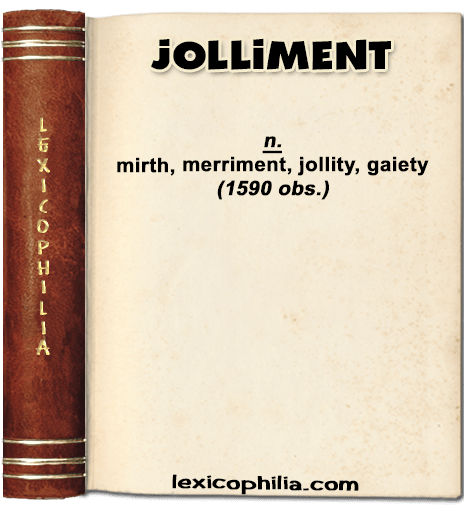
Word of the Day: JOLLIMENT

ETYMOLOGY
irregular from jolly (adj.) + -ment

EXAMPLE
“… And therein sate a Ladie fresh and faire,
  Making sweet solace to her selfe alone;
  Sometimes she sung, as loud as larke in aire,
  Sometimes she laught, that nigh her breth was gone,
  Yet was there not with her else any one,
  That might to her moue cause of meriment:
  Matter of merth enough, though there were none
  She could deuise, and thousand waies inuent,
To feede her foolish humour, and vaine
iolliment. …”

From: The Faerie Queene
By Edmund Spenser, 1590