Word of the Day: PHARMACOPOLIST

ETYMOLOGY
from Latin pharmacopola, (from Greek ϕαρµακοπώλης (pharmakopoles) (dealer in drugs)) + -ist

EXAMPLE
“… That Science then, which enables men to look thorow the shop of medicine, the topick tabernacle of naturall powers, and teaches to unlock bodies that are shut, and to draw forth their hidden vertues, is not peculiar to the family of Pharmacopolists, nor truly is the Pharmaceutick part a hand-maid to it (as is the talk of ignorants) but is a powerfull Tecmarsis of naturall history.…”

From: Matæotechnia Medicinæ Praxeōs, The vanity of the craft of physick, or, A new dispensatory wherein is dissected the errors, ignorance, impostures and supinities of the schools in their main pillars of purges, blood-letting, fontanels or issues, and diet, &c., and the particular medicines of the shops
By Noah Biggs, 1651
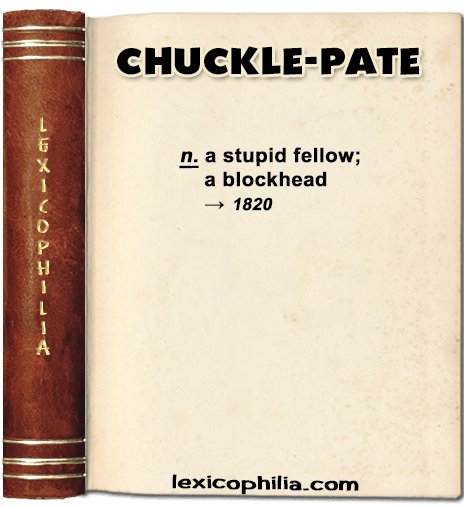
Word of the Day: CHUCKLE-PATE

ETYMOLOGY
from chuckle + pate (the head)

EXAMPLE
“…At the end, says the chief, in dispersing the poison.
“Come, come, subscribe, ’tis to carry the cause on,
Down with your cash, all I ask is a penny;”
And the pence were put down by the
chucklepate many.
We genii, you know, in a moment detected
The laugh-in-the-sleeve of the rogues who collected,
And followed unseen, ’till we saw them all seated,
Full of hopes of the spoil, but these hopes were soon cheated,
For among them swooped, and away in a minute.
…”

From: Blackwood’s Edinburgh Magazine
Volume III. April – September, 1820
The Building of the Palace of the Lamp.

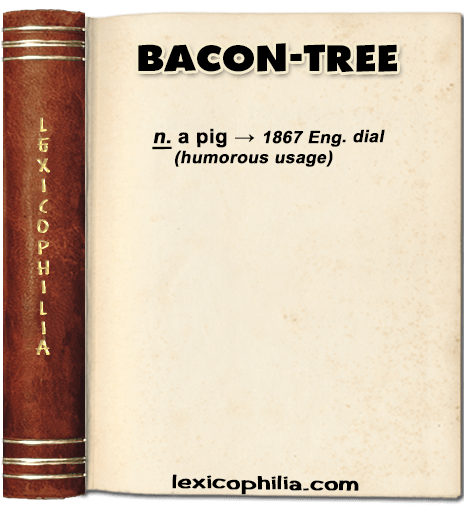
Word of the Day: BACON-TREE

ETYMOLOGY
from bacon + tree – ‘growing bacon’

EXAMPLE
“… The pig was forgotten directly, and I began to have my doubts whether the parson would have cared to leave the ‘ nut brown ‘ for the sight of a whole Smithfield of ‘ bacon trees,’ he looked so happy after his second pull at the tankard. …”

From: Popular Edition of Tales and Sketches of Lancashire Life;
By Benjamin Brierley, 1884
“Marlocks Of Merriton”

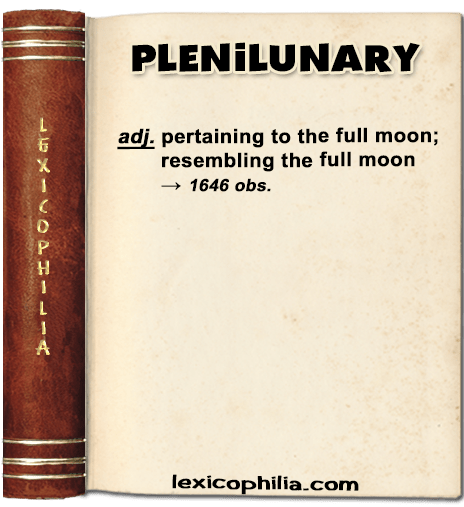
Word of the Day: PLENILUNARY

ETYMOLOGY
from pleni- (full) + lunary (pert. to the moon), after Latin plenilunium (full moon)

EXAMPLE
“… whereunto if we adde the two Aegyptian dayes in every moneth, the interlunary and pleniluary exemptions, the Eclipses of Sunne and Moone, conjunctions and oppositions Planeticall, the houses of Planets, and the site of the Luminaries under the signes, (wherein some would induce a restraint of Purgation or Phlebotomy) there would arise aboue an hundred more; …”

From: Pseudodoxia Epidemica, or, Enquiries into very many received tenents and commonly presumed truths;
By Thomas Browne, 1646

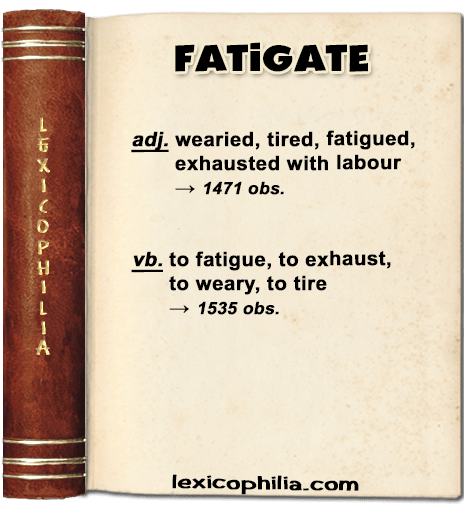
Word of the Day: FATIGATE

ETYMOLOGY
adj.:  from Latin fatigatus, past participle of fatigare (to fatigue)
vb.:  from Latin fatigat- participial stem of fatigare (to fatigue)

EXAMPLE (for adj.)
“… Oyle of Lune and water wyth labour grett,
I made Calcynyng yt with salt precipytate,
And by hyt selfe with vyolent hett
Gryndyng with Vynegar tyll I was
fatygate:
And also with a quantyte of Spyces acuate;
Uppon a Marble whych stode me oft in cost,
And Oyles with Corrosyves I made; but all was lost.
…”

From: Theatrum Chemicum Britannicum, Containing Severall Poeticall Pieces of our Famous English Philosophers, who have written the hermetique mysteries in their owne ancient language. Faithfully collected into one volume, with annotations;
By Elias Ashmole, 1652

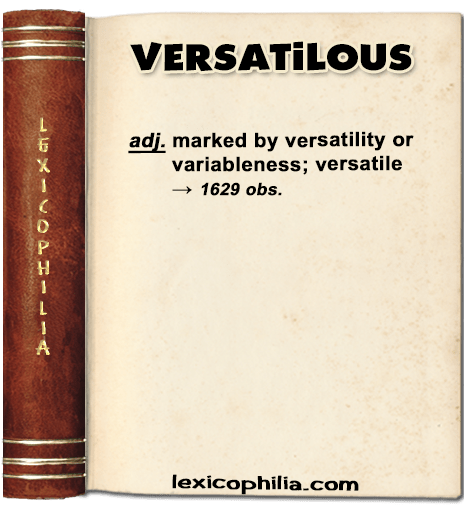
Word of the Day: VERSATILOUS

ETYMOLOGY
from Latin versatilis (versatile) + -ous

EXAMPLE
“… But the grounds of Diuinity in this point in hand, are farre more demonstratiue and certaine, than that of Copernicus his Philosophy. For he can finde no certaine demonstration of the heauens motion, but that he can stoppe with his versatilous wit; no more then my braine, earthy as it is, can be moued to beleeue his earths motion. …”

From: Truth’s Triumph ouer Trent: or, The Great Gulfe betweene Sion and Babylon
By Henry Burton, 1629

Word of the Day: BY-DWELLER

ETYMOLOGY
from by- + dweller

EXAMPLE
“… Their number encreasing, and doings outragious, Sir Edmund Windam Knight, at that time high Shiriffe of the Shire, made proclamation among them in the Kings
name to depart, which if they did not foorthwith, he pronounced them Traitors, but had not his Horse beene the swifter, he had beene either taken or slain, thereupon their terror began to be fearefull, & themselues to be furnished with weapons, Armour, and Artillery, daily brought them in abundance by the
By-dwellers, besides store of victuals to maintaine their Campe. ….”

From: The History of Great Britaine under the Conquests of ye Romans, Saxons, Danes and Normans. Their originals, manners, warres, coines & seales…
By John Speed, 1611

Word of the Day: ASSENTANEOUS

ETYMOLOGY
from Latin assentaneus (from assentiri (to assent)) + -ous

EXAMPLE
“… The bowels of Sir Thomas waxed tenderer and tenderer; and he opened his lips in this fashion :
“Stripling! I would now communicate unto thee, on finding thee docile and
assentaneous, the instruction thou needest on the signification of the words natural cause, if thy duty toward thy neighbour had been first instilled into thee. …”

From: Works Of Walter Savage Landor
By Walter Savage Landor, 1846
Citation and Examination of William Shakespeare“, 1834

Word of the Day: CHARGEFUL

ETYMOLOGY
from charge (n.) + -ful

EXAMPLE (for adj. 1.)
“… For so it is that whan the Kyng coude nat fynde with the seid Lowes bi alle the forseid costeley and chargefull ambassades but fraude, deceipte, and illusion, his Highnesse, of a grete prudence and foresight, purchased alliaunces and amyties with two the myghtyest princes of Fraunce, the Dukes of Burgoigne and Britaigne, …”

From: Literae Cantuarienses: The Letter Books of the Monastery of Christ Church, Canterbury, 1474
Edited by Joseph Brigstocke Sheppard, 1887