Word of the Day: GRINAGOG

ETYMOLOGY
from grin (vb.)

EXAMPLE
“… Fyrst, bycause none haue ye Prophets marke but such as be godly & lament wickednesse. But many of the diuels children, grinagods and such other, be crossed, and cursed to. Then also the proportion is so farre different, that there is no likenesse betwixt them. But for the likenesse of the effect, they may be well compared together. …”

From: An Aunsvvere to the Treatise of the Crosse wherin ye shal see by the plaine and vndoubted word of God, the vanities of men disproued
By James Calfhill, 1565
Word of the Day: PERICLITATE

ETYMOLOGY
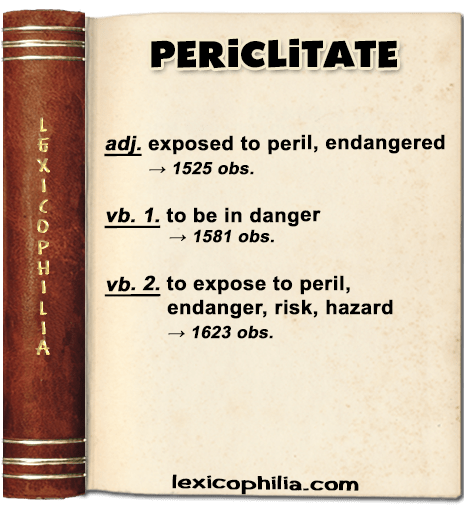
adj.:  from Latin periclitatus (tried, tested, endangered) past participle of periclitari
vb:  from Latin periclitat-, past participial stem of periclitari (to expose to risk, danger, or peril), from periculumpericlum (trial, risk, danger)

EXAMPLE (for adj.
“… He alone be not noted to be the occasion of longer division werre and hostilite in Cristendome, wherby the hole state of the same may be periclitate and put in extreme daunger, but that by deliverance of the Frenche King, upon a convenient rawnsom, ther may ensue, God willing, generall peax bitwene al Cristen Princes, wherin He shal, besides the thanke of God, adquire more honour, than though by extreme force and violence He had attayned suche an other realme as Fraunce is. …”

From: State papers, published under the authority of His Majesty’s Commission. King Henry the Eighth, 1830
King Henry VIII. to Tunstall, &c., 1525

Word of the Day: ELF-SKIN

ETYMOLOGY
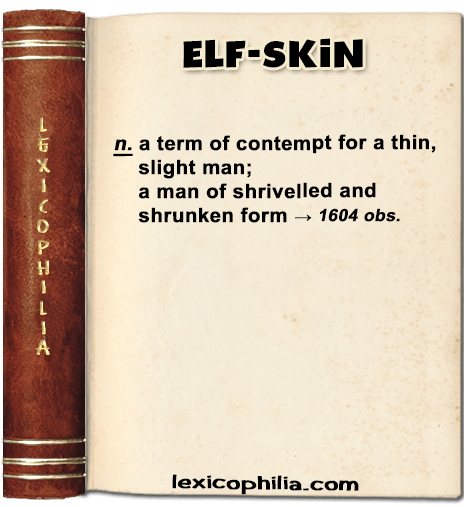
some editors suggest “elf-skin” is a misprint for “eel-skin

EXAMPLE
“… Zbloud you starueling, you elfskin, you dried neatstongue, you buls-pizzel, you stockefish: O for breath to vtter what is like thee, you tailers yard, you sheath, you bowcase, you vile standing tuck. …”

From: William Shakespeare, The Complete Works
Edited by Stanley Wells and Gary Taylor, 1986
The history of Henrie the Fourth. 1604

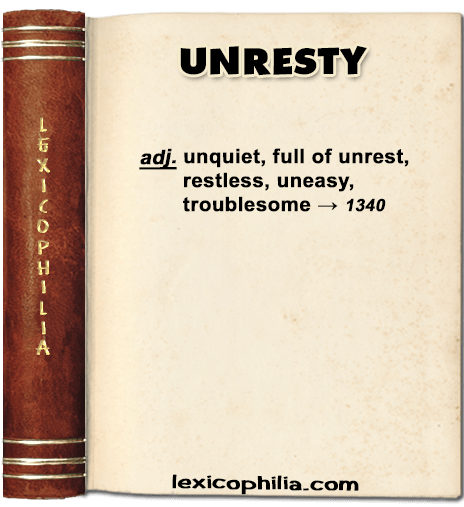
Word of the Day: UNRESTY

ETYMOLOGY
from un- + resty (restless, fidgety)

EXAMPLE
“… But for as muche as I mot nedes lyke.
Al þat yow lyst I dar not pleyne more.
But humbely with sorwful sykes syke.
Yow wryte ich myne
vnresty sorwes sore.
Fro day to day desyryng euere more.
To knowen fully yf it youre wil [it] were.
How ye han ferd and don whyl ye be þere.
…”

From: A parallel-text print of Chaucer’s Troilus and Criseyde from the Campsall ms. of Mr. Bacon Frank, a1413
Edited by Frederick James Furnivall
Published for the Chaucer Society, 1881

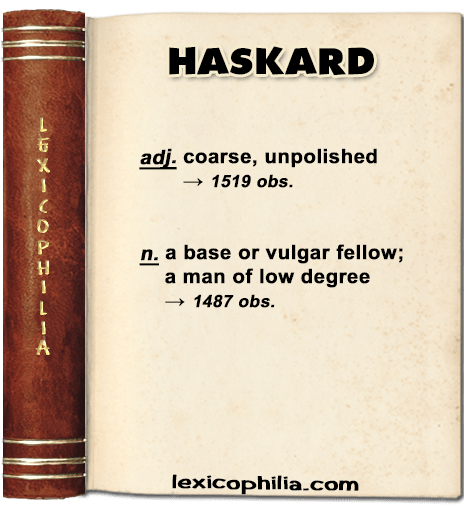
Word of the Day: HASKARD

ETYMOLOGY
of uncertain derivation; the suffix as in bast-ard, etc

EXAMPLE (for n.)
“… one daye as in a mornyng that he came out of the hous of a comyn woman He mette wyth a lewde haskarde, whyche for to doo the sayd synne of lechery went to the hous there as the holy man fro…”

From: Vitas Patrum
Translated by William Caxton, 1495

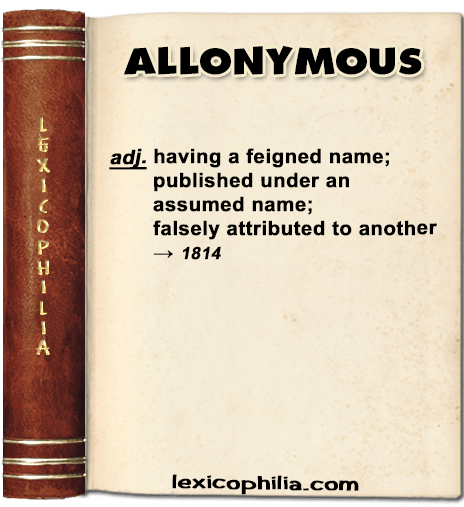
Word of the Day: ALLONYMOUS

ETYMOLOGY
from allo- (comb. form) + ‑nymous, perhaps after French allonyme (see allonym n.).

EXAMPLE
“… With regard to their authors, books are
(1.)
Allonymous; those published under the real name of some author of reputation, to whom consequently works are attributed which he never composed. – Such was the Book on Antiquities published by Annius of Viterbo, at Rome, in 1498, in folio; and again in 1542, in octavo. In this compilation, Annius has been charged with fabricating works falsely attributed to Xenophon, Philo, and other antient authors. …”

From: An Introduction to the Study of Bibliography: to which is Prefixed a Memoir on the Public Libraries of the Antients
By Thomas Hartwell Horne, 1814

PRONUNCIATION
al-ON-uh-muhss

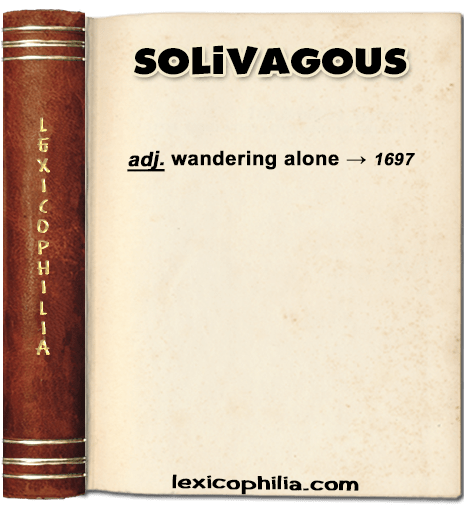
Word of the Day: SOLIVAGOUS

ETYMOLOGY
from Latin solivagus, from solus + vagari (to wander)

EXAMPLE
“… Other creatures live free and independent upon one another, except the young ones of some Creatures, while they can seek their Food and Preservation; and are either Solivagous and Hurtful, as Foxes, Wolves and Tigers, &c. or live promiscuously in Herds and Flocks, and are innocent Creatures as Sheep, Goats, &c. whereas Men live in Dependency one upon another, so as no Man can subsist of himself; …”

From: A Detection Of The Court and State Of England During The Four Last Reigns 
and the Inter-Regnum.
By Roger Coke, 1697
The Reign of King Charles II. A. D. 1661

Word of the Day: LADYKIN

ETYMOLOGY
from lady + -kin

EXAMPLE
“… .In the time of Ieremie the land mourned for oathes, in our time it is to be wondred, that the land sinkes not to hell under the burden of this sinne: there is hardly one of an hundred that makes conscience of all oathes: they haue pettie oathes (as they account them) and coyne strange Gods to sweare by, the Masse, Ladikin, or Lakin, and much like grosse profanenesse they continually use without feare or wit: yet is cursing as ordinary as swearing, and drunkrnnesse comes not behind any of them, how generall it is, and how it hath, and doth infect, witnesse the ruine of many families, the pining and leane cheekes of many wiues and children, and the loathsome stinke of it in every corner. ..”

From: The Way to Blessednes a Treatise or Commentary, on the First Psalme
By Phineas Fletcher, 1632

Word of the Day: CREDULIST

ETYMOLOGY
from Latin credulus (ready to believe or trust) + -ist

EXAMPLE
“… the couetous Bashaw of Aleppo, the gouernor of those parts, are contented to beare with things euen contrary to the lawes of their Alcheron, impugning altogether the Godhead and incarnation of Christ: as the Iews against his pouerty and humiliation: & for great sums of mony, & annuall entrado, suffer stil diuers friers & religious persons to entertain pil∣grims, trauellers, ignorant deuotists, superstitious papists, and simple credulists, with impudent, lying, & deceitfull relicks …”

From: The Secretaries Studie Containing New Familiar Epistles
By Thomas Gainsford, 1616

Word of the Day: FLUMMADIDDLE

ETYMOLOGY
probably from flummery (nonsense, humbug, empty trifling)

EXAMPLE (for n. 1.)
“… When Mr. Middleton was spoken to on the subject of sending Julia to Frankfort, he at first refused outright. ” No,” said he, ” indeed she shan’t go ! What does she want of any more flummerdiddle notions ? What she does know is a damage to her ! “
“But do you not wish to give your daughters every possible advantage ? ” said Mr. Wilmot.
…”

From: Tempest and Sunshine; or, Life in Kentucky
By Mary Jane Holmes, 1854