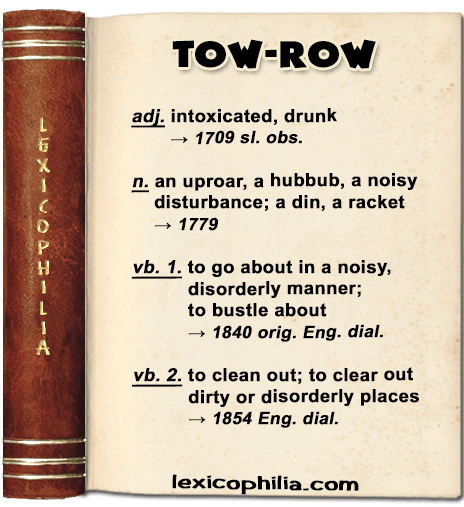
Word of the Day: TOW-ROW

ETYMOLOGY
reduplicated or extended form of row (a violent disturbance); orig. dialect

EXAMPLE (for adj.)
“… If a Virgin blushes, we no longer cry the Blues. He that Drinks till he stares, is no more Tow-Row, but Honest. A Youngster in a Scrape, is a Word out of Date; and what bright Man says , I was Joab’d by the Dean …”

From: The Tatlers
By Isaac Bickerstaff. 1710
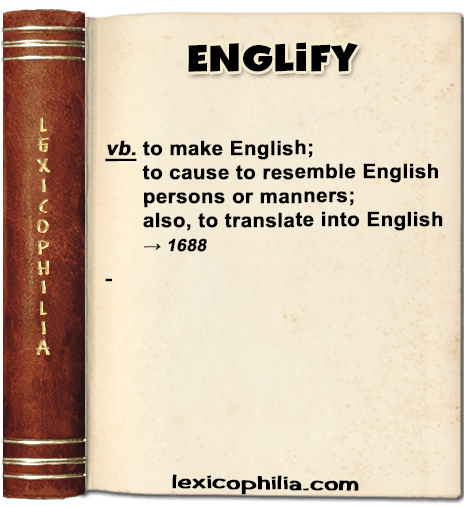
Word of the Day: ENGLIFY

ETYMOLOGY
from Engl- (in English) + ‑ify 

EXAMPLE
“… This is the true shape of it, concerning which I have formerly written, chap. 10. numb. 15, 16. This is by some termed a Frog seiant, A. a Fesse between three of them Vert, is the coat of Paddock, a breviation from Ap Addock, a Welsh name Englified, as is very usual with them when they come to inhabit amongst the English, as Iohn ap Richard to be called Iohn Pritchard, William ap Hugh, to be called William Pugh, and the like. …”

From: The Academy of Armory, or, A storehouse of armory and blazon containing the several variety of created beings, and how born in coats of arms, both foreign and domestick: with the instruments used in all trades and sciences, together with their their terms of art
By Randle Holme, 1688

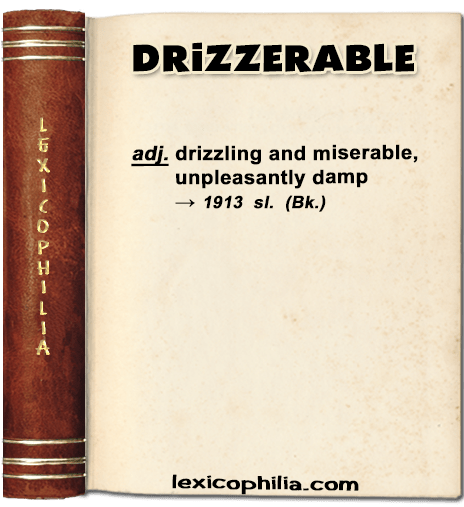
Word of the Day: DRIZZERABLE

ETYMOLOGY
from drizzling + miserable

EXAMPLE
“… As loggers used to say, two ‘drizzerable‘ days of sullen wet wind blew by before I dared risk the open lake in the canoe. To mollify my impatience, I spent the time rethinking the cabin logs, rebracing roof members, and chopping wood, should I decide to spend another winter there. …”

From: The Bears and I
By Robert Franklin Leslie, 1971

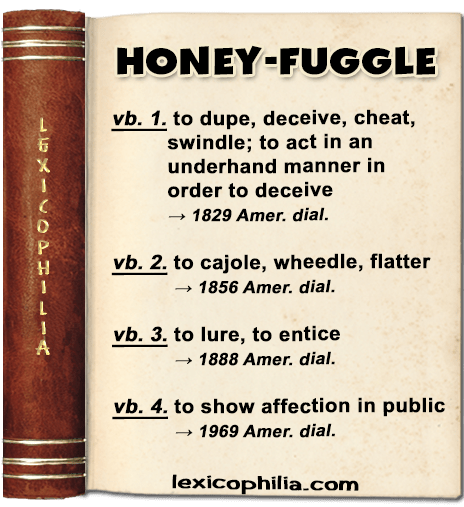
Word of the Day: HONEY-FUGGLE

ETYMOLOGY
apparently from honey (n.) + fugle (to cheat, trick), 
perhaps after dialect connyfogle (to deceive)

EXAMPLE
“… Let it be borne in mind that Sharp is a willing, a swift, and a long-winded witness, having come from the Territory, two thousand miles off, mainly for the purpose of devoting to the sitting Delegate the benefit of his counsel and his oath. Pardon me for using the word; but Sharp ‘honey-fuggled‘ around me; He came to me, and stated that Chapman wanted him to make an affidavit, but that he would rather not do it; that he had declined doing it; and thus he misled me and threw me off my guard, and then a few days afterwards, he makes this affidavit, gets on board the cars, and left the city for western Iowa, to pull wires in politics to secure his own election to the Iowa Legislature; …”

From: United States. Congress. Congressional Globe; Containing the Debates and Proceedings of the Congress 1855 – 1856
Nebraska Contested Election.
Speech of Hon. H. P. Bennet of Nebraska,
In the House of Representatives, July 22, 1856.

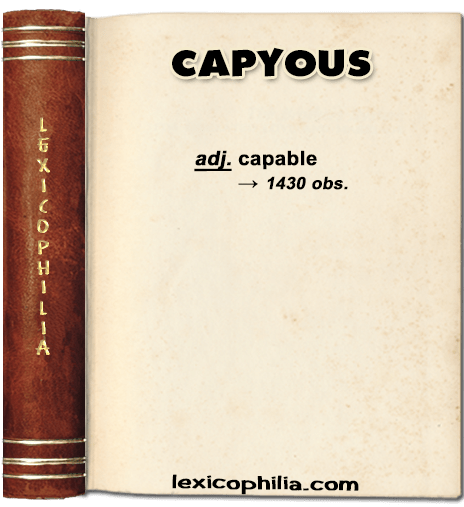
Word of the Day: CAPYOUS

ETYMOLOGY
from Latin capere (to take) + -ious

EXAMPLE
“… The wonderfullest and most meruaylous
That euer yet were seen tofore
Wherof no wyght by kynde is
capyous
First how god to saue that was forlore
Lowly in erthe list to be bore
And how a mayde in hir virgynyte
Myght also chylde and a moder be
…”

From: The Lyf of our Lady
By John Lydgate, 1484

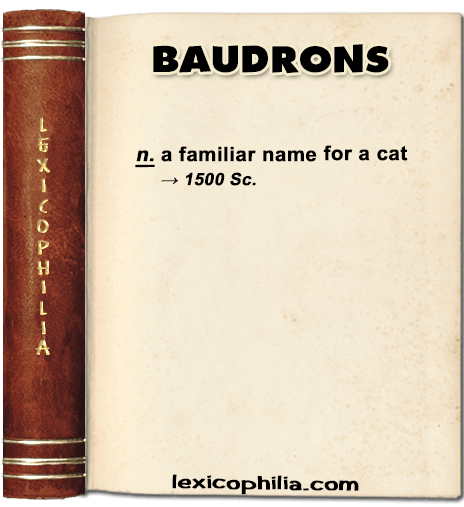
Word of the Day: BAUDRONS

ETYMOLOGY
of uncertain origin; perhaps Celtic

EXAMPLE
“… With fair tretie ʒit scho gart hir vpryse,
And to the burde thay went and togidder sat,
And scantlie had thay drunkin anis or twyse,
Quhen in come Gib hunter our Iolie Cat,
And bad God speid, the Burges vp with that,
And till the hole scho went as fyre on flint,
Bawdronis the vther be the bak hes hint. ….”

From: The Morall Babillis of Esope the Phrygian
By Robert Henryson, a1500

PRONUNCIATION
BAW-druhnz

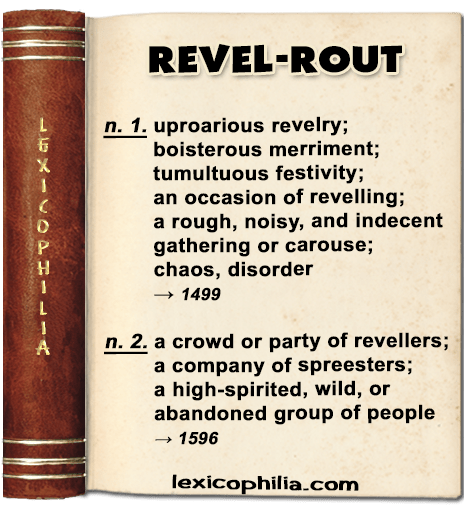
Word of the Day: REVEL-ROUT

ETYMOLOGY
from revel (exuberant merrymaking) + rout (a company or assemblage of persons)

EXAMPLE (for n. 1.)
“… Counter he coude (Olux) vpon a potte
An estryche fedder of a capons tayle
He set vp fresshely vpon his hat a lofte
What
reuell route quod he and gan to rayle
How ofte he hadde hit Ienet on the tayle
Of felyce fetewse dnd lytell prety cate
How ofte he knocked at her klycked gate
…”

From: Here begynneth a lytell treatyse named The Bowge of Courte
By John Skelton, 1499

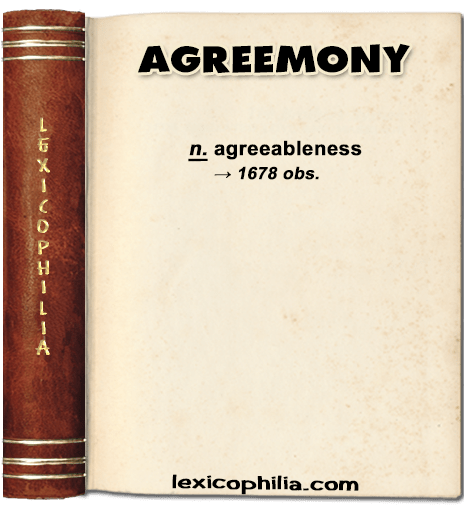
Word of the Day: AGREEMONY

ETYMOLOGY
alteration of acrimony, punningly after agreement

EXAMPLE
“... Upon my Reputation, Madam, you’re a civil well-bred Person, you have all the Agreemony of your Sex, La Bell Talie, la Boon Mien, & reparteét bien, and are tout one toore, as I’me a Gentleman, fort agreeable. — If this do not please your Lady, and Nauseate her, the Devil’s in ’em both for unreasonable Women. …”

From: Sir Patient Fancy: a comedy
By Aphra Behn, 1678

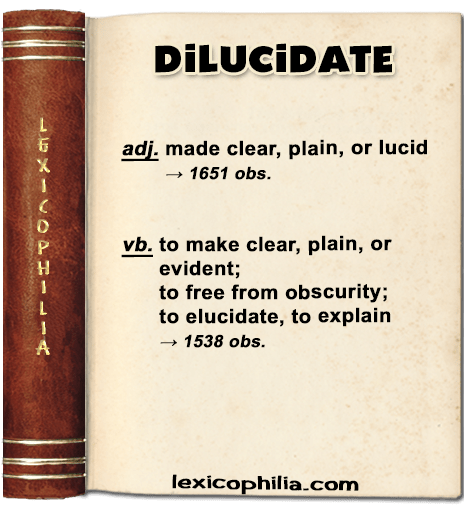
Word of the Day: DILUCIDATE

ETYMOLOGY
adj.:  from Latin dilucidatus, past participle of dilucidare (to make clear, to explain), from dilūcidus (clear, bright)
vb:  from Latin dilucidat- participial stem of dilucidare (to make clear, to explain)

EXAMPLE (for vb.)
“… .For we folowe not only a standynge text of the Hebrue, with the interpretacion of the Caldee, and the Greke, but we set, also, in a pryvate table, the dyversite of redinges of all textes, with suche annotacions, in another table, as shall douteles delucidate and cleare the same; as well without any singularyte of opinions, as all checkinges and reprofes. The prynt, no doubt, shall please your good Lordship. …”

From: State papers, published under the authority of His Majesty’s Commission. King Henry the Eighth
Coverdale and Grafton to Crumwell, 1538