Word of the Day: STULTITIOUS


ETYMOLOGY
for adj. 1: from Latin stultitia (folly),
from stultus (foolish)


EXAMPLE
“…In Wales in diuers places is vsed these two stulticious matters, the fyrste is, that they wyl sell their lams, and theyr calues, and theyr corne the whyche is not sowen, and all other newynges, a yere before that they be sure of any newynge; and men wyl bye it, trustynge vppon hope of suche thynges that wyl come…”

From:
The Fyrst Boke of the Introduction of Knowledge
By Andrew Boorde, 1549

Word of the Day: SITIBUND


ETYMOLOGY
from Latin sitibundus (thirsty),
from Latin sitio (to be thirsty) + abundo (to abound)


EXAMPLE
“…The spas of Germany turned the tide towards Kissingen, Wildbad, and Carlsbad; and now Vichy will be the Thule of the sitibund Britishers who like to drink mineral water in good company, and now learn that they are certain to find both in perfection at Vichy…”

From:
The Mineral Springs of Vichy
By Augustus Bozzi Granville, 1859

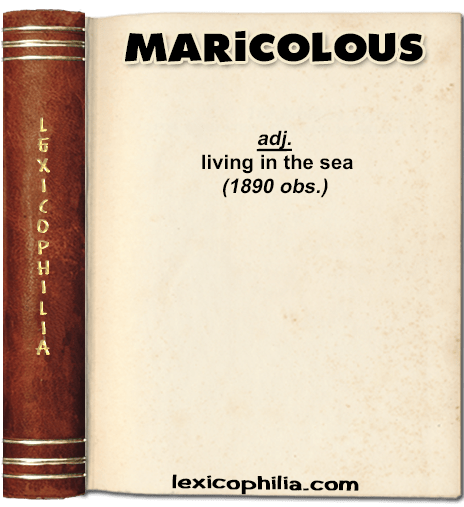
Word of the Day: MARICOLOUS


ETYMOLOGY
from Latin mari-mare (sea) + –colus (inhabiting, colere (to inhabit))


EXAMPLE
“…The members of this genus are small, constantly apterous, gregarious, maricolous, and inhabit relatively still salt and brackish waters of bays, atolls, estuaries, inlets…”

From: Studies on the Fauna of Suriname and Other Guyanas
By D.C. Geijakes, 1962

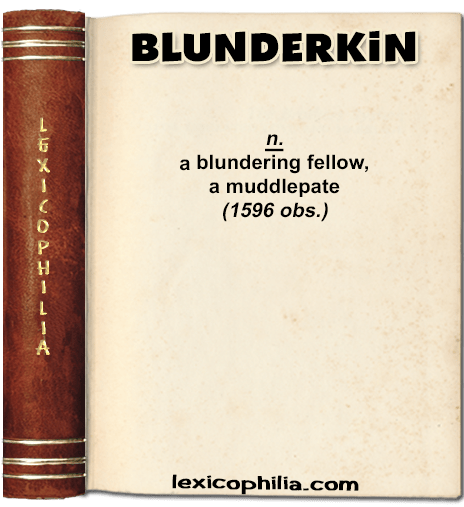
Word of the Day: BLUNDERKIN


ETYMOLOGY
from blunder, taken in sense of ‘blunderer’ + -kin


EXAMPLE
“…I vtterly despaire of them, or not so much despaire of them, as count them a paire of poore ideots, being not only but also two brothers, two blockheads, two blunderkins, hauing their braines stuft with nought but balder-dash, but that they are the verie botts & the glanders to the gentle Readers…”

From: Haue with you to Saffron-Walden; or, Gabriell Harueys Hunt is Vp
By Thomas Nashe, 1596

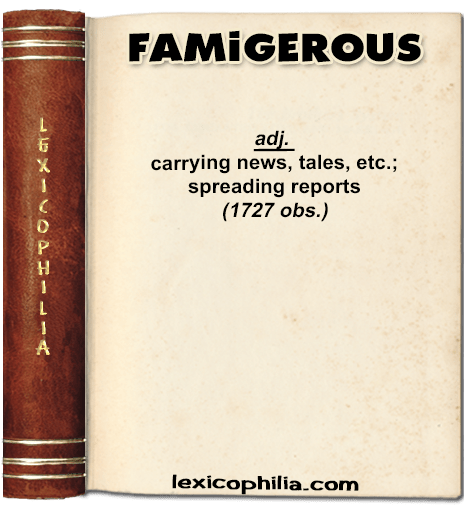
Word of the Day: FAMIGEROUS


ETYMOLOGY
from Latin famigerare; formed on fama (a being much talked about, report) + gerere (to carry)


EXAMPLE
“…Renowned Sir, I made bold to beautify and embellish this worthless contemned work I am upon, with the oriental lustre of your eminent and deservedly most famigerous name: for which presumption I intended to crave your pardon, and behold! I am prevented, not with your absolution only, but with a grateful acceptance…”

From: The Whole Works of the Rev. John Lightfoot
Edited by the Rev. John Rogers Pitman, Volume XIII. 1824
Letters to and from Doctor Lightfoot. Letter XXVII.

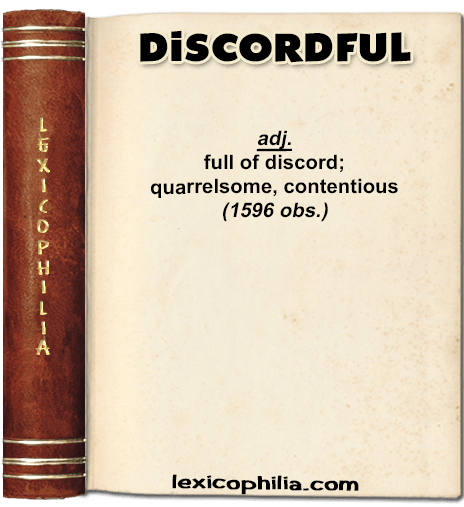
Word of the Day: DISCORDFUL


ETYMOLOGY
from discord + -ful


EXAMPLE
“…Thus as they marched all in close disguise,
Of fayned loue, they chaunst to ouertake
Two knights, that lincked rode in louely wise,
As if they secret counsels did partake;
And each not farre behinde him had his make,
To weete, two Ladies of most goodly hew,
That twixt themselues did gentle purpose make
Vnmindfull both of that discordfull crew,
The which with speedie pace did after them pursew
…”

From: The Second Part of The Faerie Queene
By Edmund Spenser, 1596

Word of the Day: LOCOMOVE


ETYMOLOGY
from Latin loco, ablative of locus (the place in which something is situated or occurs) + move


EXAMPLE
“…A Journey in a Postchaise
To his Brother
Passenham, July 16, 1792

Dear Brother, – It is high time you should know something about us and our locomotions. To-morrow morning, at six of the clock, we begin to loco-move towards Bitteswell
…”

From: Recreations and Studies of a Country Clergyman of the Eighteenth Century
By Thomas Twining (letter)

Word of the Day: HILUM


ETYMOLOGY
from Latin hilum (little thing, trifle);
according to Festus, thought to have originally meant ‘that which adheres to a bean’;
hence, later used in anatomy (the depression or opening where ducts, vessels, etc. enter an organ) and in biology (a scar on a seed or spore created by detachment)


EXAMPLE
“…Now Solomon was a wise, and an understanding childe. How much more then should you take care of ignorant, knotty, illiterate, and unhewn Sailors, that have no more than a meer hilum of goodness in them?…”

From: Πελαγος or, An Improvement of the Sea
By Daniel Pell


PRONUNCIATION
HIGH-luhm

Word of the Day: EUCLIONISM


ETYMOLOGY
from Euclionem, the name of a miser, the chief character in Plautus’ Aulularia + -ism


EXAMPLE
“…Yea in the worde of one no more wealthy then hee was, wealthy saide I, nay I’le befworne hee was a grande iurie man in respect of me, those graybeard Huddle-duddles and crusty cum-twangs, were strooke with such stinging remorse of their miserable Euclionisme and sundgery, that hee was not yet cold in his graue but they challenged him to be borne amongst them, and they and sixe citties more, entred a sharpe warre aboute it, euery one of them laying claime to him as their owne, and to this effect hath Bucchanan an Epigram….”

From: Lenten Stuffe
By Thomas Nashe, 1599

Word of the Day: CHILDLING


ETYMOLOGY
from child + -ling


EXAMPLE
“…and therefore more than one hundred times doth he in this his rayling pasquill expresse himselfe against me in such termes as these: Youngling, novice, boy, childe, youth, young springlius, young glorioso, young ignaro, young Phaeton, vaine young man, unworthy young man, young Jenkins, young simplicius, childling, young Pragmatico, shamelesse young man, young Dictator, young Metropolitan, young Thraso, green-head, young peece of presumption, Prelaticall peece of Presbytery, unhallowed peece of Presbytery, swelling peece of vanity, san of shame and folly, illiterate soule, poore man, silly brain, mancipium of illiteratenesse, friend William, Batte mi fili, (as if with his religion and reason, he had also abjured good manners.) And he plainly tels his Reader, that his aime in writing his booke was thus: To make me know my selfe; though a gracious heart would have put him upon writing to have made the people know the truth….”

From: Ὁδηγος Τυϕλος [Odegos Tuphlos]: The Blind Guide, or, The Doting Doctor
By William Jenkyn
Written by John Goodwin, 1648