Word of the Day: NIMBLE-CHOPS


ETYMOLOGY
from nimble + the plural of chop (the jaws and cavity of the mouth)


EXAMPLE
“…Why frend Nimblechaps me thinks you seeme rather ready to play with ye shadowe of euery thing then wi[l]ling to vnderstand the substantiall matter in a­ny thing: can you rightly gather vpon my speech that a woman is euill? if you do well vnderstande mee, you shal finde nothing lesse, but rather that shee is for the most parte one of the greatest good thinges in this world, and most necessa­ry of any thing els besydes…”

From: A Short Inuentory of Cer­tayne Idle Inuentions
The Fruites of a Close and Secret Garden of Great Ease, and Litle Pleasure
By C. Thimelthorpe, 1581
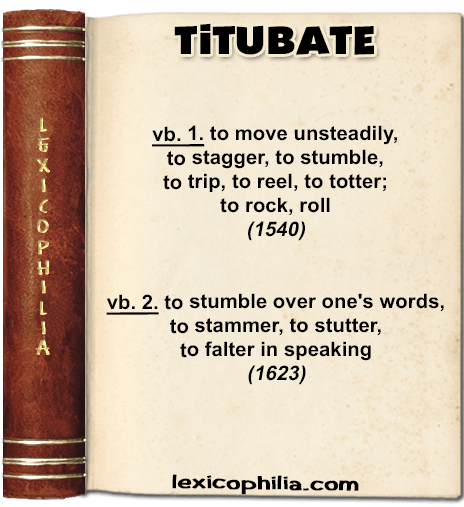
Word of the Day: TITUBATE


ETYMOLOGY
from Latin titubat-, past participial stem of titubare (to walk unsteadily, to totter, to stagger, to falter, to vacillate or dither, to make a mistake, slip up, or stumble (in speech or action)


PRONUNCIATION
TIT-yuh-bayt


EXAMPLE
“…Repercussed by the ryght redolent & rotounde rethorician R. Smyth P. with annotacios of the mellifluous and misticall Master Mynterne, marked in the mergent for the enucliacion of certen obscure obelisques, to thende that the imprudent lector shulde not tytubate or hallucinate in the labyrinthes of this lucubratiuncle…”

From: An Artificiall Apologie (title page)
By R. Smyth, 1540

Word of the Day: MICACIOUS


ETYMOLOGY
from Latin micare (to shine, sparkle, dart, move swiftly) + -acious 


PRONUNCIATION
migh-KAY-shuhss


EXAMPLE
“…Others little inferior in splendour followed in procession; and what added much to their gorgeous appearance was, that as the oars were lifted, the water was perfectly micacious, and they appeared to glide over a sea of liquid gold…”

From: Constantinople Ancient and Modern:
With Excursions to the Shores and Islands of the Archipelago and to the Troad
By James Dallaway, 1797

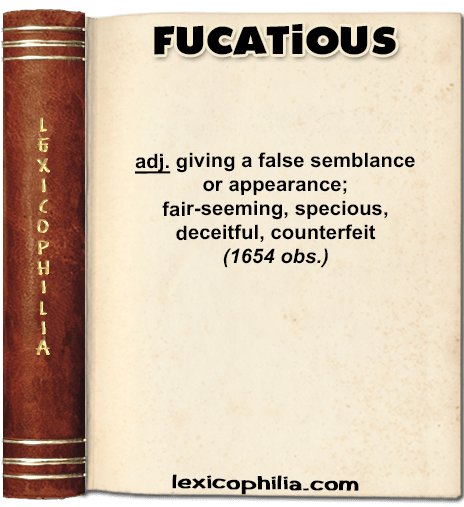
Word of the Day: FUCATIOUS


ETYMOLOGY
from fucation (a painting the face; hence, the giving of a false semblance or appearance, counterfeiting), (from Latin fucatus, pa. pple. of fucare (to paint, rouge)) + -ous


EXAMPLE
“…but then the condition must be possible in his power to whom ’tis made, and the perfor∣mance according to the promisers Wil or liking; els it can∣not be candid or current. For to offer a courtesy under impossible condition, is frivolous or fucatious: as if one should offer mony to a blind Man on condition he wil tel what coin ’tis; which is al one as to deny an alms: nay in som sort wors, sith ’tis a denial with delusion and derision, or a meer mockery…”

From: Theoremata Theologica: Theological Treatises.
Octo theses theologicæ: Eight theses of divinity
By Robert Vilvain, 1654

Word of the Day: AROMATOUS


ETYMOLOGY
from Latin aromata or French aromat, as if adapted from Latin aromatosus or French aromateux


EXAMPLE
“…And thenne it hath vertue tascende by the lightnes of the fume and to comforte by his qualite and to conioyne by the gumme and to conferme by that it is aromatous or wel smellyng. And all in lyke wyse i the orison or prayer whiche ascendeth to the mynde of god. It conforteth the soule as to the synne passed in axyng medecyne…”

From: Legenda Aurea/The Golden Legend
By Jacobus de Voragine
Translated by William Caxton, 1483

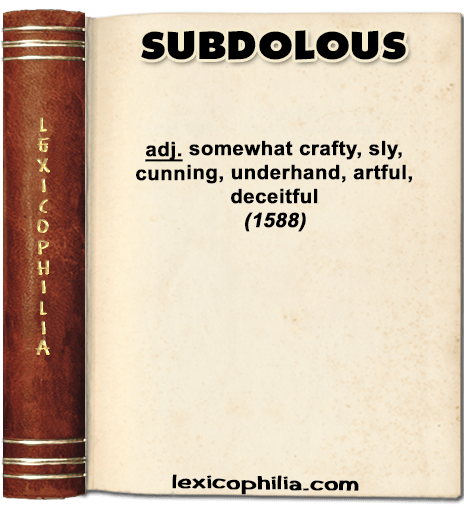
Word of the Day: SUBDOLOUS


ETYMOLOGY
either from late Latin subdolosus (rather cunning), from classical Latin subdolus (sly, deceitful, treacherous) + -osus (-ous),
or from classical Latin subdolus (sly, deceitful, treacherous) (from sub- (sub-) + dolus (dole the corrupt, malicious, or evil intention essential to the guilt of a crime)) + -ous


PRONUNCIATION
SUB-duh-luhss


EXAMPLE
“…The subdolous crafte and deceate of Satan…”

From: Ane Cathechisme or Schort Instrvction of Christian Religion
By Peter Canisius
Translated by Adam King, 1588

Word of the Day: ACCIDIOUS


ETYMOLOGY
from medieval Latin accidiosus (listless, slothful),
from accidia (slothfulness, apathy, lethargy) + Latin -osus (-ous)


PRONUNCIATION
uhk-SID-ee-uhss


EXAMPLE
“…Þe accidious man haþ ydilnesse, sleuþe, & sleep for his god…”

From: The Pore Caitif, edited from MS. Harley, a1400
(a late fourteenth-century Middle English manual of religious instruction intended for the use of the laity)

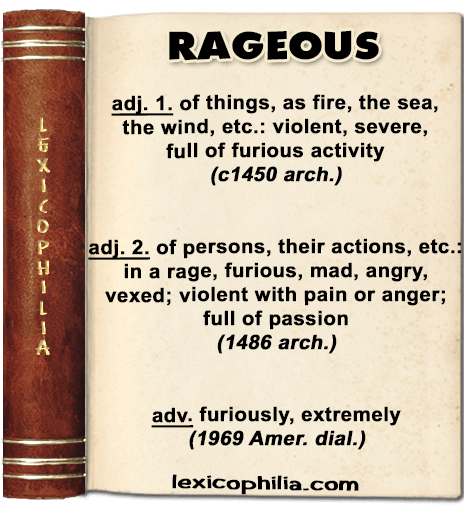
Word of the Day: RAGEOUS


ETYMOLOGY
partly from Anglo-Norman ragous (raging), from rage (rage) + -ous,
and partly directly from rage (n.) + -ous 


EXAMPLE (for adj. 1)
“…What nede y spende more enke or parchement,
That fele the crampe of deth myn hert so nyghe
As thorugh this rageous fyre which hath me hent?
Thus calle y for yowre socoure pitously
…”

From: The English Poems of Charles of Orleans
Edited by R. Steele, 1941
Fortunes Stabilnes, c1450

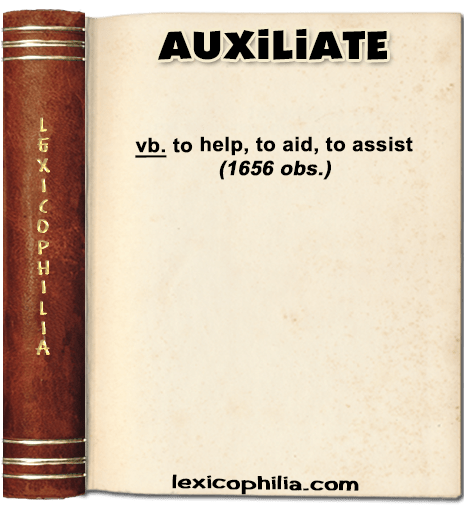
Word of the Day: AUXILIATE


ETYMOLOGY
from Latin auxiliat- ppl. stem of auxiliari (to help, to assist)


EXAMPLE
“…of which are some Plants, or parts thereof, and some Minerals, which being absolutely described, put the Apothecary upon doubts, who is ignorant of the genuine dilucidation: whose tenuity, that we may auxiliate, we will give him the names of the five opening roots; and they are the roots of Smallage, Sperage, Parsley, Fennel, and Butchers-broom. Besides which, other five are much celebrated, to wit, the roots of Grass, the greater Madder, Oenone, Ca∣pers, and Eryngium…”

From: A Medical Dispensatory
Containing the Whole Body of Physick
Composed by the Illustrious Renodaeus,
Englished and Revised by Richard Tomlinson, 1657
The Fourth Book Of Roots