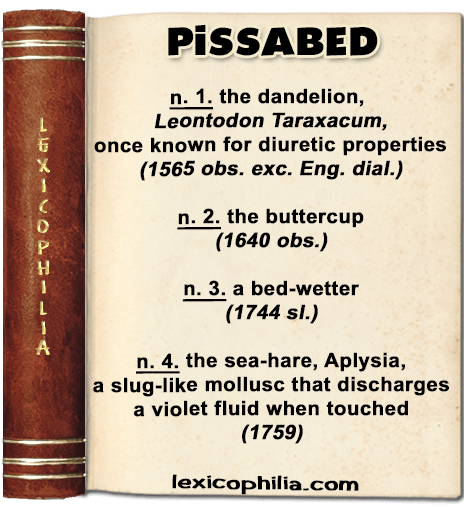
Word of the Day: MERRYTHOUGHT


ETYMOLOGY
from merry (adj.) + thought (n.)
‘The name alludes to the custom of two persons pulling the furcula of a fowl until it breaks; according to the popular notion, the one who gets the longer (in some districts, the shorter) piece will either be married sooner than the other, or will gain the fulfilment of any wish he may form at the moment.


EXAMPLE
“…Fetherstone. O youle make her sicker then.
Greeneshield. I warrant you; would all women thought no more hurt then thou doost now, sweet villaine, Kate, Kate.
Kate. I longd for the merry thought of a phesant.
Greeneshield. She talkes in her sleepe….”

From: North-ward Hoe
By Thomas Dekker & John Webster, 1607
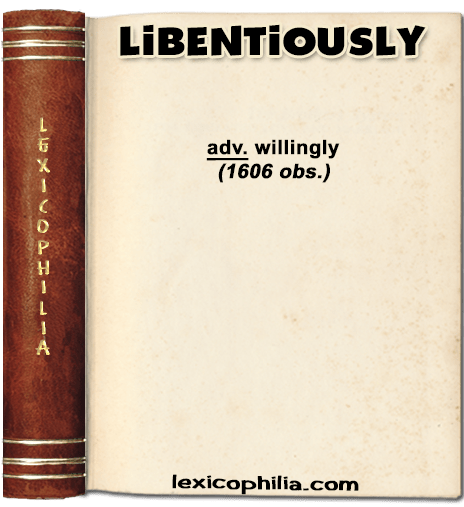
Word of the Day: LIBENTIOUSLY


ETYMOLOGY
as if from libentious (from Latin libentia, from libentemlibens (willing)) + -ous + -ly


EXAMPLE
“…Most-what by Women, sillie Girles, youths, firie-wits, Ambitious,
By great, by needy Mal-Contents, by Credulous, and Vitious,
Work Romes Committees, & from flesh to fare much more delicious
Penance their Puples: whitest Sons these Seedsters and Seditious.
And, that for them libentiously Fooles-Catholike should erre,
Pensions, Canonizing at least, on Rome-wrights they conferre
…”

From: A Continuance of Albions England
By William Warner, 1606

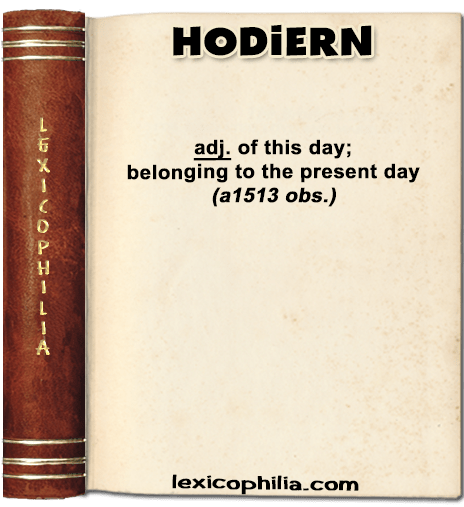
Word of the Day: HODIERN


ETYMOLOGY
from Latin hodiernus, from hodie (to-day)


EXAMPLE
“…Hale, sterne superne, hale, in eterne
 In Godis sicht to schyne,
Lucerne in derne for to discerne,
 Be glory and grace devyne.
Hodiern, modern, sempitern,
 Angelicall regyne,
Our tern inferne for to dispern,
 Helpe, rialest rosyne
…”

From: The Poems of William Dunbar (1998)
Ballad of our Lady, a1513

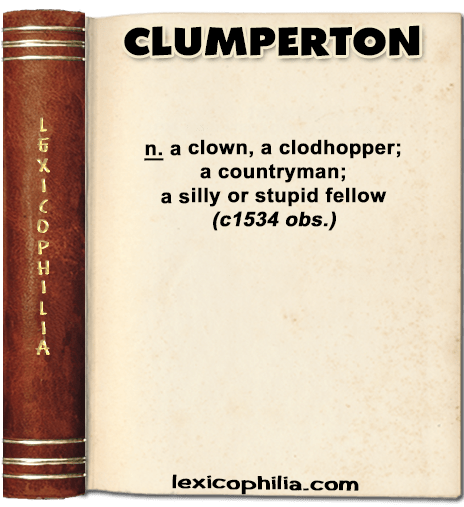
Word of the Day: CLUMPERTON


ETYMOLOGY
from clump or clumper (a lump, mass);
possibly on model of simpleton


EXAMPLE
“…Thus departinge from thence it chaunced him to stray asyde from his companie, and, fallinge into reasoninge and so to altercation with a stronge stubberne clomperton, he was shrowdlie beaten of him, yeat hee kepte him from beinge hurte of his menne, grauntinge that hee hadd well deserved those stripes…”

From: Polydore Vergil’s English History, c1534
from an early translation preserved among the mss. of the old royal library in the British museum

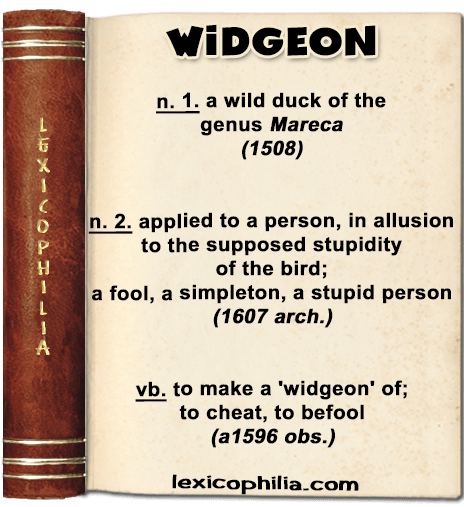
Word of the Day: WIDGEON


ETYMOLOGY
of uncertain origin

From the Oxford English Dictionary:
The form appears to suggest a French origin (compare pigeon n.), but French forms are first attested significantly later than the English word: compare †vigeon kind of West Indian duck (1667), †vingeon kind of duck observed in Madagascar (1690), kind of West Indian duck (1767 or earlier), Eurasian wigeon (Buffon 1783, also as †gingeon), American wigeon (J. Latham 1785), and it is even possible that the French word was borrowed < English.


PRONUNCIATION
WIJ-uhn


EXAMPLE (for n. 2)
“…Such as you shall like too: what say you to this young Gent. He is the widgen that wee must feed vpon…”

From: The Miseries of Inforst Mariage
By George Wilkins, 1607

Word of the Day: MONTIVAGANT


ETYMOLOGY
from Latin monti-mons (mountain) + vagantem, pres. pple. of vagari (to roam) + -ant


EXAMPLE
“…Downward he speeds to mingle in the fray
As headlong rolls the torrent of the hills
When wintry storms montivagant outpour
Their pluvious treasures from the deep purloined
…”

From: Rogvald: An Epic Poem
By John Fitzgerald Pennie, 1823

Word of the Day: DUMBLEDORE


ETYMOLOGY
compound of dumble (similar to bumble) +‎ dor (a buzzing flying insect)


EXAMPLE
“…I thank you for your poetry. What is the burnie-bee? Is it not the humble-bee, or what we call the ‘dumbledore‘ – a word whose descriptive droning deserves a place in song?…”

From: A Memoir of the Life and Writing of William Taylor
By John Warden Robberds, Sir Robert Southey, 1799