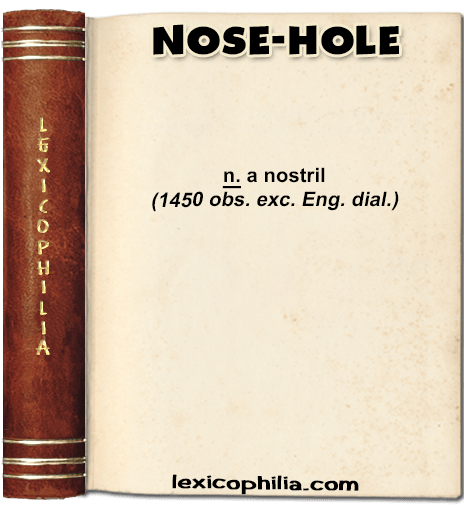
Word of the Day: NOSE-HOLE


ETYMOLOGY
from nose + hole


EXAMPLE
“…Whan a bodi is stinged of an Adder than shall the woūde be wasshed ther with and clowtes wet layd ther vpō I Cotton wet in the same water & put in the nose holes is good agaynst Polippus that is stynkinge flesshe in the nose…”

From: The vertuose boke of distyllacyon of the waters of all maner of herbes 
By Hieronymus Brunschwig
Translated by Laurence Andrewe, 1527
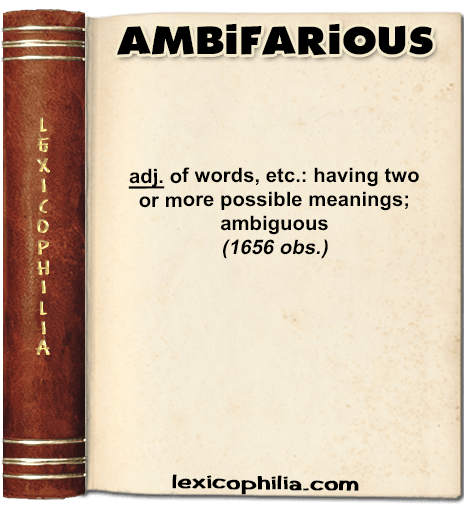
Word of the Day: AMBIFARIOUS


ETYMOLOGY
from Latin ambifarius two-sided, of double meaning + -ous


EXAMPLE
“…The Bridegroom, with his Bride is brought,
To Bed with various Turn of Thought;
By Ruth, with ambifarious Jest:
To please them both, she thinks it best
…”

From: Poems on Various Subjects,
By Thomas Sadler, 1766
The Unfortunate Batchelor, Or Wife’s Resentment

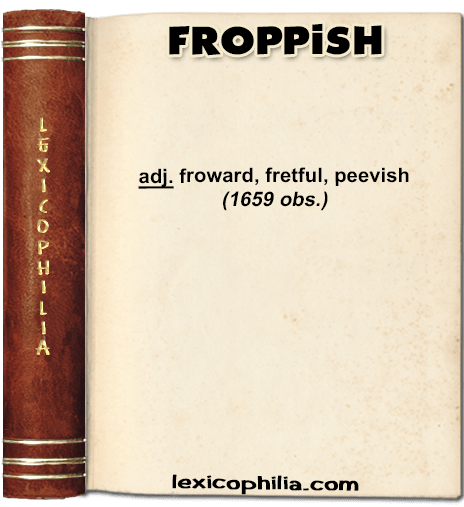
Word of the Day: FROPPISH


ETYMOLOGY
? from frop, variant of frap (to strike, to beat) + -ish


EXAMPLE
“…God doth usually, if not constantly, break their wills by de∣nying them, as one would cross a froward. Child of his stub∣born humour: or else puts a sting into them, that a man had been as good he had been without them, as a man would give a thing to a froppish Child, but it may be with a knock on his Fingers, and a frown to boot.…”

From: Christian letters full of spiritual instructions tending to the promoting of the power of godliness, both in person and families.
By Joseph Alleine, 1659

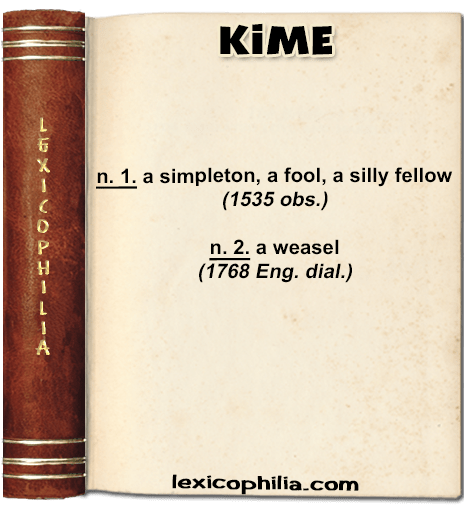
Word of the Day: KIME


ETYMOLOGY
of uncertain origin


EXAMPLE
“…The Emperour yaf the Pope somtyme
So hyghe lordshyp hym aboute,
That at the laste the sely kyme
The proude Pope putte hym out!
So of thys realme is in doute,
But lordes be ware and them defende;
For nowe these folke be wonder stoute:
The kynge and lordes nowe thys amende!
…”

From: The Ploughman’s Tale, c1535

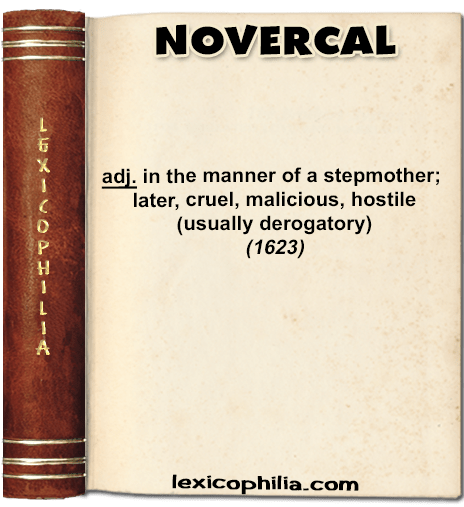
Word of the Day: NOVERCAL


ETYMOLOGY
from Latin novercalis (characteristic of a stepmother),
from noverca stepmother + -ālis (-al)


EXAMPLE
“…But Fortune that lends her smiles as Exctors do mony, to undoe the Debtor, soone cald for the Principall and Interest from this Prince, to whom she was meerly Novercall, and he might well call her with the expert Heros …”

From: The History of the Life and Reigne of Richard the Third
By Sir George Buck, 1646

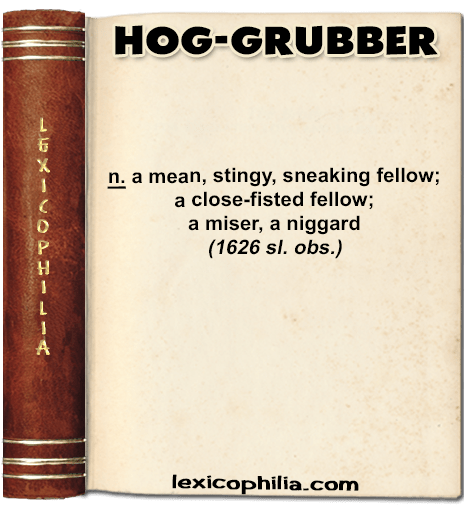
Word of the Day: HOG-GRUBBER


ETYMOLOGY
from hog + grubber (a person who gets wealth by sordid or contemptible methods)


EXAMPLE
“…The next that in our little Ease,
Came to be bit with Lice and Fleas,
Was a spruce Knave, like none of these, But sober,

As the Strand May-pole, – he did go,
In russe, – His thumb th’row ring, did show
A Gentleman seal’d, – for he was no Hog-grubber:

It was a Petty-fogging Varlet,
Whose back worse freez, but burn no scarlet,
And was tane napping with his Harlot, At noddy: …”

From: The Counter-Scuffle
Whereunto is added, the Counter-Ratt
By Robert Speed, 1626

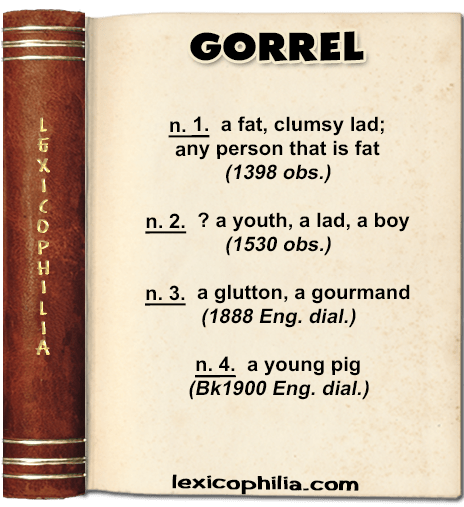
Word of the Day: GORREL


ETYMOLOGY
from Old French gorelgorreau (a pig, hog);
related to Old French gore (sow): of unknown origin.


EXAMPLE (for n. 1.)
“…Crampe that comyth of replycyon fallyth ofte to fatte men and flesshly and well fedde and gorrelles…”

From: Bartholomew de Glanville’s De Proprietatibus Rerum,
Translated by John Trevisa, 1495

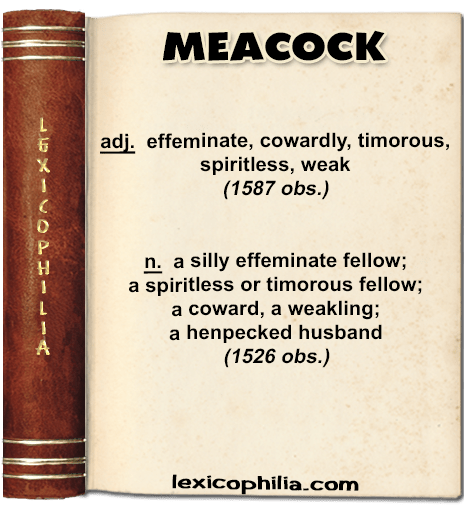
Word of the Day: MEACOCK


ETYMOLOGY
of obscure origin: perhaps originally a name of some bird  
(From Murray’s N.E.D.: “the suggestion that it is from meek (adj.) is untenable”)


EXAMPLE
“…He shuld be no cowarde, no maycocke, ne fearfull persone that dare no thyng enterprise….”

From: Here Begynneth a Deuout Treatyse in Englysshe, called the Pylgrimage of Perfection,
By William Bonde, 1526