Word of the Day

Word of the Day: DELAYOUS

ETYMOLOGY
from Old French delaieus, from delai (delay) + -ous

EXAMPLE
“…Neuyrthelesse I remembere well that ye delt wythe ryght delayous peple, my lord Archbyshop and othere of my lordys, and I dempte by-cawse of youre long tarryng that by youre sad dyscrescyon all hadde ben sett thorow…”

From: Paston letters and papers of the fifteenth century
– John Paston, 1469
– Edited by Norman Davis, Richard Beadle, and Colin Richmond, 2004
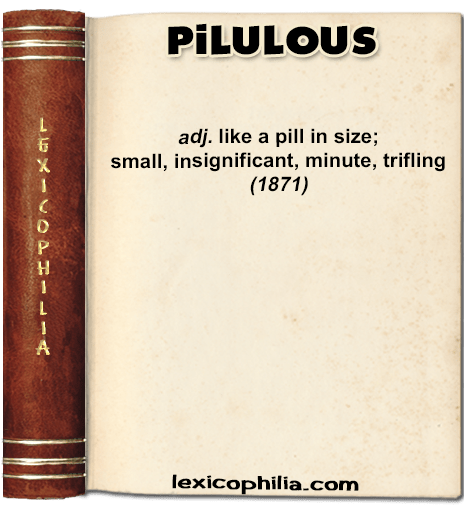
Word of the Day: PILULOUS

ETYMOLOGY
from Latin pilula (pill) + -ous

EXAMPLE
“…Dorothea’s inferences may seem large; but really life could never have gone on at any period but for this liberal allowance of conclusion, which has facilitated marriage under the difficulties of civilization. Has anyone ever pinched into its pilulous smallness the cobweb of pre-matrimonial acquaintanceship?…”

From: Middlemarch
– George Eliot, 1871

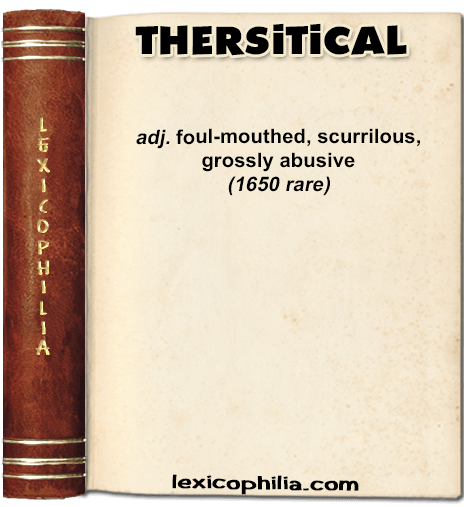
Word of the Day: THERSITICAL

ETYMOLOGY
from Greek θερσίτης Thersites (‘the Audacious’), an ill-tongued Greek at the siege of Troy + -ical

EXAMPLE
“…The Genuensians saith he, having received from the Mauritanians their Progenitors this Custome, to compresse the Temples of their Infants as soon as they are Borne, now, without that Compression, are Borne with a Thersiticall Head and Heart…”

From: Anthropometamorphosis: = Man Transform’d: or, The Artificiall Changling
– John Bulwer, 1650

Word of the Day: LOCUPLETATIVE

ETYMOLOGY
from Latin locupletare (to enrich, to make wealthy),
from locuples (rich, wealthy) + –ive

EXAMPLE
“…Veracious or mendacious, those distinctions are alike applicable to it; testimony self-regarding or extra-regarding: in both cases, servitive or disservitive: if disservitive, criminative or simply onerative: if servitive, exculpative, exonerative, or locupletative…”

From: Rationale of Judicial Evidence:
Specially Applied to English Practice
– Jeremy Bentham, 1827

Word of the Day: CLATTERFART

ETYMOLOGY
from clatter (to talk rapidly and noisily; to talk idly; to chatter, prattle, babble) + fart (a disagreeable or annoying person)

EXAMPLE
“…The Irish enimie spieng that the citizens were accustomed to fetch such od vagaries, especiallie on the holie daies, & hauing an inkling withall by some false clatterfert or other, that a companie of them would haue ranged abrode, on mondaie in the Easter weeke towards the wood of Cullen…”

From: The firste (laste) volume of the Chronicles of England, Scotlande, and Irelande
– Raphael Holinshed, Richard Stanyhurst, 1577

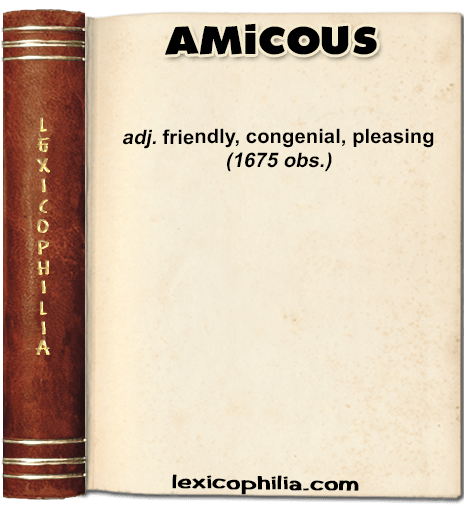
Word of the Day: AMICOUS

ETYMOLOGY
from Latin amicus (friendly, loyal, loving, favourable) + -ic-ous

EXAMPLE
“…as by which each single species draws and assimilates that only to it self, which it finds most amicous and congruous to its nature; and if so it be, then have we no more to do, than to learn how to prepare our Ferments, and apply them accordingly…”

From: A philosophical discourse of earth relating to the culture and improvement of it for vegetation,
and the propagation of plants, &c. as it was presented to the Royal Society
– John Evelyn, 1675

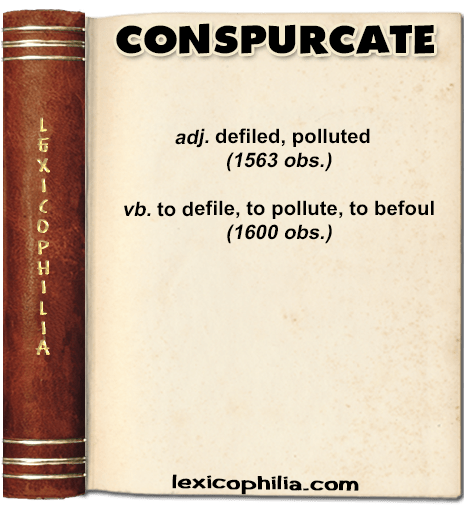
Word of the Day: CONSPURCATE

ETYMOLOGY
adjective: from Latin conspurcātus past participle
verb: from Latin conspurcāt-, participial stem of conspurcāre (to defile, pollute),
from con- + spurcāre (to befoul), 
from spurcus (unclean, dirty, foul)

EXAMPLE
“…in dede I thynk they both will declare it hartely, if they should come before them. As for me, if you woulde knowe what I thynk (my good and most deare brother Laurence) bycause I am so synfull & so conspurcate (the Lord knoweth I lye not) with many greuous synnes (which yet I hope ar washed away Sanguine Christi) I neither can nor would be consulted withal, but as a siphar in augrim.…”

From: The first volume of the ecclesiasticall history contaynyng the actes and monumentes of thynges passed in every kynges tyme in this realme
– John Foxe, 1563