Word of the Day

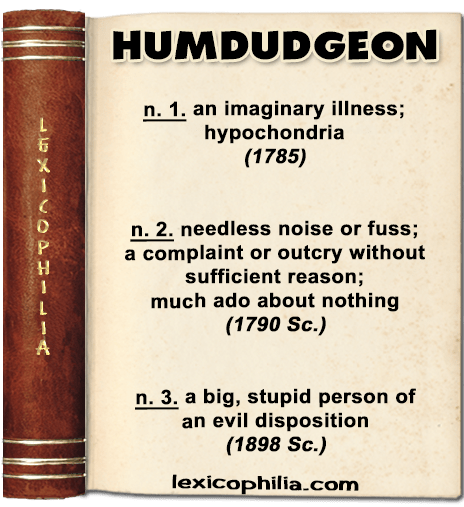
Word of the Day: HUMDUDGEON


ETYMOLOGY
from hum (a piece of humbug, an imposition, a hoax) + dudgeon (a feeling of anger, resentment, offense)


EXAMPLE (for n. 1)
“…”Hout tout, man – I would never be making a hum-dudgeon about a scart on the pow – but we’ll be in Scotland in five minutes now, and ye maun gang up to Charlies-hope wi’ me, that’s a clear case…”

From: Guy Mannering
By Walter Scott, 1815

Word of the Day: RURICOLIST


ETYMOLOGY
from Latin ruricola (a person who tills the land, husbandman, country dweller, rustic)
(from ruri-, combining form of rur-rus (country) + -cola) + -ist


EXAMPLE
“…His hood was half blue and half green, and, over his left ear, was set off with an artificial rose. His appearance did not bespeak the ruricolist, and Dick, who at once detected this, set him down for a burgess of London…”

From: The Life and Times of Dick Whittington
An Historical Romance.
By Richard Whittington, 1841

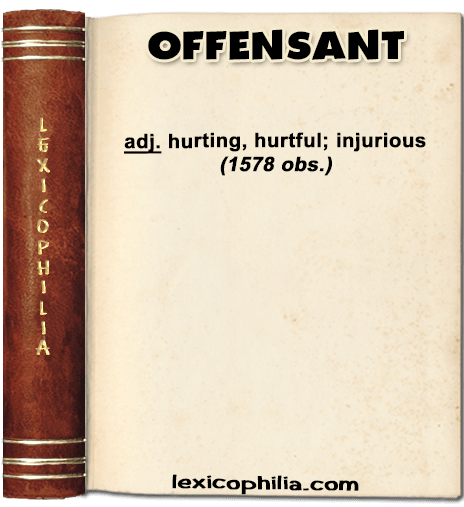
Word of the Day: OFFENSANT


ETYMOLOGY
from offence (to offend) + -ant


EXAMPLE
“…Now agayne because the ribbes, in their inner region or side, are succinged and clothed with a most sensible Membran called Pleura, and to the end that, the asperitie and roughnes of the ribbes, might not be at any time, to the sensibilitie of the same, offensaunt, it was therfore carefully prouided for, they beyng inwardly, wrought so smooth & easie for the same as may be deuised…”

From: The Historie of Man 
By John Banister, 1578

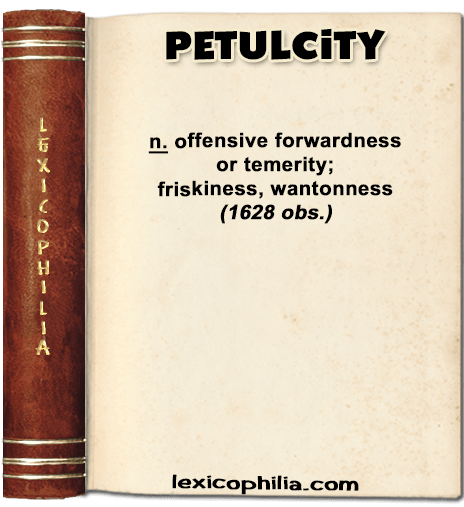
Word of the Day: PETULCITY


ETYMOLOGY
from Latin petulcus (butting, wanton, frisky)


EXAMPLE
“…I do therefore much blame the petulcity of whatsoever author that should dare to impute a popish affection to him, whom, besides his excellent writings and sermons, God’s visible, eminent, and resplendent graces of illumination, zeal, piety, and eloquence have made truly honourable and glorious in the Church of Christ…”

From: The Works of the Right Reverend Joseph Hall, 1837
Letter to Joseph Hall from Thomas Morton, 1628

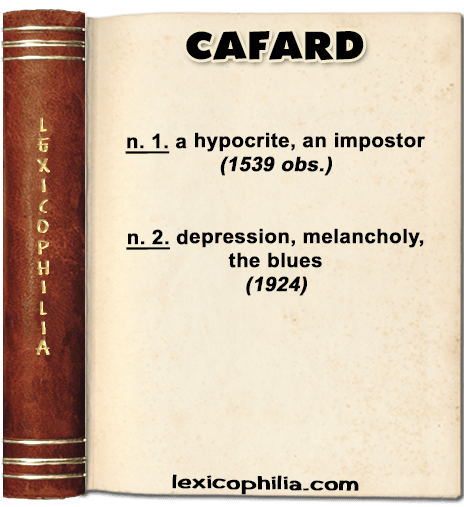
Word of the Day: CAFARD


ETYMOLOGY
from French cafardcaphard, of doubtful origin:
some have proposed to identify it with Catalan cafre (infidel), Spanish, Portugese cafre (cruel), which are apparently adapted from Arabic kafir


PRONUNCIATION
kaff-AR


EXAMPLE
“…wherat he woundred, and sayd that he thought Your Grace the Prince best furnished thereof in Christendom. We commoned of the cafart, Cornibus, that slanderose frere. He said that Your Majesties Ambassadour, the Bishop of Hereford, hath sued and proposed certayn articles against him, athe copie whereof he hath promessed to sende unto me…”

From: State Papers Published Under the Authority of His Majesty’s Commission
King Henry the Eighth, 1830
Crumwell to King Henry VIII, 1539

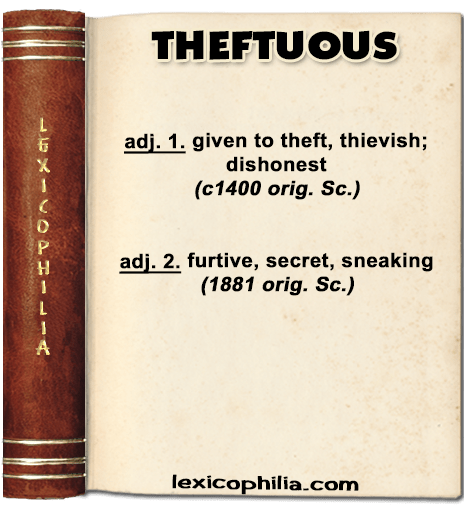
Word of the Day: THEFTUOUS


ETYMOLOGY
alteration (influenced by -uous) of Middle English thiftwis,
from thifte (theft) + wis (wise)


PRONUNCIATION
THEFF-tyoo-uhss


EXAMPLE
“…It is declared, that whosoever intercommuns with Thieves, or assists them in their theftous stealings, or deeds, either in going, or coming, or gives them meat, harbour, or assistance, or trysts with them any manner of way, they shall be pursued, either Civilly, or Criminally; but this act strikes not against such as have entertained the Thief any considerable time, after the committing of the Theft, and before Letters of Intercommuning were execute…”

From: The Laws and Customes of Scotland
By Sir George Mackenzie, 1678

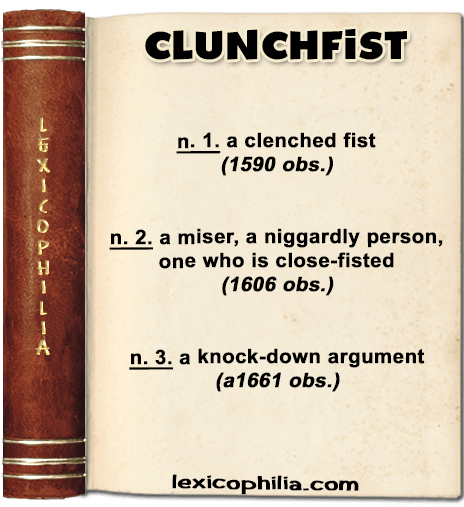
Word of the Day: CLUNCHFIST


ETYMOLOGY
from clunch (to clench) + fist


EXAMPLE
“…such a quoile with pro and con, such vrging of Ergoes, til they haue gone fro Art togither by the eares, and made their conclusions end with a Clunchfist, right like the old description of Logicke…”

From: Plaine Percevall, the Peace-maker of England:
Being a Reply to Martin Mar-Prelate
By Richard Harvey, 1590

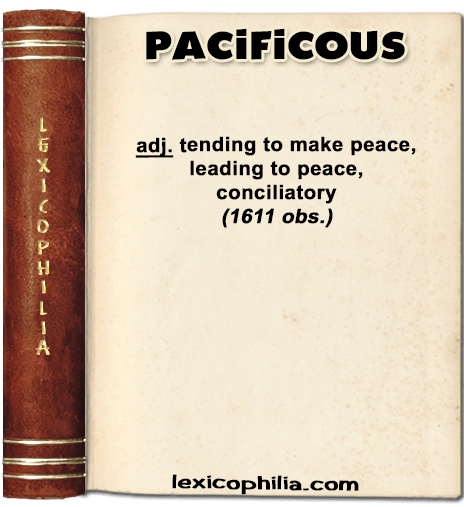
Word of the Day: PACIFICOUS


ETYMOLOGY
from Latin pacificus (peace-making, peaceful) + -ous,
from paxpacem (peace) + -ficus (-fic)


EXAMPLE
“…These, belike, were not acquainted with the Exploits of the Graecian Xenophon, the Roman Caesar, the English Sidney, Montjoy and Ra∣leigh, Gentlemen that were renowned both in Arms and Letters. Yet such as were transported with Warmth to be a sighting, prevail’d in Number, before the Pacificous…”

From: Scrinia Reserata A Memorial offer’d to the Great Deservings of John Williams
By John Hacket, 1693